
The Questions That Build Centuries: Five Questions Every University President Must Answer Before Taking Office
 28 July 2026


News Americas, NEW YORK, NY, Sat. July 25, 2026: Every university president inherits more than campuses, budgets, traditions, rankings, strategic plans, and expectations. Every president inherits trust. That trust is the bridge connecting an institution’s founding purpose with the future it has not yet seen. The presidency is not primarily an office of administration. It is a covenant of stewardship. Buildings can be renovated. Budgets can be replenished. Reputations can be restored. Lost purpose is far more difficult to recover. The defining moments of a presidency rarely begin with the first decision a leader makes. They begin with the questions a leader has the wisdom and humility to ask. Leadership is measured less by the problems it solves than by the future it prepares.
Every enduring presidency begins with a question of institutional necessity: If this university did not exist today, would society create it tomorrow? If so, for what indispensable purpose? Heritage deserves gratitude, but history alone never justifies continued existence. Every generation must earn the right to remain indispensable. Institutions survive because they continue to solve problems that matter, illuminate truths that endure, and cultivate leaders the world cannot afford to lose. A university that merely preserves its past gradually surrenders its future.
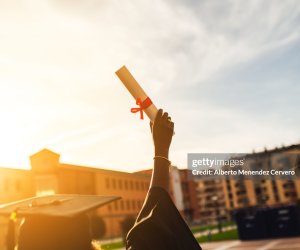
The second question defines institutional distinctiveness: What graduate should leave this university unlike any graduate another institution consistently produces? Universities do not change the world because they award degrees. They change the world because they form women and men whose character, intellect, faith, courage, and commitment to service become living expressions of their highest ideals. Diplomas recognize achievement. Lives demonstrate influence. Every graduate extends the reach of the institution into homes, communities, laboratories, classrooms, businesses, hospitals, courts, churches, and governments. In time, a university becomes the accumulated character of the people it has formed.
The third question demands uncommon discernment: Which traditions express our mission so faithfully they must endure? Which practices have outlived their usefulness and should give way to better ones? Great universities understand a distinction weaker institutions often overlook. Mission is permanent. Methods are temporary. Convictions anchor identity. Practices exist to advance those convictions, never to replace them. Wise presidents preserve what is sacred, strengthen what is effective, and release what no longer advances the institution’s calling. Stability without renewal breeds stagnation. Innovation without purpose produces drift. Institutions that endure protect both identity and relevance with equal resolve.
The fourth question extends leadership beyond the horizon of a single administration: How will every major decision strengthen human flourishing, advance truth, and create value for generations yet unborn? The fifth demands moral courage: What decision should we have the courage to make today before history asks why we waited? Every presidency eventually arrives at the moment when comfort confronts conviction. Exceptional leaders meet that moment with disciplined reflection. Does this deepen our mission? Does it prepare students for a future we cannot yet see? Does it strengthen excellence, character, and service together? Will it matter a generation from now? Leadership begins where convenience ends, because stewardship always chooses tomorrow over applause today.
The enduring measure of a university president is never the number of buildings constructed, budgets balanced, rankings achieved, campaigns completed, or speeches applauded. Those accomplishments deserve recognition, but they are not history’s final measure. History remembers institutions that became more faithful to their mission, more courageous in their leadership, more rigorous in their scholarship, more compassionate in their service, and more transformative in the lives they shaped because someone accepted the privilege of stewardship. Buildings weather. Rankings fluctuate. Endowments rise and fall. A life formed in truth, wisdom, faith, and service continues to shape families, professions, communities, nations, and generations long after every administration has passed. The truest legacy of a presidency is not the campus it leaves behind, but the people it sends into the world.
History rarely asks if a president was admired. It asks a more demanding question: Did those who followed inherit an institution stronger in purpose, richer in character, and better prepared to serve the future than the one entrusted to its care? Every presidency writes its own verdict through thousands of decisions, large and small, seen and unseen. Time preserves the evidence. Generations live with the consequences. History simply reads the verdict aloud.
EDITOR’S NOTE: Dr. Isaac Newton is a leadership strategist, governance scholar, ordained minister, author, and President of Paramount Communication & Marketing, LLC. Educated at the University of Southern Caribbean, Oakwood University, Princeton, Columbia, and Harvard, he advises leaders across government, higher education, nonprofit organizations, and the private sector on ethical leadership, governance, institutional renewal, and organizational excellence. He is the author of several books and coauthor of Steps to Good Governance, When Nations Kneel, Daring to Hope, and the forthcoming The Belief Code.
Related News
The Caribbean Court Of Justice, And The Standard The Judiciary Must Meet

Over Four Dozen Missing After Guyana Ferry Disaster

Could New Royal Archive Evidence Strengthen CARICOM’s Reparations Case?