India loses its last left-wing government after five decades
 04 May 2026

Bengaluru, India – In the sultry August heat of 2007, India’s government under Prime Minister Manmohan Singh was sweating over the future of negotiations with the United States over a landmark nuclear deal. The proposed agreement aimed to ease access to nuclear fuel and technology in exchange for greater international scrutiny of India’s facilities.
The problem? India’s communists – suspicious of the US – were opposed to the deal. And they were India’s kingmakers.
- list 1 of 3India denounces ‘hellhole’ remark shared by Trump
- list 2 of 3Raghu Rai, legendary Indian photographer, dies at 83
- list 3 of 3Two Kashmir brothers: One killed by rebels, another by army 26 years later
end of list
With 62 seats in India’s lower house in parliament, their support was holding up the Singh government. And the so-called Left Front threatened to withdraw that support if the PM went ahead with the deal.
Though Singh eventually gambled and convinced other parties to support him in parliament, and pushed through the deal in the face of communist opposition, that moment marked the high point of the political left’s clout in India.
On Monday, nearly two decades later, that influence appeared to have reached its nadir.
According to early results from a range of state elections, the left has been swept from power in Kerala, the southern state that was the first in the world to have a democratically elected communist government – and the last state in India where communists were in power. The United Democratic Front, led by the Congress party – the main national opposition – had won or was leading in 98 seats in the legislature of 140 seats by late afternoon. The Left Democratic Front – as the grouping of left-wing parties in Kerala is called — had won or was leading in 35 seats.
Advertisement
The state has long been a stronghold for left-wing politics and ideology. In the late 1950s, it gave the world its first democratically elected communist government, when the Communist Party of India (CPI) led Kerala from April 1957 to July 1959. That was before the government of Jawaharlal Nehru, the Congress leader and India’s first prime minister, sacked the communist authorities after they started land and educational reforms.
Since 1977, at least one Indian state has always been ruled by the left. Not any more.
“This year’s election results indicate that, for the first time, the left may not come to power in any state,” Rahul Verma told Al Jazeera. He is a political scientist and a fellow at the Centre for Policy Research (CPR), a think- tank based in New Delhi.
Left losing across the country
The Left Front, an alliance of left-wing political parties in West Bengal, was in power there from 1977 to 2011, when the Trinamool Congress, led by Mamata Banerjee, ended its long rule. In Tripura, the Left Front ruled from 1993 until 2018, when the BJP won. In Kerala, the LDF and the UDF have swapped power for decades: Before the latest election, the left was in power since 2016.
Even in India’s parliamentary elections, the left has seen a steady decline — from 62 in the 2004 election, to just eight seats now.
Rajarshi Dasgupta, an assistant professor at the Centre for Political Studies at Jawaharlal Nehru University in New Delhi, told Al Jazeera that the left’s hold was always limited, and only managed to develop pockets or regions where they became influential and electorally powerful, such as Kerala, Tripura and West Bengal.
“Their presence in the Hindi-speaking belt [primarily in North India] was largely limited to industrial areas, which declined with the decline of trade union politics,” he said.
“The larger reason for their limited outreach is, in my opinion, their incapacity to address questions of caste and gender, and the changing nature of capitalism, especially after liberalisation,” he added.
Harish Vasudevan, an independent social activist and public interest litigation specialist lawyer, told Al Jazeera that the political trend in India is where right-wing ideology is favoured.
“But more than that, the left has partially lost their leftist ideology and [has] compromised,” he said.
Role of the left in Kerala
The left first came to power in Kerala under the CPI in April 1957. EMS Namboodiripad, an iconic communist leader, became the state’s first chief minister. His government brought about important land and education reforms in the state.
Advertisement
But those reforms sparked major protests from the Congress – ruling nationally, but in opposition in the state and the church, which were worried about their influence being weakened. The Nehru government used a controversial constitutional provision to sack the Namboodiripad government.
In 1960, when new elections were held, the CPI lost to a Congress-led-alliance. The CPI subsequently fractured into several parties that, since the 1970s, have worked together.
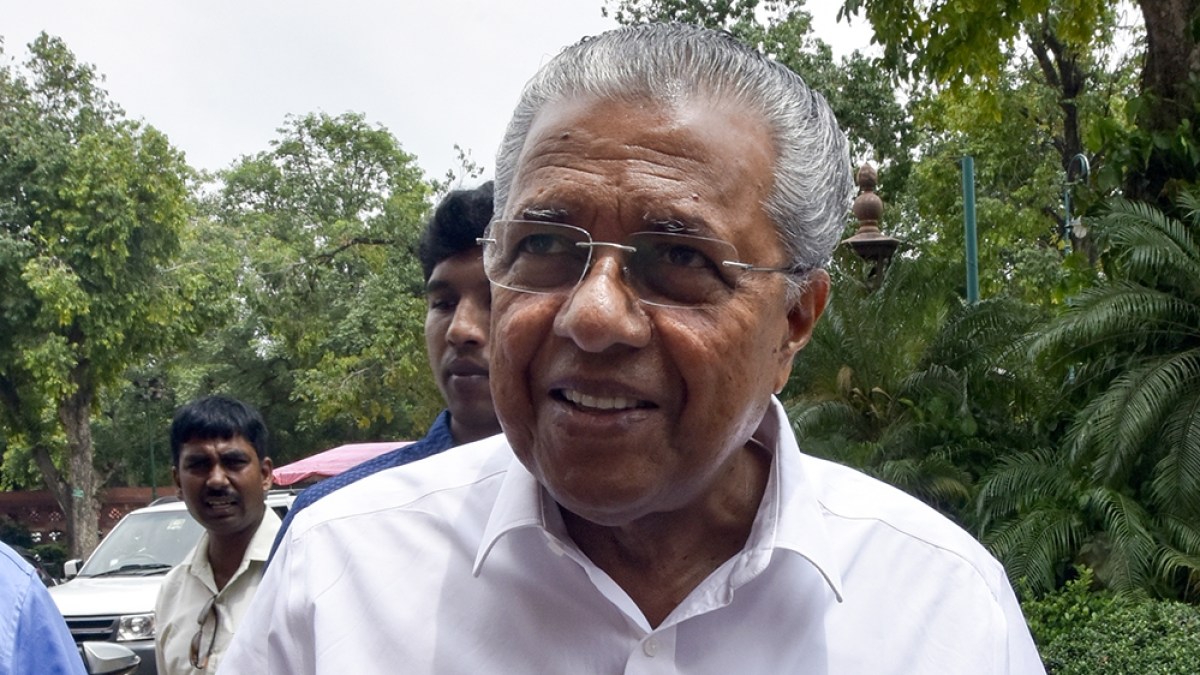
The outgoing government of LDF Chief Minister Pinarayi Vijayan has focussed on improving Kerala’s infrastructure and welfare schemes. During the COVID-19 pandemic, his government’s strategy to tackle the coronavirus was widely praised as a model for containing the pandemic, as other parts of the country struggled to stop its spread.
“As far as the poor and vulnerable are concerned, Kerala has given them special attention during these difficult times. We have strived to ensure total social security. Accordingly, 55 lakh [5.5 million] people – elderly, differently abled and widows – in Kerala have been paid 8,500 rupees ($89) each,” Vijayan told Al Jazeera in a May 2020 interview.
A year later, when elections were held in the state, he made history by returning to power, breaking a 40-year tradition of alternating power with the Congress-led UDF.
Last November, after carrying out his four-year Extreme Poverty Alleviation Project (EPEP), Vijayan declared Kerala free from extreme poverty, becoming the first Indian state to achieve that.
But experts say, despite the successes, the LDF’s credibility in Kerala has taken a beating in recent years.
“In Kerala, the LDF had always played their rebel role against the power abuse. But in the last five years, the party started speaking in the language of power,” Vasudevan told Al Jazeera.
He noted that in this year’s state elections, traditional left voters voted against the LDF “as a corrective measure against their own leadership”.
Can left-wing politics in India be revived?
With state election results suggesting that India may no longer have a left-wing government in power after half a century, political analysts say the political left needs to restructure itself.
Vasudevan said that while the left may not be in power, its role as an opposition force is increasing and could make a difference.
“The gap between the rich and poor is increasing, financial policies of the country are getting corporate-centric. The left has a role to play to balance this out by giving due benefits to the unorganised working class in the country,” he said.
Assistant professor Dasgupta said established Indian left-wing parties had a lack of imagination and a dearth of young leaders necessary to weather the challenges facing their movement.
“Having said that, there are signs of a revival of socialist democratic politics across the world, and there is no reason to believe that it will not impact India. And the problems of wealth inequality and jobless growth are getting worse by the day, which no mainstream parties are keen to address – besides the left,” he said.
Advertisement
“The persistence of these problems make a comeback of the left very much possible, provided they can reinvent themselves effectively from a 20th century communist mould to a social democratic force germane to the Indian context in the 21st century,” he added.
Related News
Police raid Peru’s election authorities after outcry over slow vote count
Cuba confirms talks with US officials, wants end to Trump’s energy blockade
Ukraine eyes Belarus border activities as Russian strikes persist