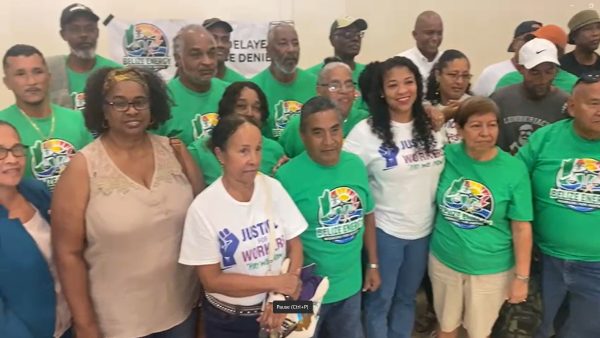
BSCFA and Tate & Lyle face off in court
 20 April 2026
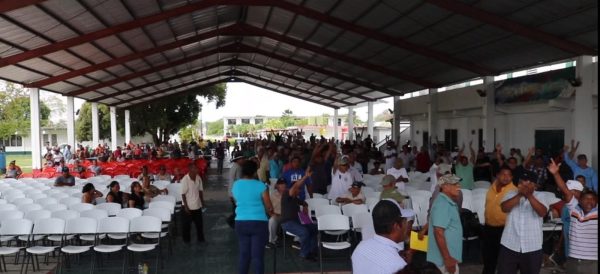

BELIZE CITY, Thurs. Apr. 9, 2026
For almost four hours on Monday, March 30, the Belize Court of Appeal heard the application by Tate & Lyle Sugars Limited (TLS) challenging the High Court decision of July 2025 not to strike out the Belize Sugar Cane Farmers Association’s (BSCFA) claim for Fairtrade (FT) premiums. The premiums reportedly amount to $9 million, plus interest.
The claim was filed in March 2024 against Belize Sugar Industries (BSI), which sells Fairtrade-eligible sugar to TLS. TLS — acquired by American Sugar Refining (ASR) in October 2010 — was added as a second defendant in June 2024 when BSI (also owned by ASR) amended its defense. BSI indicated that it had reported to TLS the Fairtrade-eligible sugar derived from cane supplied by all associations, but TLS withheld payment to the BSCFA because the Association did not have a Letter of Enhancement (LOE) with TLS, unlike the other three associations. At all material times, the BSCFA was Fairtrade certified.
At the heart of the dispute is whether Fairtrade premiums are earned by producing certified cane or only by signing an LOE. The lengthy hearing laid bare not only the legal complexities of the case, but also the deeper tensions that have shaped the sugar industry for more than a decade. The case will determine if millions in Fairtrade earnings remain with the multinational buyer or flow to cane farmers in the north who have been unable to access FT funds to ease hardships, particularly during the last crop season, when production fell sharply due mainly to pest infestation and disease.
The BSCFA, represented by Senior Counsel Magali Marin-Young and Allister Jenkins, contends that the premiums were earned, collected, and paid to the other three cane farmers’ associations, and that withholding them from the BSCFA is both unlawful and unconscionable. TLS, supported by Belize Sugar Industries (BSI), insists that without an LOE, there is no entitlement to the premiums. TLS is represented by Senior Counsel Eamon Courtenay and Illiana Swift, while Senior Counsel Godfrey Smith, Hector Guerra and Edgar Lord appeared for BSI.
BSCFA rejects multinational’s position that Fairtrade premiums are a privilege
The BSCFA framed the dispute as one rooted in fairness and principle. It reminded the Court that Fairtrade is a global system built on “ensuring fair prices, safe working conditions, and environmentally sustainable farming.” Yet, in Belize, it argued, that very system has been used to “mete out unfairness by multinational companies.”
The association explained that it produces Fairtrade‑certified cane, which is then sold to BSI under a commercial agreement. BSI then sells the milled sugar to TLS under a Long‑Term Agreement (LTA). TLS, in turn, markets the sugar internationally as Fairtrade and pays the associations. The BSCFA maintains that no LOE is needed for payment to be made, whereas TLS argued that the only thing they (BSCFA) are entitled to is payment for the sugar cane delivered under the commercial agreement, after which the cane becomes the property of BSI.
TLS’s appeal centers on whether the High Court had jurisdiction to hear the claim. TLS insists that the arbitration clause in the 2021 LOE (now expired) requires that any dispute be referred to arbitration in London. That LOE applied only to the 2020/2021 crop year, meaning no LOE existed for the two crop years now in dispute: 2021/2022 and 2022/2023.
Because the BSCFA maintains that LOEs are not automatically renewable, it stresses that “None of the authorities relied on by TLS and BSI support the assertion that an arbitration clause which expressly applies to a particular period and which has expired, continues to govern future disputes between the parties.” In essence, the BSCFA is arguing that TLS cannot simultaneously deny the existence of an LOE for the disputed years and rely on an expired one to oust the Court’s jurisdiction.
The BSCFA pointed the Court to clause 10(b) of the LTA, which provides that Fairtrade premiums are to be paid directly to producer associations. Although the BSCFA is not a party to the LTA, and cannot enforce it due to an exclusion of third‑party rights, it argued that TLS and BSI held the premiums on constructive trust for the farmers who produced the cane. Courtenay submitted that the exclusion of BSCFA from enforcement of the LTA is premised on the fact that there would have been an agreement between them and TLS providing for such enforcement.
Although not a party to the appeal, BSI was permitted to make submissions. Guerra took a firm line, arguing that the BSCFA brought the situation they are in upon themselves. He asserted that it was of their own doing, since they refused to sign an LOE (renewed annually) because they objected to the arbitration clause. He added that it went further and the association ended the commercial agreement with BSI. He reported that in 2021, the BSCFA approached BSI seeking to sign an LOE, but was told it made no sense since they could not deliver sugarcane without a commercial agreement. Guerra insisted that the commercial agreement does not contemplate the payment of FT premiums, emphasizing that “the only document that would allow for that is the LE …”
The association countered that there were several reasons why no LOE was signed, including an ongoing dispute that ultimately ended in civil unrest. It accused TLS and BSI of acting together in unlawfully conspiring to withhold the LOE for the disputed years, thereby depriving the BSCFA of the Fairtrade premiums. The BSCFA is seeking damages for the tort of unlawful conspiracy, arguing that BSI and TLS breached the Fairtrade Regulations by withholding premiums due to BSCFA “with the sole intention of causing economic harm.” It also noted that a commercial agreement was reinstated and that this agreement – not an LOE – is the contract that is mandatory for the sale of FT-eligible cane to the miller.
TLS, for its part, argued that the Fairtrade Standards require a contract between the buyer and the producer for premiums to be paid. The BSCFA rejected that interpretation, pointing out that the standards require contracts for the purchase of Fairtrade products, not for the payment of premiums, and that the relevant contracts already exist, these being the commercial agreement between BSCFA and BSI, and the LTA between BSI and TLS.
In a twist, TLS raised a new point in its speaking notes, arguing that the Fairtrade Regulations themselves require alternative dispute resolution, and therefore the High Court lacked jurisdiction.
The BSCFA immediately objected, noting that the argument was not included in the notice of appeal, had not been raised in the court below, and could not be introduced without leave. Nonetheless, Marin-Young responded that mediation is recommended under the regulations but is not mandatory.
The BSCFA has asked for the appeal to be dismissed. The Court reserved its decision.
Related News
War Over Hormuz Enters Dangerous New Phase as Iran Refuses Reopening and Global Price Fear...

Bus operators can’t bear the price of diesel
Democratic Party Sues Election System, Says Primary Process Ignores Federal Court Ruling