Janelle Sarauw Wins Democratic Primary for Delegate to Congress With 53 Percent of Vote
 01 August 2026
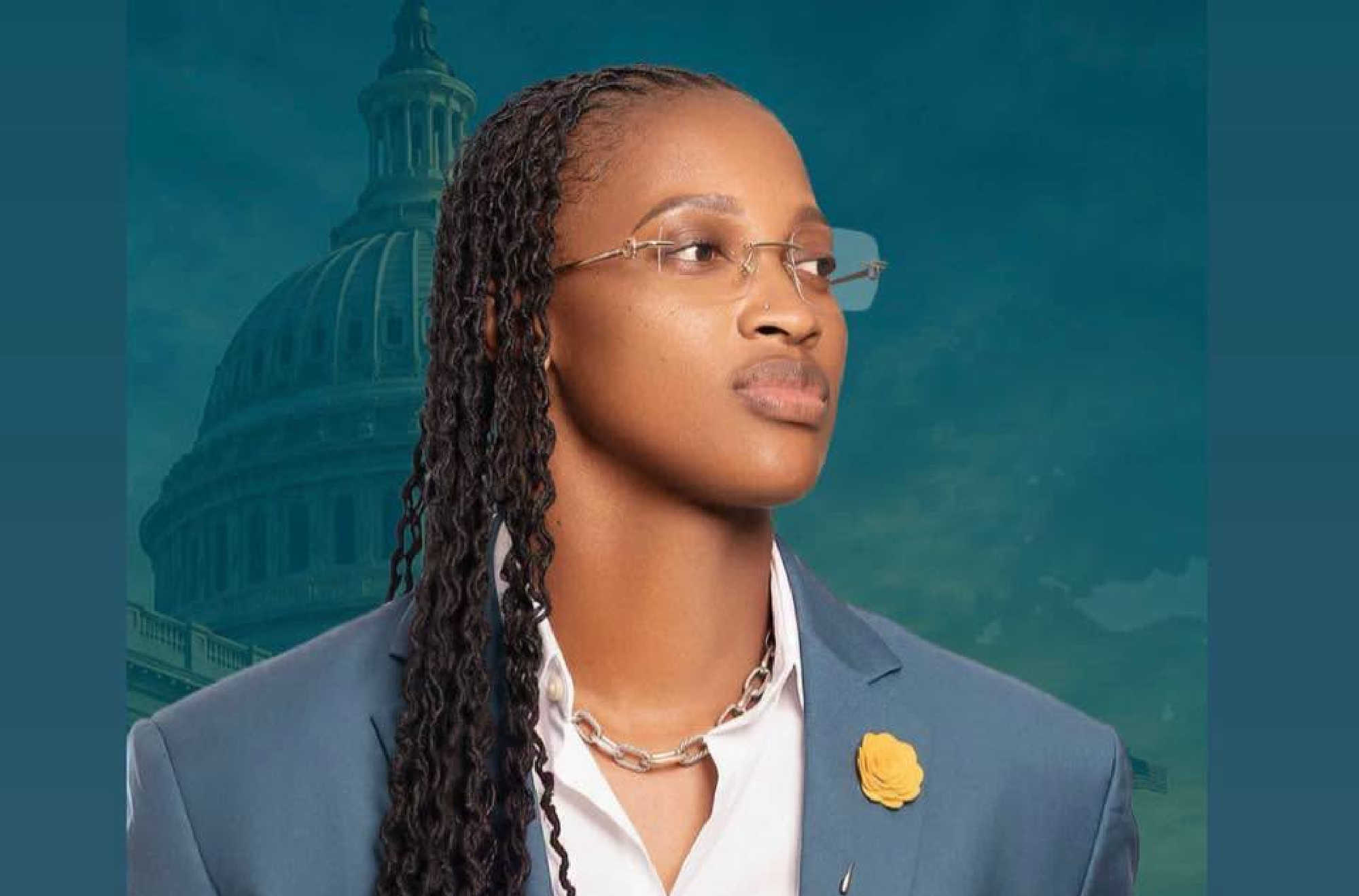

Former senator Janelle K. Sarauw won the Democratic nomination for Delegate to Congress on Saturday, capturing a majority of the vote in a four-way contest shaped by debates over disaster-recovery funding, healthcare equity, territorial rights and the Virgin Islands’ ability to command greater influence in Washington.
Unofficial territorial results released by the Elections System at 8:46 p.m. showed Ms. Sarauw receiving 4,913 votes, or 53.21 percent of the 9,234 votes recorded in the delegate contest.
Former U.S. Attorney Delia Smith finished second with 3,007 votes, or 32.56 percent. Teri Helenese placed third with 799 votes, or 8.65 percent, while former senator Emmett Hansen received 493 votes, or 5.34 percent. Another 22 votes were cast for write-in candidates.
Ms. Sarauw defeated Ms. Smith by 1,906 votes and received more votes than her three named opponents combined. The results remain unofficial pending certification.
The election summary reported 9,991 total ballots cast across the primary, with overall voter turnout reaching 47.75 percent. The delegate race drew fewer total votes than the gubernatorial contest, in which 9,561 votes were recorded.
The Elections System’s amended calendar schedules certification of the primary results for August 11. Ms. Sarauw will advance to the November 3 general election in the contest to become the Virgin Islands’ representative in the U.S. House of Representatives.
Her victory completed a political transition that began when Delegate Stacey Plaskett decided to leave the congressional race and seek the governorship. Ms. Plaskett also prevailed in Saturday’s Democratic primary, opening the way for a new delegate to represent the territory after the general election.
Ms. Sarauw entered the race after serving three terms in the Virgin Islands Legislature from 2017 to 2023. Although she had built much of her political identity as an independent and had frequently criticized the local Democratic Party, she changed her registration to Democrat in February and argued that party alignment would improve her ability to organize, build alliances and advocate for the territory in Congress.
She maintained during the campaign that joining the party would not prevent her from challenging its leadership or taking independent positions when she believed the interests of Virgin Islanders demanded it.
The primary ultimately presented voters with four candidates offering distinct qualifications for the federal post.
Ms. Sarauw ran on her legislative experience, her familiarity with territorial policy and her argument that the next delegate must build alliances while aggressively challenging federal disparities affecting the Virgin Islands.
Ms. Smith presented herself as a former U.S. attorney with legal experience, bipartisan federal relationships and an understanding of how federal departments and law-enforcement agencies operate.
Ms. Helenese emphasized her experience as the Virgin Islands government’s Washington representative and her existing relationships with Congress, the White House and federal agencies.
Mr. Hansen relied on his previous legislative service, long involvement in Democratic politics and his position that the delegate must remain closely coordinated with the territorial government while building a stronger case for equal federal treatment.
Those differences were tested during multiple forums and debates as the candidates addressed the limitations and opportunities associated with an office whose occupant cannot vote on final legislation on the House floor.
Ms. Sarauw emphasized that territorial delegates can vote in congressional committees and argued that those assignments provide opportunities to influence legislation before measures reach the full House. She proposed building alliances with the other U.S. territories as well as Alaska and Hawaii, jurisdictions she said share concerns involving geographic isolation, shipping, healthcare and federal policy.
She also proposed mobilizing the large Virgin Islands diaspora in states including Florida, Texas, Georgia, New York and North Carolina. Her argument was that Virgin Islanders living in voting states could pressure their own members of Congress to support legislation affecting the territory, giving the delegate additional political leverage beyond the territory’s nonvoting seat.
Disaster recovery emerged as one of the campaign’s most urgent subjects.
The candidates agreed that federal awards established after Hurricanes Irma and Maria had not kept pace with escalating construction, shipping, materials and labor costs. The dispute centered on how the next delegate should respond as the territory faces the possibility of reducing the scope of major public projects because original federal awards no longer reflect actual rebuilding expenses.
Ms. Sarauw proposed pursuing disaster-equity legislation and calling for a Government Accountability Office review of the Federal Emergency Management Agency’s approval process and outstanding backlogs.
She also proposed inviting members of the House Committee on Natural Resources to the Virgin Islands so lawmakers could examine recovery conditions, construction costs and delayed projects firsthand before being asked to support additional funding or policy changes.
Ms. Smith said she would begin direct discussions with federal agencies responsible for recovery awards and press them to account for the Virgin Islands’ shipping, construction, materials and real-estate costs.
Ms. Helenese proposed working with members of the House Appropriations Committee and coordinating with the other territories to seek additional federal support.
Mr. Hansen argued that federal cost estimates based on mainland conditions could not adequately reflect the expenses involved in rebuilding in the Virgin Islands and said the territory must arrive in Washington with the data necessary to prove its case.
Healthcare financing created another major dividing line.
Ms. Sarauw identified the elimination of federal Medicaid and Tax Equity and Fiscal Responsibility Act funding caps as a priority. She also argued that hospital reimbursement rates must be updated and that the Virgin Islands should benefit from federal prescription-drug reforms from which the territory had previously been excluded.
Ms. Helenese likewise made the elimination of the Medicaid cap under Section 1108 of the Social Security Act a central campaign commitment.
Ms. Smith argued that federal funding was available but that the territory’s local matching requirements, billing weaknesses and inability to document or use some resources were also driving the healthcare crisis.
Mr. Hansen focused on the need for qualified medical professionals and proposed pursuing a veterans hospital in the Virgin Islands to improve access to care while retaining federal healthcare spending within the territory.
Economic diversification and the future of St. Croix’s South Shore were recurring campaign topics.
Ms. Sarauw proposed maximizing the South Shore as a territorial economic engine and developing the existing free-trade zone. She later expanded that proposal by suggesting that St. Croix could become a regional mail and logistics hub serving the Caribbean, Central and South America and portions of Africa.
She argued that such a facility could improve local mail service while creating additional economic activity around the territory’s geographic position and trade-zone designation.
Ms. Helenese promoted a feed mill on St. Croix to strengthen agriculture and food security and supported expanding the products eligible to generate federal cover-over revenues.
Mr. Hansen said he had already prepared legislation addressing an expansion of cover-over eligibility, while also arguing that the Virgin Islands must focus more heavily on building its economy from within.
The campaign also forced the candidates to explain how they would work with President Donald Trump and a federal government that might not share their political priorities.
Ms. Sarauw said her approach would place people before party and pointed to her service as an independent senator within a Legislature controlled by Democrats as evidence that she could seek consensus across political lines.
Ms. Smith cited her federal work under both Republican and Democratic administrations and her bipartisan confirmation as U.S. attorney.
Ms. Helenese pointed to existing relationships across Congress and the executive branch. Mr. Hansen warned that the territory’s delegate could not afford to become absorbed in national political disputes at the expense of Virgin Islands priorities.
Territorial equality became especially prominent after the candidates were questioned about federal legislation that could affect birthright citizenship in the U.S. territories beginning in 2027.
Ms. Sarauw proposed working with territorial-rights organizations and activating the Virgin Islands diaspora to press voting members of Congress. Ms. Helenese advocated pursuing equality in stages, beginning with healthcare, Social Security and taxation. Ms. Smith said congressional action would ultimately be required, while Mr. Hansen argued that the territories must document how their residents contribute to federal programs, military service and national institutions without receiving equal benefits.
Postal delays and the Virgin Islands’ administrative connection to Puerto Rico also featured prominently.
Ms. Smith proposed separating the federal postal resources assigned to Puerto Rico and the Virgin Islands. Ms. Helenese discussed federal conversations surrounding the loss of the de minimis customs exemption. Mr. Hansen proposed joining with the other territories to press postal leadership for change.
Ms. Sarauw returned to her South Shore development plan, proposing a St. Croix mail hub that could serve both the Virgin Islands and wider international markets.
The final V.I. Consortium-WTJX debate also examined violent crime and whether the territory needed a larger federal law-enforcement presence.
Ms. Sarauw focused on obtaining additional resources for nonprofit organizations working in prevention and intervention. She also called for greater scrutiny of Caribbean Basin Security Initiative funding and whether some of those resources could be directed toward border security.
Ms. Smith emphasized improved coordination between federal and local law-enforcement agencies. Ms. Helenese called for a stronger federal presence and additional support for youth programs, while Mr. Hansen proposed stationing a Coast Guard cutter in the Virgin Islands rather than Puerto Rico to combat gun and drug trafficking.
Policy was not the only focus of the debates. Each candidate was asked to respond to issues involving their public or personal record.
Ms. Sarauw faced questions involving public legal disputes and apologized to voters while offering her account of the circumstances. Ms. Smith was questioned about a federal judge’s criticism of her office’s representations during a court proceeding. Ms. Helenese addressed past legal claims involving a former personal relationship, while Mr. Hansen was challenged over the absence of a functioning campaign website and whether that reflected his readiness to establish a congressional office.
The debate subjected the candidates to sustained questioning on whether their previous experience matched the demands of the position.
For Ms. Sarauw, the case to voters rested on whether her legislative background, willingness to challenge established institutions and proposed alliances with territories and diaspora communities could compensate for not having worked within Congress or the federal executive branch.
For Ms. Smith, the question was whether her federal legal experience and bipartisan credentials provided the strongest foundation for the role.
Ms. Helenese asked voters to select a candidate who already understood Washington’s agencies, lawmakers and territorial advocacy networks. Mr. Hansen argued that political longevity, institutional knowledge and closer local-federal coordination were more important than campaign organization or federal titles.
Saturday’s results delivered a decisive answer within the Democratic electorate. Ms. Sarauw not only finished first but crossed the 50 percent threshold in a field of four candidates, avoiding the need to rely solely on a plurality divided among several contenders.
The result also gave Ms. Sarauw substantially more support than she received during her unsuccessful 2022 campaign for lieutenant governor as the running mate of gubernatorial candidate Kurt Vialet, placing her in a different political position heading into November.
She must now broaden her campaign beyond Democratic primary voters and compete for the support of independents, Republicans and residents who did not participate in Saturday’s election.
The November contest will determine who replaces Ms. Plaskett in Washington and assumes responsibility for pursuing federal funding, protecting territorial rights, addressing healthcare disparities and advocating for the Virgin Islands within a Congress where the territory’s representative can participate in committees but cannot vote on final passage on the House floor.
Related News
Ministry of Human Development hosts 2-day training on human trafficking with focus on chil...

Southland Seeks “Closure” on Horse Racing Deal as Bryan Warns Senate May Send Measure ...
Magazine Dental Academy launched in Belize City