US revokes visa of Brazilian ambassador amid deepening diplomatic spat
 04 August 2026

The administration of President Donald Trump has cancelled the visa for Brazil’s ambassador in the United States, the latest sign of a deepening diplomatic rift between the two countries.
An anonymous US State Department official briefed reporters on Tuesday that Ambassador Maria Luiza Ribeiro Viotti’s visa had been temporarily revoked.
- list 1 of 3Brazil’s Lula launches fourth-term bid, focuses on national sovereignty
- list 2 of 3Bolsonaro’s son begins Brazil presidential bid with Netanyahu, Milei kudos
- list 3 of 3US tariffs ‘strengthen’ Lula against Bolsonaro’s son in upcoming elections
end of list
But Ribeiro Viotti was not being expelled from the country, the official added.
“The action was that the visa of a senior diplomat here was revoked or canceled. That is not the same thing as kicking the person out of the country,” the official said.
The decision to revoke the visa was framed as backlash to Brazil’s decision to withhold approval for Trump’s ambassador to the South American country.
Should that approval be granted, the US official explained Ribeiro Viotti’s visa would be returned. Until then, the official suggested she could remain in the US.
“It means that they are here but without a visa, and would have their visa restored if the balance is restored by giving agreement to our chosen ambassadorial nominee,” the official said.
The move comes after Washington expressed anger over Brazil’s failure to approve Trump’s choice for ambassador to Brazil, Danny Perez.
Perez is a Florida state representative and a Republican ally of Trump’s hawkish Secretary of State, Marco Rubio. He was nominated to the ambassadorship in June, but he has yet to be confirmed by the full US Senate.
Media reports indicate that Trump publicly nominated Perez before reaching out to Brazil.
Advertisement
Sources inside the Brazilian government said this was considered a breach of protocol, and they intend to probe Perez’s nomination before issuing formal approval.
Without such approval, though, Perez will be unable to take up his post in the capital, Brasilia.
The tit-for-tat over the ambassadors is likely to ratchet up long-simmering tensions between the US and Brazil, the country’s largest South American trading partner.
Last month, Brazil denied visas to officials from the US State Department’s Bureau of Democracy, Human Rights and Labor, after voicing concerns that the delegation intended to undermine the country’s election system. Brazil is set to elect its president in October.
Trump is considered a close ally of the Bolsonaro family, a powerful political dynasty on Brazil’s far right.
The US president’s first term overlapped with the presidency of Jair Bolsonaro, who was nicknamed the “Trump of the Tropics”.
His son, Senator Flavio Bolsonaro, is on the ballot this election season.
Both Trump and the elder Bolsonaro have previously used false claims of election fraud to dispute unfavourable election results.
Trump has also sought to boost the prospects of right-wing candidates across Latin America since the start of his second term, even threatening to withhold US funds depending on election outcomes.
With Latin America experiencing a shift rightwards, Brazil remains the largest country to be governed by a left-wing leader: President Luiz Inacio Lula da Silva. He has emerged as a vocal critic of Trump’s attempts to increase US influence in Latin America.
Lula defeated the elder Bolsonaro in the 2022 presidential elections, and he is seeking a fourth, non-consecutive term this October. Flavio Bolsonaro is his top rival.
Since being voted out of office, Jair Bolsonaro was sentenced to 27 years in prison for his role in an alleged plot to overthrow the 2022 election results.
Trump, however, vocally rejected Jair Bolsonaro’s prosecution, which was recommended by Brazil’s Federal Police. Last year, the US president placed steep tariffs on Brazil, demanding that prosecutors end their case.
Though those tariffs were lifted, the US announced in July that it would impose 25 percent tariffs, this time accusing Brazil of unfair trade practices.
Brazilian authorities remain wary that the US might seek to influence the outcome of October’s presidential election in favour of Flavio Bolsonaro.
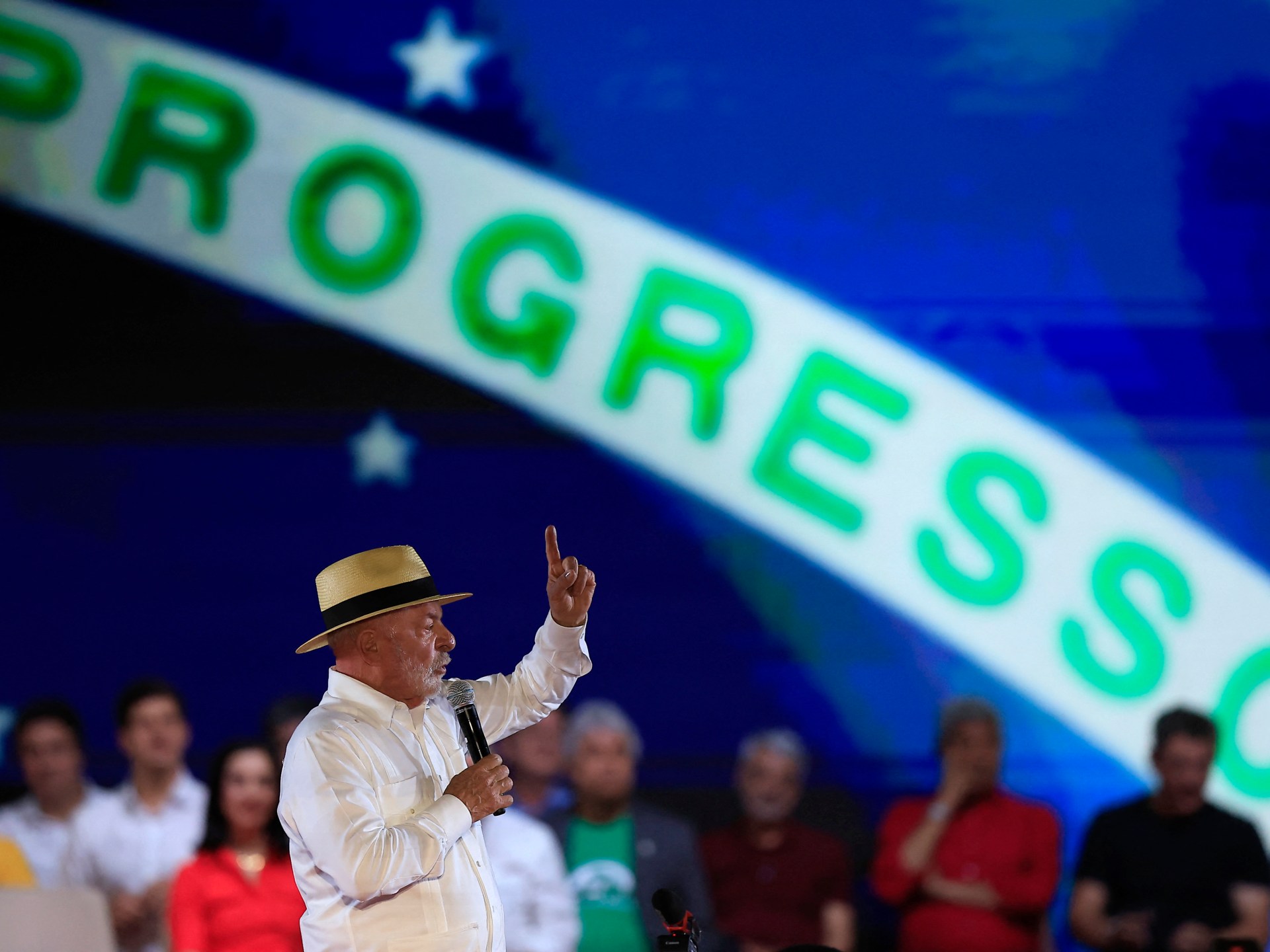
Lula formally launched his campaign bid on Sunday, framing the race as a question of national sovereignty — and the “future of Latin America”.
Related News
Russian ballistic attacks intensify as Kyiv claims Dnipropetrovsk advance
Sam Altman says AI has entered ‘singularity’: Should we be worried?
Huckabee calls Israeli settlers ‘terrorists’: Can US push end Qusra siege?