P.M. Briceno addresses bus/fuel crisis and global challenges
 04 May 2026

GoB slashes spending to help bus operators
By William Ysaguirre (Freelance Writer)
BELIZE CITY, Wed. Apr. 29, 2026
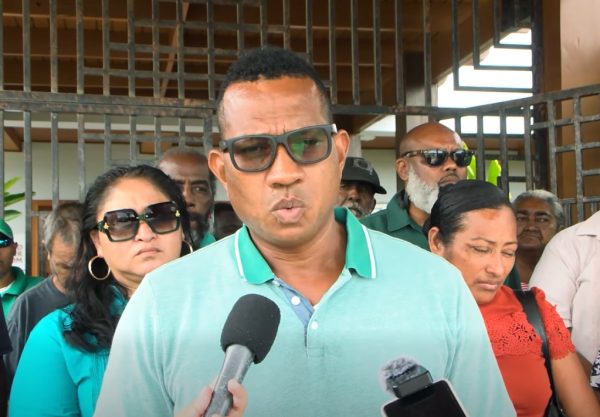
Prime Minister Hon. John Briceño and his administration have decided to implement some cuts in public spending in order to make funds available to offer independent bus operators of the Belize Bus Association (BBA) a $3.00 per gallon fuel subsidy, which brought an end to the strike by those operators which included a blockade at several points on the Philip Goldson Highway on Monday, April 27.
At first the BBA had requested a rate adjustment to cover the increased price of diesel, which had risen to almost $16.00 per gallon, and on Tuesday, April 21, Cabinet approved a fare increase to 18 cents per mile; then on Friday, April 24, the Ministry of Transport published a detailed list of how this increase would impact fares to different stops on the Northern, Western and Southern bus routes, with the increase to take effect on Monday, April 27. However, there was an outcry from some commuters when it became clear that the fares on heavily travelled commuter runs from Belize City to Belmopan, and from Orange Walk to Belize City, would increase by $2.00, and a long trip south from Belize City to Punta Gorda would increase from $27.00 to $39.00! This backlash prompted the BBA to opt not to proceed with the proposed fare increase, and instead they requested a fuel subsidy, calling for the price of fuel to be reduced to $10 per gallon.
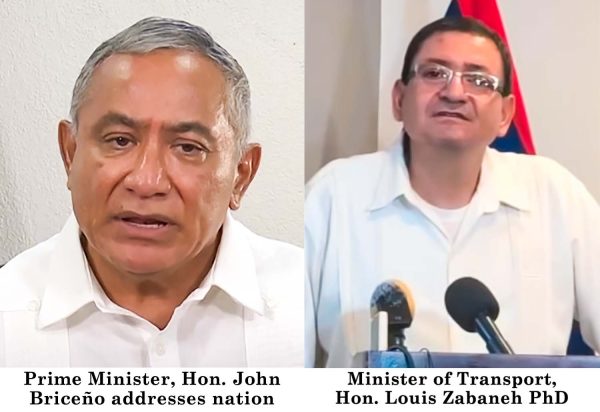
In response, the Minister of Transport, Hon. Louis Zabaneh, PhD, sat down with the bus operators to work out a compromise; and last Saturday, April 25, he called a press conference at the Best Western Biltmore Plaza Hotel, where he announced that he had reached an agreement with the independent operators, and that neither the National Bus Company (NBC) nor the BBA would be increasing fares.
The BBA initially agreed to the fuel subsidy, but when they read the fine print of the Government release, and understood that the subsidy would be limited to national highway runs only, and that service within Belize City and short runs to the villages would be excluded, they wrote urgently to the Prime Minister on Sunday, April 26, demanding that the short runs be included or else they would shut down operations on Monday. The BBA called the release “bad-faith conduct by the Ministry of Transport,” and they moved ahead with strike action on Monday. They had demanded that the subsidy “must clearly include:
“1. Belize City runs under the subsidy framework;
“2. ALL village runs under the subsidy framework; and
“3. Confirmation that the subsidy will compensate operators for any pump price exceeding $10 per gallon.”
In an effort to quickly address an emerging crisis, Minister Zabaneh and other ministry officials again met with the BBA to hammer out the details of the agreement, while the police moved to clear the blocked highways, detaining 3 recalcitrant bus drivers in the process. Zabaneh announced the compromise later on Monday, committing to meet again with the BBA on Tuesday to work out the new fare schedule for each stop, particularly short village runs for which the fare was $2.50, which the BBA proposed to increase to $3.00.
The Prime Minister subsequently addressed the nation and stated, “With regard to domestic transportation and the recent issues with our bus operators concerning bus fares, the Cabinet determined that pricing for routes operated by the nascent National Bus Company will remain at current rates.”
He continued, “For private operators who demanded the rate increases, the Government has approved a generous subsidy that specifically covers the incremental fuel cost. Over the next 3 months, the government will provide a $3 per gallon fuel subsidy to all private bus operators. This measure is intended to prevent any major increases in bus fares for commuters who travel within or outside their districts during this period.
“And I proposed to go even further, to tighten our belts, so the government embraces its fair share of sacrifice. Cabinet and I, therefore, have agreed to the following: firstly, we will defer $30 million in capital expenditures previously programmed for this budget year.
“Secondly, $25 million will be cut from goods and services allocated across all Ministries and departments.
“Thirdly, we will continue to tighten expenditure by significantly reducing foreign and local travel, which will require less subsistence for meetings. This will be achieved by insisting on attending and organizing meetings and conferences virtually. We will also continue to cut the government’s fuel bill by limiting the use of government vehicles.
“At the end of the first quarter, we will assess budget performance to determine what additional measures are necessary. While we have made these hard adjustments, I want to emphasize that our social safety net spending will not be disrupted. Social assistance services will continue through the Human Development ministries, grocery bags, BOOST, and housing for single mothers’ programs.”
He further stated, “In education, the tens of millions for scholarships and subsidies, as well as the Early Start and school feeding programs will be maintained.
“In health and wellness, free medical services at our public hospitals and NHI national rollout will continue. Rest assured that when it comes to spending reductions and cuts, this government will never reduce the investments we have budgeted for those most in need. That is a sacred contract of Plan Belize 2.0.”
He then added, “The government is committed to minimizing and mitigating the impact of global events, and working closely with all stakeholders and the community to protect our national interest. This is the directive I have given the ministers, to representatives, to mayors and councilors and to all those with whom I share the duties of national leadership. These are their assurances I give you, the Belizean people.”
The Prime Minister had prefaced these assurances by explaining, “There are some things that are beyond our control. Global conflicts, inflation, instability, and variations to the international order are examples of grave issues that are outside of [our] direct control. Like you, I am deeply concerned by the recent developments in the Middle East. This week marks two months since the latest Middle East conflict commenced. Today there is no end in sight, and we’re not sure when normalcy will return.
“Cabinet and I have been constantly reviewing the many areas where Belize as a small, open economy is vulnerable to the direct and indirect consequences of these hostilities, as well as to other global and regional developments. As we all know, Belize is vulnerable to these shocks; chief among them is our access to fuel and the price we pay for it. Most concerning is our vulnerability to inflation, where the money we earned buys less of what we need. Even the IMF has said that Belize imports our inflation. In other words, certain price increases are imposed upon us, and all we can do is to manage our response in a way that is achievable and affordable.
“Every Belizean is negatively impacted by inflation. In the last two months, world oil prices have surged by 76 percent, from about USD$60 to USD$105 per barrel. All this considered, let me assure you that there is no immediate threat to our fuel supply. While no buyer can be protected from what we see on the news every day about fuel supply, Belize’s supply, currently estimated at some $5 million per month, is so far assured.”
He had also noted, “Yes, there have been, and there will continue to be adjustments to the price at the pump, and to the prices of certain products and services related to fuel costs. Let me address the issue of the price we pay at the pump. When the acquisition cost of fuel rises, that is to say, the price paid by Puma and its suppliers, the excise tax collected by the government does not rise. This is a fixed amount, and this amount—the excise tax collected — has been significantly reduced by the government since the crisis. In fact, the excise tax charged on regular gasoline has been cut by 68 cents. The excise tax charged on diesel has been cut by $1.55. These two tax reductions amount to $4.7 million per month, for a projected $60 million for this budget year.
“I assure you that if the acquisition costs for fuel continues to rise, the Cabinet will consider further adjustments. We are mindful that if all prices continue to rise, the government may need to introduce more substantial cost saving measures. If and when that time comes, we will of course engage with our partners to ensure proper consultations. Thankfully, we’re not there yet. With respect to the wider economy, the good news is that so far the effects of the conflict have not materially dampened employment and investments flows. Forecasts for calendar year 2026 remain positive, with all of government’s focus and resources directed to protecting our industries at home and abroad.
“Fortunately, to date, the tourists continue to come, and all airlines and routes to Belize remain strong. Thankfully, our agricultural sector and other areas like the BPO business are robust and insulated from the current chaos.” (AMANDALA Ed. Note: As we go to press tonight, the latest word is that Government has reached a compromise with bus owners, whereby along with a subsidy of $3.00 dollars per gallon of diesel, they will be allowed a 50-cent increase in bus fares for short stops, and up to $1.00 increase in fares for longer runs. This new arrangement goes into effect on Monday, May 4.)