CCJ ruling goes against Belizean businessman in landmark CARICOM case
 08 July 2026

BELIZE CITY, Fri. July 3, 2027
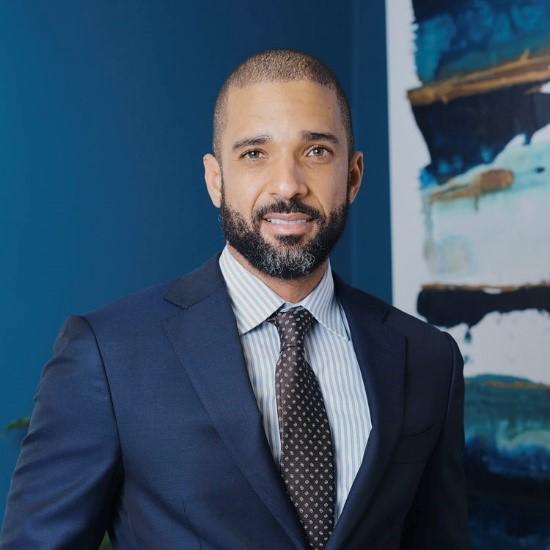
Belizean businessman Anwar Barrow – who owns and operates businesses in Belize and other CARICOM Member States – and seven Belize-registered companies with CARICOM links, have all emerged as negatively affected by a landmark decision of the Caribbean Court of Justice (CCJ). The ruling, delivered on July 3, is historic, as it marks the first time that any national court in CARICOM has referred a legal question to the CCJ under Article 214 of the Revised Treaty of Chaguaramas (RTC).
The referral originated from a case before the High Court of Belize, which held that the Apex Court is the only court empowered to interpret the Treaty which governs the CARICOM Single Market and Economy (CSME). The CCJ confirmed that authority in its ruling. The High Court stayed the domestic proceedings in March this year while seeking the CCJ’s interpretation on whether certain regulatory requirements imposed by the Financial Services Commission (FSC) – the first Defendant – breach Article 177 of the Treaty. The objective of that clause is to “prevent anti-competitive business conduct that would frustrate the benefits of the CARICOM Single Market and Economy.” The FSC applied to the High Court on January 30, 2026, requesting that the matter be referred to the CCJ.
Barrow is the first claimant in the case. The second claimant, Acuity Holdings Limited – owned by Barrow – is the surviving entity from a merger of 13 companies. The remaining 5 claimants (Conservation Alliance Limited, Ibid Limited, Ohana Limited, Paree Limited, and Proxie Limited) are Belize-registered firms that provide general corporate services, while the eighth claimant, Southern Renewable Energy Limited, is engaged in research and investment in renewable energy.
The claimants argued that Belize-registered companies with foreign shareholders or directors are being subjected to regulatory obligations not imposed on purely domestic companies. They contend that this amounts to anti-competitive behaviour in breach of the Treaty and constitutional protections of equal treatment and protection of the law.
A related issue before the High Court concerns the FSC’s requirement that domestic companies with shareholders and directors from other CARICOM jurisdictions pay fees in U.S. dollars rather than Belize dollars, which the claimants say is inconsistent with the Belize Companies Act.
The specific question referred to the CCJ asked whether Belize’s requirement that “(a) local companies with shareholders or directors from CARICOM jurisdictions and (b) companies incorporated within CARICOM countries maintain and file documents through local registered agents, breaches the Caribbean Community Act which incorporates the Treaty …”
The CCJ heard the matter on May 19. In its ruling, the CCJ held that Article 177 is directed at anti-competitive business conduct by enterprises – or conduct “which constitutes the abuse of a dominant position in the market” – not at regulatory measures enacted by Member States. The court did acknowledge that there are other provisions of the Treaty under which State measures capable of distorting competition can be reviewed, but those were not before the court for interpretation.
The CCJ reviewed a wide range of case law, relevant Belize law, and treaties and international materials in arriving at its interpretation.
The Claimants were represented by Senior Counsel Godfrey Smith along with Hector Guerra and Edgar Lord. The FSC was represented by Senior Counsels Eamon Courtenay and Priscilla Banner along with Stacey Castillo Ysaguirre, while Deputy Solicitor General Samantha Matute appeared for the Attorney General along with Crown Counsel Alea Gomez.
Carissa Rodulfo, supported by Mikhail Charles, participated as Amicus Curiae, offering independent submissions on competition law to aid the Court in interpreting Article 177 of the Treaty.
Costs are to be determined by the High Court, which must still rule on the remaining aspects of the case relating to the alleged constitutional breaches.