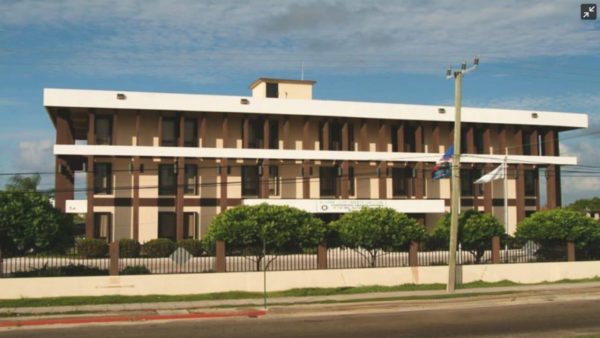
Belize Education Sector Plan 2.0 launched
 20 April 2026

By William Ysaguirre (Freelance Writer)
BELIZE CITY, Thurs. Apr. 9, 2026
The Belize Education Sector Plan 2.0 was launched by the Ministry of Education, Culture, Science and Technology at the Lord Ashcroft Convention Centre at the Fort George Hotel in Belize City on Thursday morning, April 9.
The 5-year plan 2026-2030 proposes the provision of more free education, more school meals through the schools feeding program for students, more school transportation, more qualified teachers, and more inclusion of under-served areas and communities.
The government has budgeted $300 million for the education plan, to build on the achievements of the past 5 years, and to deliver more in the next 5 years, Minister of Education Hon. Francis Fonseca promised, as he explained the 5 pillars of the plan in his keynote address. The aim is to expand equitable access to a quality education and completion of programs by more students across all levels. The plan is to improve learning outcomes and teaching quality, and to strengthen alignment with labor market needs, so that students become empowered to drive national economic development. There is also a focus on reducing inequities and advancing inclusion for more girls and for students with special needs and diverse abilities, to give all an equal opportunity to live full, productive lives, leaving no one behind.
An investment of $15 million will be made this year via the Education Upliftment project, “Together We Rise,” so that the benefits of the program can reach a larger group: 14,000 students at 27 schools, said the project’s director of policy and planning, Ricardo Gideon.The project began with a pilot serving 947 students at 4 schools, then a $13 million investment last year expanded the project to serve 11,653 students at 23 schools. The project will guarantee access to tuition-free education for 100 percent of students at government high schools, relieving more than 8,500 families of the cost of tuition. This will benefit 60 percent of high school students across the country, and the government-aided high schools will be added to the project as the need grows.
A key component of the plan is the National Healthy Start Feeding Program. The ministry had invested $8 million to feed 15,850 students at 56 primary schools and 22 high schools in this academic year, and will invest $10 million more in the next academic year to feed more than 20,000 students. The program will be scaled up to feed 35,000 students by 2030.
Some 280 bus runs provide school transportation for more than 14,000 students and teachers at a $12 million annual cost, and there will be an increase to 295 bus runs in the next academic year, at a $12.5 million cost per year.
Inclusion of students with special needs is key, and more than 2,000 teachers have been trained to manage classrooms in which there are children with diverse abilities. The ministry has implemented a screening program to identify children with special needs across schools in the country, screening some 20,000 children since 2021, so that teaching support can be targeted where needed. Specialized therapeutic support is offered at the Stella Maris School and in the Cayo District.

The ministry is investing $13 million to financially support 1,350 primary school students, and 5,000 high school students are receiving direct support. In total, more than 19,000 high school students are receiving full or partial financial support.
This year, the ministry has invested a further $3 million to support tertiary level students in an effort to catalyse the development of a skilled, professional workforce. Presently, 80 percent of University of Belize students are receiving financial support; and 60 percent at 6th forms and junior colleges are also financially supported. Over 1,000 Belizean students are studying abroad on scholarships, to return with more global expertise for the local workforce.
The plan also calls for investing in the 6,361 teachers serving 98,000 students around the country: 513 at preschool; 3,454 at primary schools; 1,698 at secondary schools; and 696 at tertiary level institutions. Some 91.8 percent – $217.7 million of the ministry’s budget—goes to teachers’ salaries and benefits, with an annual increase of $14 million planned. The plan will enhance teachers’ well-being by providing a Teacher Learning Institute for their professional development, and enabling teachers to advance their careers via scholarships, paid study-leave, and targeted grants.
According to director of science and technology, Namrita Balani, a primary objective is to pique students’ curiosity, so they want to learn, to make learning fun. The ConnectED platform enhances students’ Internet access to educational materials such as Wild 501, which features an archive of Carol and Richard Foster’s film documentaries of Belizean wildlife, inviting schoolchildren to learn everything they ever wanted to know about Belize’s flora and fauna.
Chief Executive Officer in the ministry, Dian Maheia explained that each programme of the plan has some 20 component modules to enhance governance and operation, drive performance and innovation, transform teaching and learning, advance priority sectors, and strengthen school services to maximize our human capital.