Typhoon Champi hits Taiwan, killing one and injuring 350
 23 October 2026
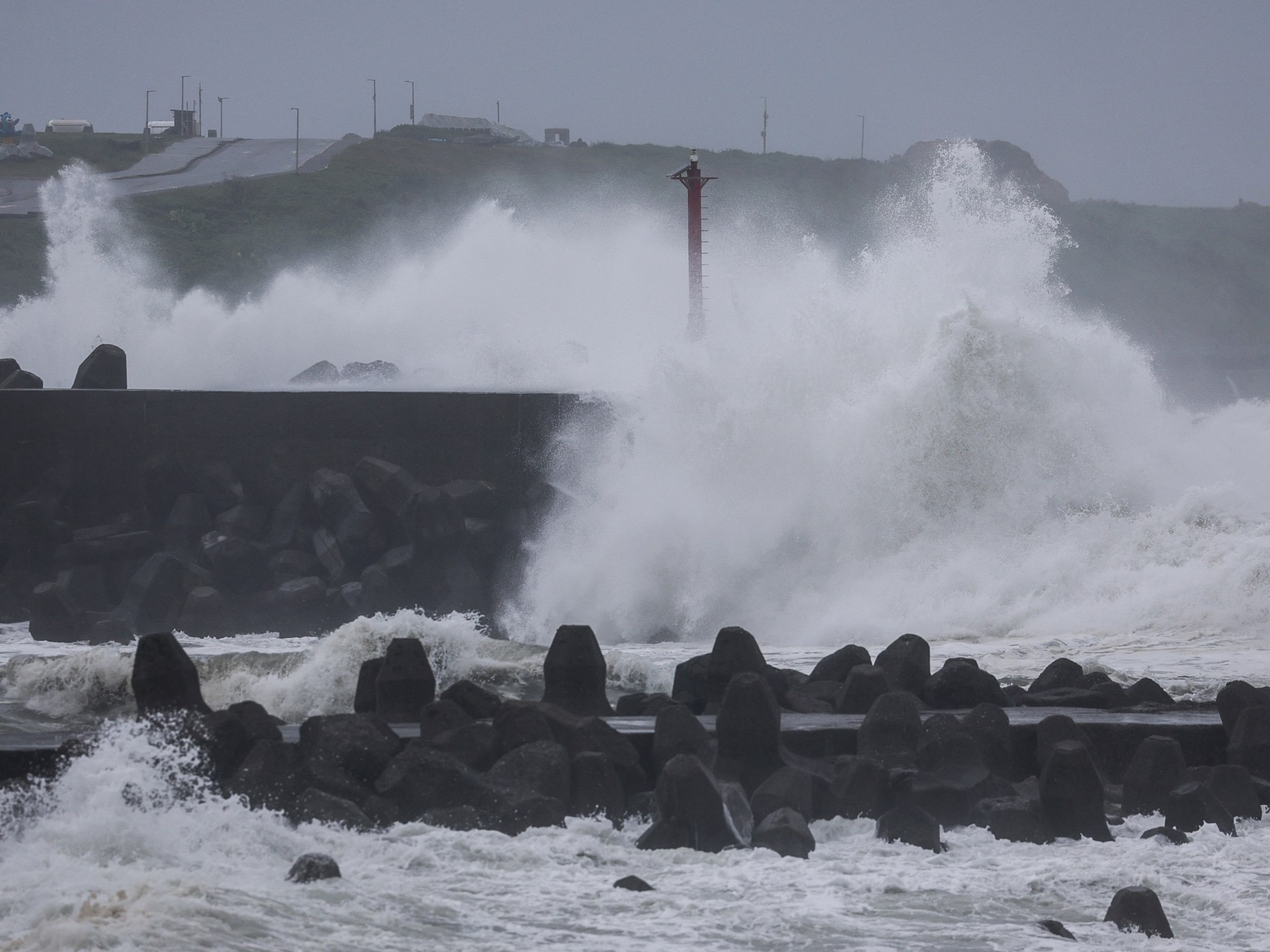

Typhoon Champi has struck Taiwan, killing one person and injuring at least 350 others, as authorities warned of “destructive winds” and instructed people to stay indoors.
The storm swept past the island’s northeast on Friday, toppling trees, shutting shops and schools, cutting power to thousands of households, and forcing more than 4,300 people to evacuate from their homes.
- list 1 of 3Restoring nature is key to a more resilient future
- list 2 of 3Southeast Asia’s haze crisis will persist until polluters pay
- list 3 of 3Almost all shallow-water coral reefs now face extinction risk, study warns
end of list
Champi is heading towards China and Japan, forcing the cancellation of hundreds of flights in the region.
“From tonight through tomorrow morning conditions will be very windy and stormy everywhere,” Central Weather Administration (CWA) forecaster Lin Ping-yu said in a briefing. “Please try to stay indoors.”
Champi was briefly a super typhoon with winds of nearly 300 kilometres per hour (186 miles per hour) but has since weakened. The US Joint Typhoon Warning Center reported maximum winds of 185km/h (115mph).
Worse is still expected to come on Saturday. Champi could drop up to 900mm (35 inches) of rain between Thursday and Saturday, with the northeast hit hardest, the CWA said. More than 400mm fell in Yilan County on Friday.
CWA forecaster Lu Kuo-chen said the typhoon could slow near the island’s northeastern tip, prolonging its impact.
About 8,400 households in Japan’s Okinawa islands were without power on Friday afternoon, according to the Okinawa Electric Power Company. Champi is forecast to hover near Okinawa and then China’s eastern coast before turning northeast towards mainland Japan.
Champi is the latest storm in a Pacific season supercharged by El Nino.
Advertisement
The United Nations said on Wednesday that El Nino, a natural cycle that warms the tropical Pacific, is heading off the charts.
“The current El Nino event could be unprecedented in strength. Literally off the monitoring charts that we have used for the past four decades,” said Celeste Saulo, secretary-general of the World Meteorological Organization.
It is expected to peak in December, with its impact lasting into 2027 and beyond.
Related News

Labour fends off the Green party in closely watched UK by-election
More than 250,000 displaced in Yemen since fighting escalated: UNHCR

Benjamin Netanyahu attacks Israel’s enemies and allies in UN speech