
ICJ decision draws closer
 14 October 2026
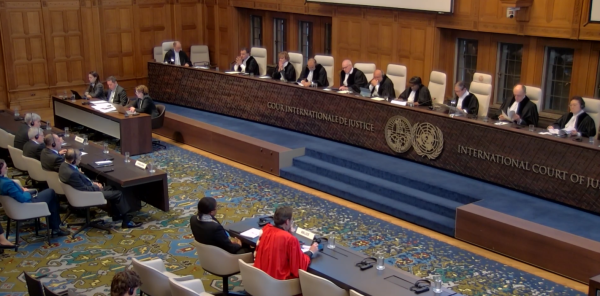

Oral hearings for Guatemala and Honduras cases fixed for February-March 2027
BELMOPAN, Thurs., Sept. 17, 2026
The registrar of the International Court of Justice (ICJ) today notified H.E. Assad Shoman, Belize’s Agent before the Court, that Belize’s two territorial cases have been scheduled for oral hearings 22 weeks from now, in February and March 2027.
In the case of Guatemala’s territorial, insular and maritime claim against Belize, hearings will open on Monday, February 22, from 10:00 a.m. to 1:00 p.m. at The Hague, and 3:00 p.m. to 6:00 p.m. Guatemala presents first, followed by Belize on Wednesday, February 24, during the same time slots. The second round of oral arguments is set for Thursday and Friday, from 3:00 p.m. to 6:00 p.m.
The oral hearings in the Sapodilla Cayes case which Belize brought against Honduras take place the following week. Belize presents first on Monday, March 1, from 3:00 p.m. to 6:00 p.m., with Honduras following on Tuesday. Guatemala, which was granted permission to intervene, will present oral observations on Wednesday between 11:30 a.m. and 1:00 p.m. The second round of oral arguments for Belize and Honduras is scheduled for Thursday and Friday in the same order and time slots.
The Belize-Guatemala dispute was submitted to the Court on June 7, 2019, after simultaneous referenda, under the terms of the Special Agreement signed on December 8, 2008. Written proceedings concluded in June 2023 when Belize filed its rejoinder—the second and final written pleading in response to Guatemala’s arguments.
Belize instituted proceedings against Honduras regarding sovereignty over the Sapodilla Cayes on November 16, 2022. Guatemala later applied to intervene, and after three days of oral hearings in November 2025, the Court granted permission.
Prime Minister John Briceño said today’s announcement gives him “a sense of excitement” now that the long-awaited moment is approaching. He added that the ICJ will be able to state clearly to both Guatemala and Honduras that “this land belongs to Belize, and we expect that it’s going to be kept intact the way it is.” He likened the feeling to learning that one is expecting a child, and said, “You’re so excited, but at the same time a bit apprehensive.”
Briceño emphasized the strength of Belize’s legal team, and noted the bipartisan collaboration behind it. “This is one issue that is not about party politics … when it comes to Belize, we stand together,” he said. Briceño highlighted the work of co‑agents Ambassador Assad Shoman and Alexis Rosado, senior counsel Senator Eamon Courtenay, and Opposition representative Michael Peyrefitte. He said Belize will ensure that the team has all necessary resources and will “fight every step of the way” to present the strongest oral arguments based on the written submissions.
Briceño also referenced a recent conversation with the president of Honduras, saying the Honduran leader affirmed that whatever the ICJ decides, “We’re going to respect it.”
Article 5 of the Special Agreement states: “The Parties shall accept the decision of the Court as final and binding, and undertake to comply with and implement it in full and in good faith. In particular, the Parties agree that, within three months of the date of the Judgment of the Court, they will agree on the composition and terms of reference of a [b]i-national [c]ommission to carry out the demarcation of their boundaries in accordance with the decision of the Court. If such agreement is not reached within three months, either Party may request the Secretary General of the Organization of American States to appoint the members of the Bi-national Commission and to prescribe its Terms of Reference, after due consultation with the Parties.”
Related News
Patient Safely Rescued From 14-Foot-Deep Cistern on St. Croix in Joint Emergency Response
Bryan Urges Trump Administration to Treat St. Croix Refinery as National Asset, Create Fed...
Man Dies After Collapsing Inside Frederiksted Post Office While Checking His Mail Sunday M...