Sons of Iran’s leader Ali Khamenei attend funeral, but Mojtaba is absent
 05 July 2026

Three sons of the former Iranian Supreme Leader Ali Khamenei have made a rare public appearance on the second day of his funeral, but there has still been no sign of his successor and other son, Mojtaba Khamenei.
Iranian TV showed Mostafa, Meysam and Masoud Khamenei praying behind coffins laid out in the vast courtyard of Imam Khomeini Grand Mosalla, a sprawling religious complex in Tehran.
- list 1 of 3Iran promotes message of continuity and revenge at Khamenei commemoration
- list 2 of 3Trump hints Israel’s Benjamin Netanyahu may visit US as early as next week
- list 3 of 3Turkiye’s Erdogan says Israel must not be able to ‘dynamite’ US-Iran deal
end of list
Among the remains on display were Ali Khamenei, his daughter, son-in-law, daughter-in-law, and 14-month-old granddaughter, all killed in an air strike on February 28, the opening day of the US-Israel war on Iran.
Mojtaba Khamenei’s absence from the mourning ceremonies is believed to be due to the dangers of Israeli threats to his life. He has not been seen or heard publicly since his appointment as supreme leader in March, a decision many analysts believe is for his safety.
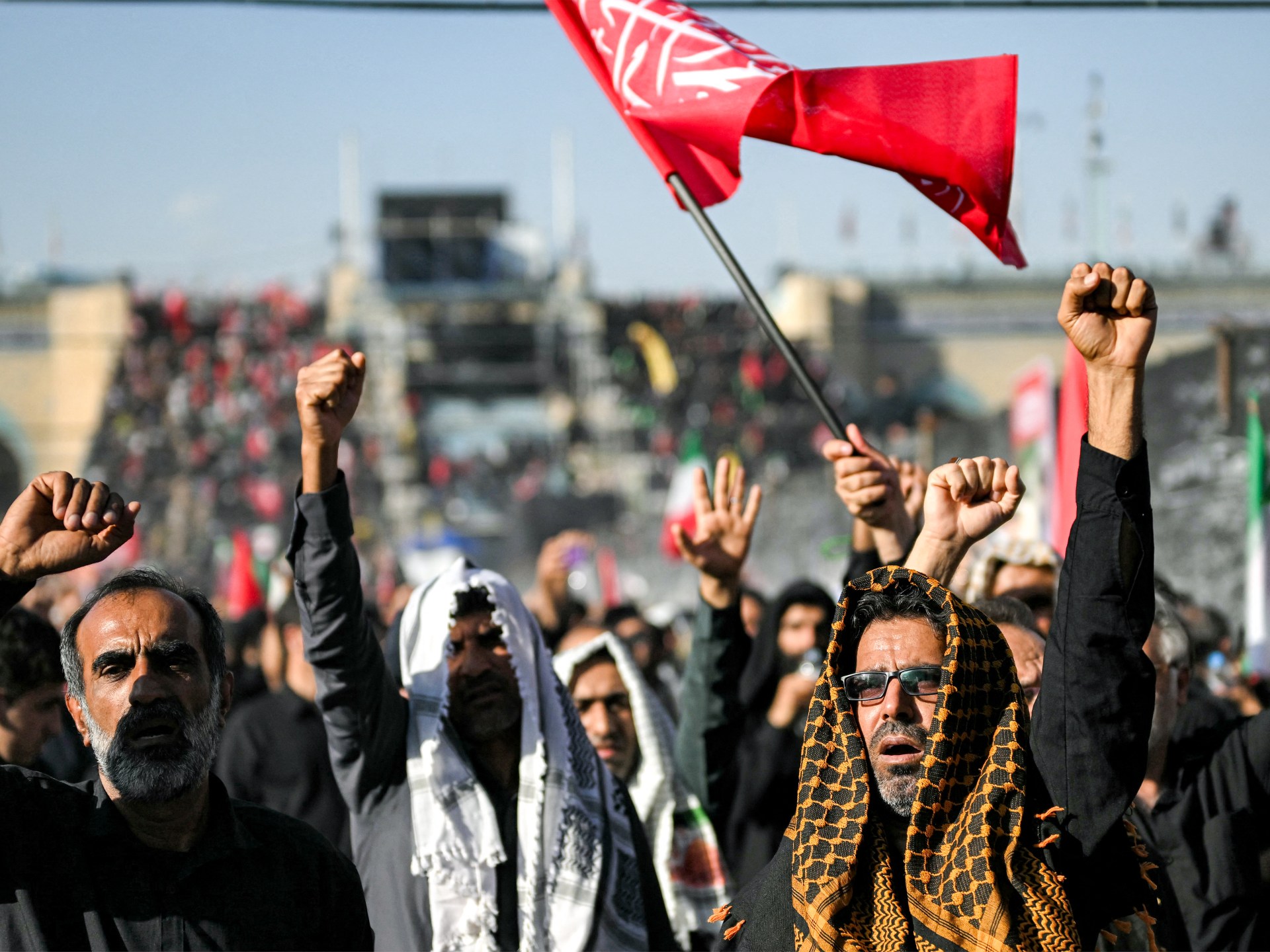
“Thousands and thousands of people are streaming through to pay their respects … they are carrying Iranian flags and also red flags symbolising a call for revenge,” Al Jazeera’s Tohid Asadi reported from Tehran.
“People are calling for revenge for the blood of the supreme leader. Chants of ‘Death to America’ and ‘Death to Israel’ are being heard among the public.”

In a display of public mourning and loyalty to the Islamic Republic, the government has launched a week-long series of funeral processions for the late supreme leader.
Advertisement
His body will go on a procession through prominent Shia holy sites in neighbouring Iraq, such as Karbala and Najaf, as well as Qom and Mashhad in Iran, where he will be buried.
“I came here to shout and seek revenge,” Gholamreza Sabooni, 29, who works in a grocery store, told AP news agency. “They killed our imam, we should kill their leader, [US President Donald] Trump.”
Following a private lying-in-state ceremony attended by senior Iranian officials and foreign dignitaries, Khamenei’s coffin was placed on public display outdoors on Saturday beneath a glass enclosure.
Iran’s highest-ranking political and military figures also attended the funeral ceremony, including President Masoud Pezeshkian, Parliament Speaker Mohammad Bagher Ghalibaf, and Quds Force commander Esmail Qaani.

The prayer ceremony attracted large crowds in Tehran amid heightened regional tensions and growing public demands for retaliation against the United States and Israel.
After what authorities are billing as a massive procession in central Tehran on Monday, there are plans to mobilise millions of people for large processions in the coming days, with the government offering transport, food and lodgings to the mourners.
Iran’s metro authority reported about seven million passenger journeys from late Saturday to Sunday morning.
“The general mood here is of immense mourning and also a moment of reflection,” said Al Jazeera’s Mahmoud Abdelwahed, reporting from Tehran. “Many people have turned up to show their solidarity, their consolidation with the establishment.”
Abdelwahed said that while some people were “hopeful this transition will bring about stability and security”, others were “bracing for another round of confrontation”.

Mostafa Khoshcheshm, a professor at the University of Applied Science and Technology in Tehran, says the message from Iranians attending the supreme leader’s funeral is unambiguous.
“I believe the message is very much clear: Iranians are not going to be fooled by talks or some kind of [memorandum of understanding]. They are awake. They know that the United States and Israeli animosity is not over,” Khoshcheshm told Al Jazeera.
Related News
US strikes Iran in response to drone strike on commercial ship
Lebanon discusses ‘de-confliction’ mechanism ahead of Israel talks
Trump blames Iran for ‘foolish’ strike on cargo ship in Strait of Hormuz