Belize hosts Regional Workshop for Strengthening Digital Resilience
 08 June 2026

BELIZE CITY, Thurs. June 4, 2026
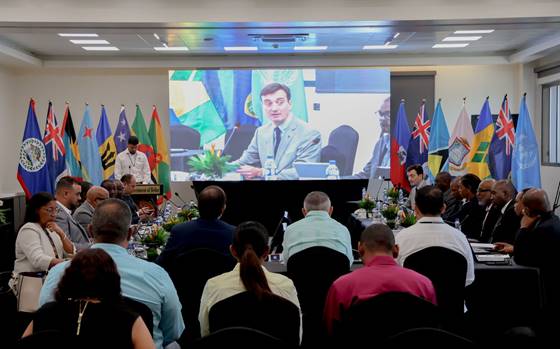
In the event of a natural disaster: hurricane, earthquake, or tsunami, would the Government of Belize be able to continue functioning, or recover in a matter of hours after a traumatic event, such as a man-made cyber-attack? It’s a scenario that the Government of Belize and the Ministry of e-Governance are preparing for, and this week, representatives from 13 Caribbean countries gathered in Belize City for the Regional Workshop on Strengthening Digital Resilience, a first-of-its-kind event aimed at improving data security, cybersecurity, and government continuity across the region. The two-day workshop, held from June 2-3 at the Grand Resort and Residences, brought together policymakers, technical experts, and international partners, including the Economic Commission for Latin America and the Caribbean (ECLAC) and the European Union (EU), to discuss strategies for safeguarding critical government data, and ensuring the continuity of public services during times of crisis.
The goal is to compile a copy of all vital government data: tax and financial records, land records, court records, births and death records, health information and license records for motorists, fishermen, loggers and all other industries, in encrypted format on external computer servers in a friendly host country. The concept was pioneered through the Estonia-Luxembourg Data Embassy Agreement, whereby a country retains full, sovereign jurisdiction over encrypted copies of its critical government data on servers in a partner state.
“For Belize, this vision is guided by the national digital agenda 2026-2030 that has just been endorsed by the Cabinet about two weeks ago,” Prime Minister Hon. John Briceño declared at the official opening on Wednesday morning. The agenda “sets a clear direction to modernize governance, strengthen economic competitiveness and enhance public service delivery, ensuring inclusive participation in the digital age,” he said.

The opening day focused on the technical foundations of digital resilience, including data protection, cybersecurity, infrastructure requirements, and governance frameworks designed to strengthen national systems against disruptions. The discussions are particularly relevant for Caribbean nations, which remain vulnerable to natural disasters that can impact both physical and digital infrastructure.
A major focus of the workshop was the Data Embassy model, an emerging approach that allows countries to securely store encrypted copies of critical government data in partner nations, while maintaining full sovereignty over that information. The model is viewed as a means of ensuring that essential government services can continue operating in the event of a disaster or other major disruption.
“A ‘data embassy’ is a sovereign extension of national digital infrastructure, hosted in trusted jurisdictions and showing that critical data remains protected under national law, even beyond the physical boundaries or our physical borders. Through data embassies, governments can maintain jurisdiction, and additional control, enforce data governance and ensure uninterrupted operations during a crisis,” Briceño affirmed.
Chief Executive Officer in the Ministry of E-Governance, José Urbina said the discussions are critical, as countries seek to strengthen both data sovereignty and resilience.
“Data sovereignty is very important for us as a country and as a region,” Urbina noted. “We’re also having these discussions to realize what [are] the requirements for us to strengthen our data sovereignty, and also to add the resiliency part of it: where should we store data, and how data should be stored within friendly countries using our embassies to ensure that we have that data resiliency in cases of natural disasters that may happen,” he emphasized.
Demetris Herakleous of the United Nations Economic Commission for Latin America and the Caribbean (ECLAC) described the historical precedents for the concept. In 1807, Portugal shipped its government archives and 15,000 people to Rio de Janeiro to continue functioning when Napoleon marched on Lisbon. During WWII, the governments of Norway, Poland, Belgium, the Netherlands, Luxemburg, all moved their state records and operated from London in exile during the Nazi occupation, and returned safely home in 1945. Many Caribbean island nations have also been the victims of cyber-attacks, and Climate Change has rendered the entire region more vulnerable to increasingly violent storms and hurricanes.
ECLAC’s Tira Greene discussed how a “data embassy” could become an instrument of resilience and the legal and governance issues to ensure digital sovereignty; how the embassies would align with international data protection regimes and standards, including emerging Al standards, protections based on treaties and jurisdiction, and other issues for host countries: immunities, access rights, dispute resolution, and national vs regional oversight of governance.
Participants also examined the role of data centers, legal frameworks, institutional arrangements, and international best practices that could be adapted to the Caribbean context. Discussions further explored the policy measures governments can implement to improve cybersecurity and expand national data storage capabilities. Discussions centered on political commitment, strategic partnerships, and collective approaches to protecting data sovereignty throughout the Caribbean. Officials also reviewed and signed the Declaration of Belize City, a document intended to reinforce regional cooperation and a shared commitment to advancing digital resilience. The workshop concluded with a high-level policy dialogue involving regional leaders and senior government officials.
BELIZE CITY, Thurs. June 4, 2026
In the event of a natural disaster: hurricane, earthquake, or tsunami, would the Government of Belize be able to continue functioning, or recover in a matter of hours after a traumatic event, such as a man-made cyber-attack? It’s a scenario that the Government of Belize and the Ministry of e-Governance are preparing for, and this week, representatives from 13 Caribbean countries gathered in Belize City for the Regional Workshop on Strengthening Digital Resilience, a first-of-its-kind event aimed at improving data security, cybersecurity, and government continuity across the region. The two-day workshop, held from June 2-3 at the Grand Resort and Residences, brought together policymakers, technical experts, and international partners, including the Economic Commission for Latin America and the Caribbean (ECLAC) and the European Union (EU), to discuss strategies for safeguarding critical government data, and ensuring the continuity of public services during times of crisis.
The goal is to compile a copy of all vital government data: tax and financial records, land records, court records, births and death records, health information and license records for motorists, fishermen, loggers and all other industries, in encrypted format on external computer servers in a friendly host country. The concept was pioneered through the Estonia-Luxembourg Data Embassy Agreement, whereby a country retains full, sovereign jurisdiction over encrypted copies of its critical government data on servers in a partner state.
“For Belize, this vision is guided by the national digital agenda 2026-2030 that has just been endorsed by the Cabinet about two weeks ago,” Prime Minister Hon. John Briceño declared at the official opening on Wednesday morning. The agenda “sets a clear direction to modernize governance, strengthen economic competitiveness and enhance public service delivery, ensuring inclusive participation in the digital age,” he said.
The opening day focused on the technical foundations of digital resilience, including data protection, cybersecurity, infrastructure requirements, and governance frameworks designed to strengthen national systems against disruptions. The discussions are particularly relevant for Caribbean nations, which remain vulnerable to natural disasters that can impact both physical and digital infrastructure.
A major focus of the workshop was the Data Embassy model, an emerging approach that allows countries to securely store encrypted copies of critical government data in partner nations, while maintaining full sovereignty over that information. The model is viewed as a means of ensuring that essential government services can continue operating in the event of a disaster or other major disruption.
“A ‘data embassy’ is a sovereign extension of national digital infrastructure, hosted in trusted jurisdictions and showing that critical data remains protected under national law, even beyond the physical boundaries or our physical borders. Through data embassies, governments can maintain jurisdiction, and additional control, enforce data governance and ensure uninterrupted operations during a crisis,” Briceño affirmed.
Chief Executive Officer in the Ministry of E-Governance, José Urbina said the discussions are critical, as countries seek to strengthen both data sovereignty and resilience.
“Data sovereignty is very important for us as a country and as a region,” Urbina noted. “We’re also having these discussions to realize what [are] the requirements for us to strengthen our data sovereignty, and also to add the resiliency part of it: where should we store data, and how data should be stored within friendly countries using our embassies to ensure that we have that data resiliency in cases of natural disasters that may happen,” he emphasized.
Demetris Herakleous of the United Nations Economic Commission for Latin America and the Caribbean (ECLAC) described the historical precedents for the concept. In 1807, Portugal shipped its government archives and 15,000 people to Rio de Janeiro to continue functioning when Napoleon marched on Lisbon. During WWII, the governments of Norway, Poland, Belgium, the Netherlands, Luxemburg, all moved their state records and operated from London in exile during the Nazi occupation, and returned safely home in 1945. Many Caribbean island nations have also been the victims of cyber-attacks, and Climate Change has rendered the entire region more vulnerable to increasingly violent storms and hurricanes.
ECLAC’s Tira Greene discussed how a “data embassy” could become an instrument of resilience and the legal and governance issues to ensure digital sovereignty; how the embassies would align with international data protection regimes and standards, including emerging Al standards, protections based on treaties and jurisdiction, and other issues for host countries: immunities, access rights, dispute resolution, and national vs regional oversight of governance.
Participants also examined the role of data centers, legal frameworks, institutional arrangements, and international best practices that could be adapted to the Caribbean context. Discussions further explored the policy measures governments can implement to improve cybersecurity and expand national data storage capabilities. Discussions centered on political commitment, strategic partnerships, and collective approaches to protecting data sovereignty throughout the Caribbean. Officials also reviewed and signed the Declaration of Belize City, a document intended to reinforce regional cooperation and a shared commitment to advancing digital resilience. The workshop concluded with a high-level policy dialogue involving regional leaders and senior government officials.
Related News
Parking and Traffic Restrictions Set for Christiansted PRIDE Parade and Frederiksted Women...
Waste Management Increases Enforcement at Bin Sites as Illegal Dumping Fines Can Reach $1,000

Graduation Highlights