
Fuel price pressure! PM: “Everyone is…taking a hit.”
 08 June 2026
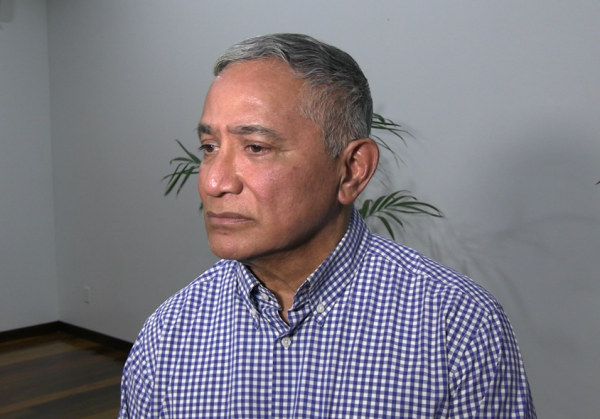

Pressure mounts on government for broader fuel price relief; PM calls Chamber’s request “embarrassing”.
BELIZE CITY, Wed. June 3, 2026
One of the earliest and most urgent calls for fuel tax relief came to a head in April this year. That’s when government officials were forced into negotiations with independent bus operators under the Belize Bus Association (BBA). Their operational costs had spiked sharply after an unprecedented increase of $2.50 in the price of diesel on March 25. By March 30, the BBA had formally requested fuel tax relief.

At the beginning of May, after weeks of engagement and threats of strike as well as a blockade at Tower Hill on April 27, a three-month fuel subsidy and minimal increase in bus fares was agreed.
The Opposition United Democratic Party has long been pressing the People’s United Party Administration to ease the cost of fuel on Belizeans. Now, the Belize Chamber of Commerce and Industry (BCCI) has added its voice to the call.
On April 21, Chamber president Giacomo Sanchez wrote Prime Minister John Briceño requesting greater transparency in how pump prices are determined, and called for the publication of full price structures. The Chamber said it wanted to see for itself the detailed breakdown for excise tax, GST, environmental taxes, commercial margins, landed cost and any other factors.
During the Barrow Administration, every price increase at the pumps was accompanied by a public notice, but those disclosures were eventually discontinued after the Briceño Administration took office in November 2020.
Since the U.S./Iran war started on February 28, 2026, and fuel prices began climbing soon after, the media has repeatedly pressed the Prime Minister about the introduction of fuel price relief measures. In April, PM Briceño revealed that the government had already been reducing its fuel tax-take by capping the excise tax. He said this amounted to a revenue loss to government of $60 million or $4.7 million per month.
On April 27, in a 12-minute pre-recorded statement, the PM reported that the excise tax was cut by $0.68 for regular gasoline and $1.55 for diesel. He added that if the acquisition costs continued to increase, Cabinet would consider further adjustments, including cost-saving measures. By then, he said, the government had already agreed to defer $30 million in capital expenditure programmed for the current fiscal year, and had cut $25 million from goods and services allocated across all ministries and departments. Cabinet also committed to tightening expenditure by significantly reducing local and foreign travel. It also committed to assess budget performance to determine additional measures, if needed.
Dissatisfied with the limited figures the PM shared, the demand grew for a full breakdown of fuel acquisition costs and pump-price components. On May 21, the Financial Secretary released detailed data covering the period January 8 to May 20.
During that time, the landed cost of fuel more than doubled. Regular gasoline landed at our ports rose from $4.62 to $9.39, while diesel increased from $5.44 to $10.11 over the same period.
In January, the government’s tax take for regular gasoline was $4.79 per gallon, contributing to a total pump price of $10.86 – the remaining $1.44 representing the commercial margin. By May 20, the tax-take on regular had fallen to $3.81 – a reduction of $0.98. For diesel, government collected $4.39 per gallon in January, compared to $3.23 on May 20, a decrease of $1.25 per gallon.
Notably, the official figures show that government made a slight reduction to its tax take in January, then held it steady as prices began inching upward.
Based on those figures, the Chamber wrote the Prime Minister again on May 27, noting precisely that “excise duties in absolute dollar terms appear to have remained within a relatively consistent range despite fluctuations in global fuel prices.” The Chamber concluded that, “In practical terms, this has limited the extent to which reductions in international prices translate into relief at the pump for consumers and businesses.”
As a result, the Chamber urged the government to consider additional temporary relief measures for the productive sector and wider public, “particularly given the continued impact of transportation and energy costs on inflation, operating expenses, and overall economic activity.” It suggested further reductions in excise duties or other targeted fiscal interventions “to provide more meaningful pass-through relief in domestic pump prices.”
When Amandala asked the Prime Minister for his response to the Chamber’s request, he dismissed it as “embarrassing.” According to Briceño, the Chamber misunderstands Government’s revenue collection. He said that whether taxes are collected through excise, GST, import duty or environmental tax, it all comes from the same overall revenue pool. Reducing one tax, he said, simply reduces the total available funds, regardless of which category it comes from.
In May, the Government also unilaterally reduced the commercial margin for fuel dealers, despite a 2004 agreement that both sides would approve any changes in writing. The PM had previously explained that back in 2004, the fuel prices were far lower, and that everyone is now taking a hit, and so must the dealers, especially when the prices keep going up. He stated today, “It’s like with the unions during COVID … we had to appeal with them to accept a salary cut, because everyone was going through a difficult time.” He appealed to the dealers for common sense to prevail. There were reports that dealers wanted to protest the unilateral cut, and the PM reported that they asked to meet with him, but he said he has left the matter in the hands of the Financial Secretary.
Related News
Districtwide Outage Gives Way to Load Shedding as WAPA Battles Generation Instability Into...
Gov't Offices in St. Thomas-St. John to Open at Noon as WAPA Reports Restart Delay at Wart...
VI National Guard Exits Federal Oversight After Six Years of Transformation