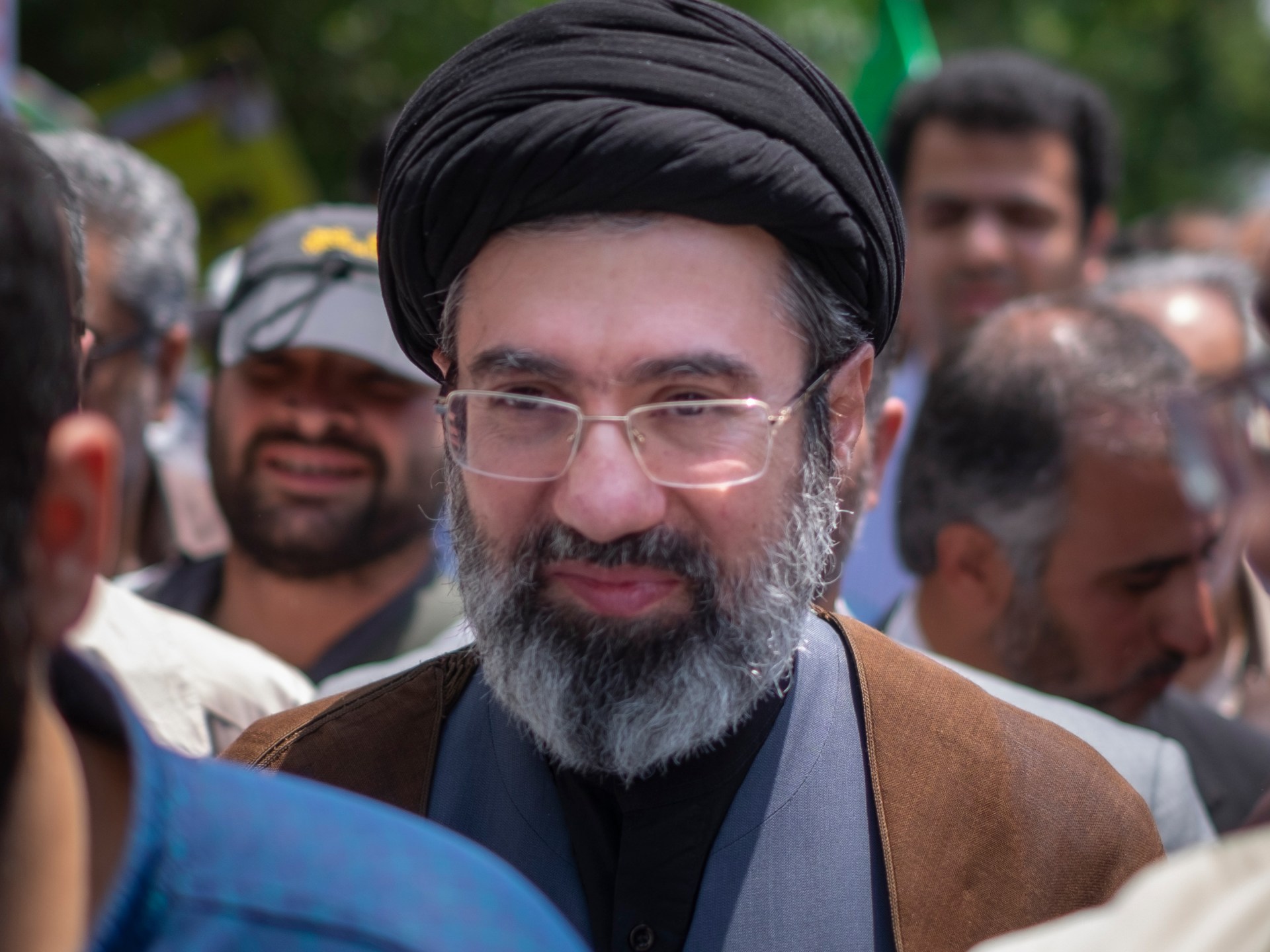
Xi Jinping’s anticorruption drive sweeps up senior Chinese military chiefs
 17 March 2026
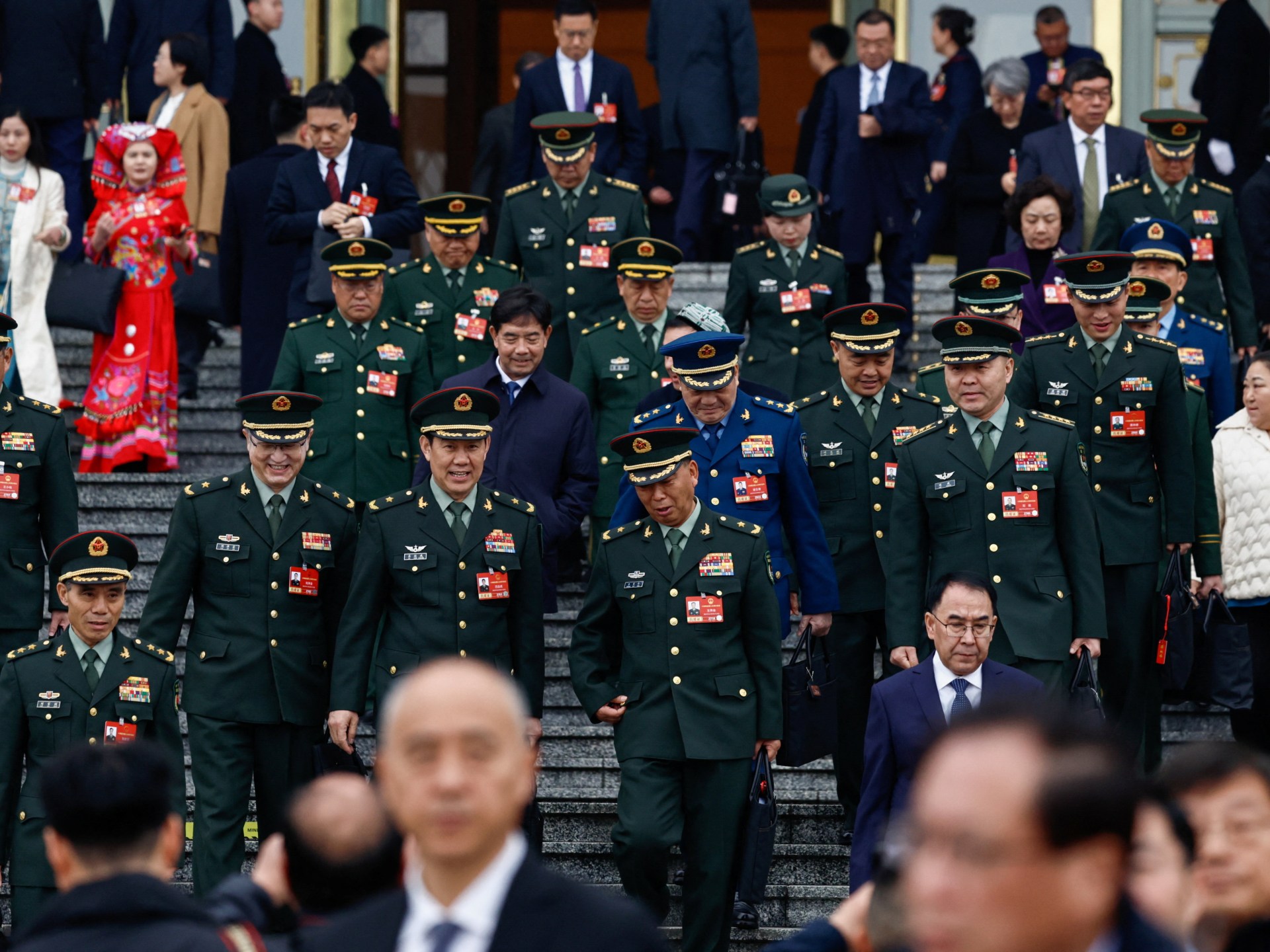

Taipei, Taiwan – As thousands of Chinese government officials gathered in Beijing for China’s annual legislative meetings known as the “two sessions” this month, at least a dozen active and retired military officers were absent from the proceedings.
Among the absentees was General Zhang Youxia, who has been under investigation since late January for “suspected serious violations of discipline and law”, according to China’s state Xinhua news agency.
- list 1 of 4‘No popular support’: China warns against government change in Iran
- list 2 of 4In a bid to counter China, Trump hosts a summit for Latin America leaders
- list 3 of 4How will soaring oil prices caused by Iran war impact food costs?
- list 4 of 4Geopolitical analysis of the imposed war against Iran
end of list
Zhang is one of the highest-ranking officials to be caught up in a wider anticorruption sweep that has become a hallmark of Xi Jinping’s long tenure as president and chairman of the Chinese Communist Party.
Xi launched the initiative shortly after rising to power in 2012, setting off an “unprecedented anticorruption storm” that targeted “both high-flying ‘tigers’ and lower-level ‘flies'” across China’s state, military, and Communist Party apparatus, according to a Xinhua report last year.
Recent government reports indicate that Xi has embarked on a renewed sweep through the military leadership of the People’s Liberation Army (PLA), according to Chieh Chung, an adjunct associate research fellow at Taiwan’s Institute for National Defense and Security Research. This time, Xi’s net appears to be even wider, he said.
It now includes operational commanders in addition to members of China’s Central Military Commission and military functional institutions, political commissars, and commanders across the PLA’s five military theatres and various military branches, he said.
Advertisement
Strengthening the PLA in advance of its anniversary
According to China’s official military newspaper last month, corruption remains a priority for President Xi.
“Corruption is the biggest cancer eroding combat effectiveness. The more thoroughly we eliminate hidden dangers, the more promising the century-long battle against corruption will be,” the paper read, according to an English translation.
The PLA’s latest work report – released during the two sessions – placed the fight against corruption as equal to other goals like “political rectification” and ensuring loyalty.
The anticorruption drive comes as the PLA prepares to mark its 100th anniversary in August 2027, when it will take stock of its decades-long modernisation campaign.
Tristan Tang, a non-resident Vasey Fellow at the Honolulu-based Pacific Forum research institute, told Al Jazeera that Zhang and other military targets reflect Xi’s long-running dissatisfaction with management of the armed forces.
The Chinese leader renewed his focus on the military between 2016 and 2017, according to Tang. The more recent removals should be seen as an extension of that campaign, he said.
“My interpretation is that the leadership has discovered longstanding problems in the PLA’s personnel system. That may explain why a large number of generals and admirals have been removed or investigated while many positions remain unfilled – because officers across the system, possibly even senior colonels, are undergoing re-evaluation and investigation,” Tang told Al Jazeera.
“As a result, when a unit commander is purged, it does not necessarily mean there was a problem within that unit; the issue may stem from actions taken in a previous post,” he said.

‘Missing or potentially purged’
Zhang and his ally General Liu Zhenli have been two of the most high-profile cases to date, but dozens of officials have been removed in recent years.
According to one estimate from the US-based CSIS China Power Project, about 100 senior officers in the PLA have been “purged or potentially purged” since 2022.
The list includes 36 generals and lieutenant generals, according to a late February report, and 65 officers who are “missing or potentially purged” based on their absence from important meetings.
While corruption has been cited as the official reason in many cases, security experts across East Asia have been trying to assess what it could mean for one of the world’s most powerful militaries.
Advertisement
Zhang and Liu, who were removed around the same time, are members of China’s powerful Central Military Commission, where Xi has cleaned house over the past year, according to Kunihiko Miyake, a former Japanese diplomat and research director of the Tokyo-based Canon Institute of Global Studies.
“Roughly speaking, since last year, several senior officials of the Chinese Central Military Commission have been ousted, and of the seven members, only two remain, including President Xi Jinping,” Miyake wrote, according to an English translation.
“This is an extraordinary situation on the same level as the loss or absence of the Chief of Staff of the Joint Staff and the Commander in Chief of Joint Operations in Japan, or the Chairman of the Joint Chiefs of Staff and the Commander in Chief of the Indo-Pacific Command in the United States,” he said.
In-Bum Chun, a retired South Korean lieutenant general, told Al Jazeera that the changes raise questions about the overall “internal health” of the military.
“If the dismissals are primarily anticorruption measures, they may indicate deeper institutional problems within the system. If they are primarily political, they may reflect concerns in Beijing about loyalty at senior levels,” Chun said.
“In either case, frequent leadership disruptions can create uncertainty within any military organisation. While it may strengthen central political control, it can also affect morale and internal trust among officers,” he continued.
China’s ‘growing determination’ towards Taiwan
The shake-up in PLA leadership has been closely watched in Taiwan and raised questions about China’s intentions.
China has promised to annex Taiwan, a 23-million-person democracy, by peace or by force. The United States has separately pledged to help Taiwan defend itself under the 1979 Taiwan Relations Act, although it has not committed troops.
By one often-repeated estimate from retired US Admiral Philip Davidson, the PLA will be capable of launching a military campaign against Taiwan by 2027.
William Yang, senior analyst for Northeast Asia at the Crisis Group, said China’s latest Government Work Report, released last week at the National People’s Congress in Beijing, indicates that annexing Taiwan remains a top priority.
The report shows “Beijing’s growing confidence in the overall trend of cross-strait dynamics, which it believes is trending in its favour, and also reflects its growing determination to accelerate preparation for unification, including through more coercive means, in the coming years,” he told Al Jazeera.

Security experts told Al Jazeera the leadership shake-ups do not appear to have affected China’s military operations around Taiwan, although, they cautioned, they are still assessing the fallout.
The PLA’s Eastern Theater Command carried out the “Justice Mission 2025” military exercises around Taiwan in late December 2025, around the time that Zhang and others were under investigation or already removed, according to Alexander Huang, chairman of the Council of Strategic and Wargaming Studies in Taipei.
Advertisement
“This suggests that the PLA’s training and exercise system has not been significantly disrupted,” he said.
PLA “joint combat readiness patrols” have also continued into 2026, as well as “grey zone activities” intended to intimidate Taiwan or test its military resources.
Related News
Trump says US does not need United Kingdom aircraft carriers for Iran war
Aftermath in Iran of US and Israeli air strikes
India releases Ladakh activist Sonam Wangchuk after six months in jail