VI repped at climate workshop
 22 March 2026
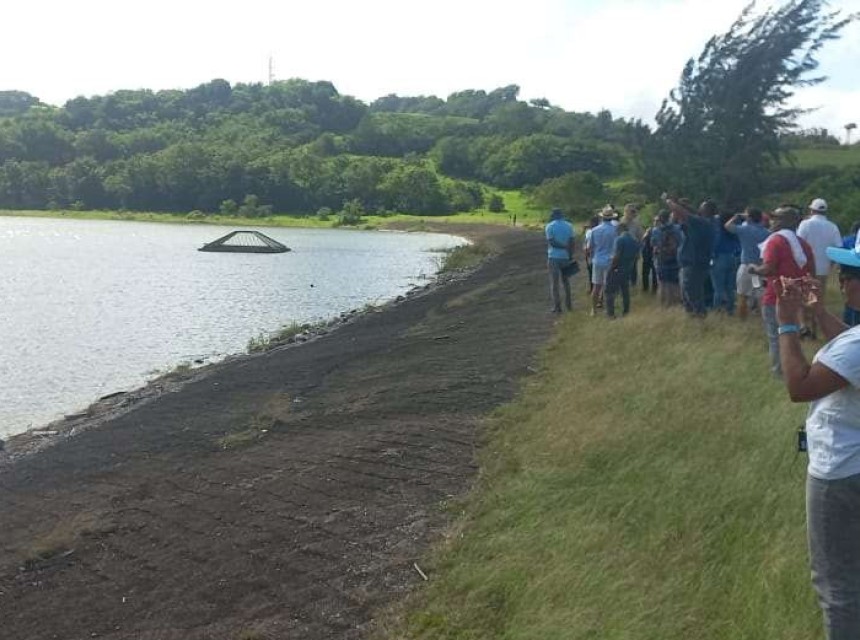

A Virgin Islands delegation travelled to Barbados last month to participate in a regional workshop focused on strengthening water systems against the growing threats of climate change.
The event, which was held in Bridgetown from Feb. 9-13, brought together technical specialists, policymakers and water-resource managers from across the Caribbean, according to government.
Representing the territory were Atoya George from the Ministry of Environment, Natural Resources and Climate Change and Dillon Robin from the Ministry of Communications and Works.
The delegates attended technical sessions covering climate-risk assessment for water infrastructure, water-resources management, and enhanced sharing of data and other information, government stated.
Ronald Smith-Berkeley, the environment ministry’s permanent secretary, said the workshop aligned with government’s broader approach to climate-change adaptation.
“Water security is one of the most critical challenges facing small island states like the Virgin Islands,” he said. “Climate change is altering rainfall patterns and increasing the intensity of storms. The knowledge gained from this workshop will directly inform national planning, infrastructure development and community awareness initiatives.”
Strategies and tools
During the workshop, the participants discussed strategies, practical tools, financing mechanisms and policy frameworks aimed at improving water systems’ resilience to climate-related hazards, according to government.
Sessions included technical training, case-study reviews and planning exercises focused on adapting to increasing rainfall variability, prolonged droughts and extreme weather events such as hurricanes.
The VI delegation also shared the territory’s experiences, including its heavy reliance on desalination and rainwater harvesting and its vulnerability to storm damage, flooding and sargassum seaweed influx.
In considering solutions, participants reviewed best practices in areas such as water conservation, leakage reduction and climate-resilient infrastructure design, according to government.
Protecting infrastructure
MCW Permanent Secretary Elvia Smith-Maduro said the workshop also offered practical guidance for protecting critical infrastructure.
“The training provided important insights into designing and protecting water systems, including storage tanks, pipelines and desalination facilities,” she said. “These lessons will assist the territory in strengthening its water infrastructure network standards and reducing service disruptions following extreme weather events.”
Officials said information gathered at the workshop will also help inform ongoing work to update the territory’s 2012 Climate Change Adaptation Policy.
19 OCTs
The workshop included representatives from 19 overseas countries and territories.
It was organised by the Green Overseas Programme, which is funded by the European Union and implemented by Expertise France.
The programme is designed to foster sustainable development across European and British overseas countries and territories, with a focus on climate resilience and energy transition, according to government.