Venezuela’s Delcy Rodriguez heads to The Hague for land dispute case
 09 May 2026
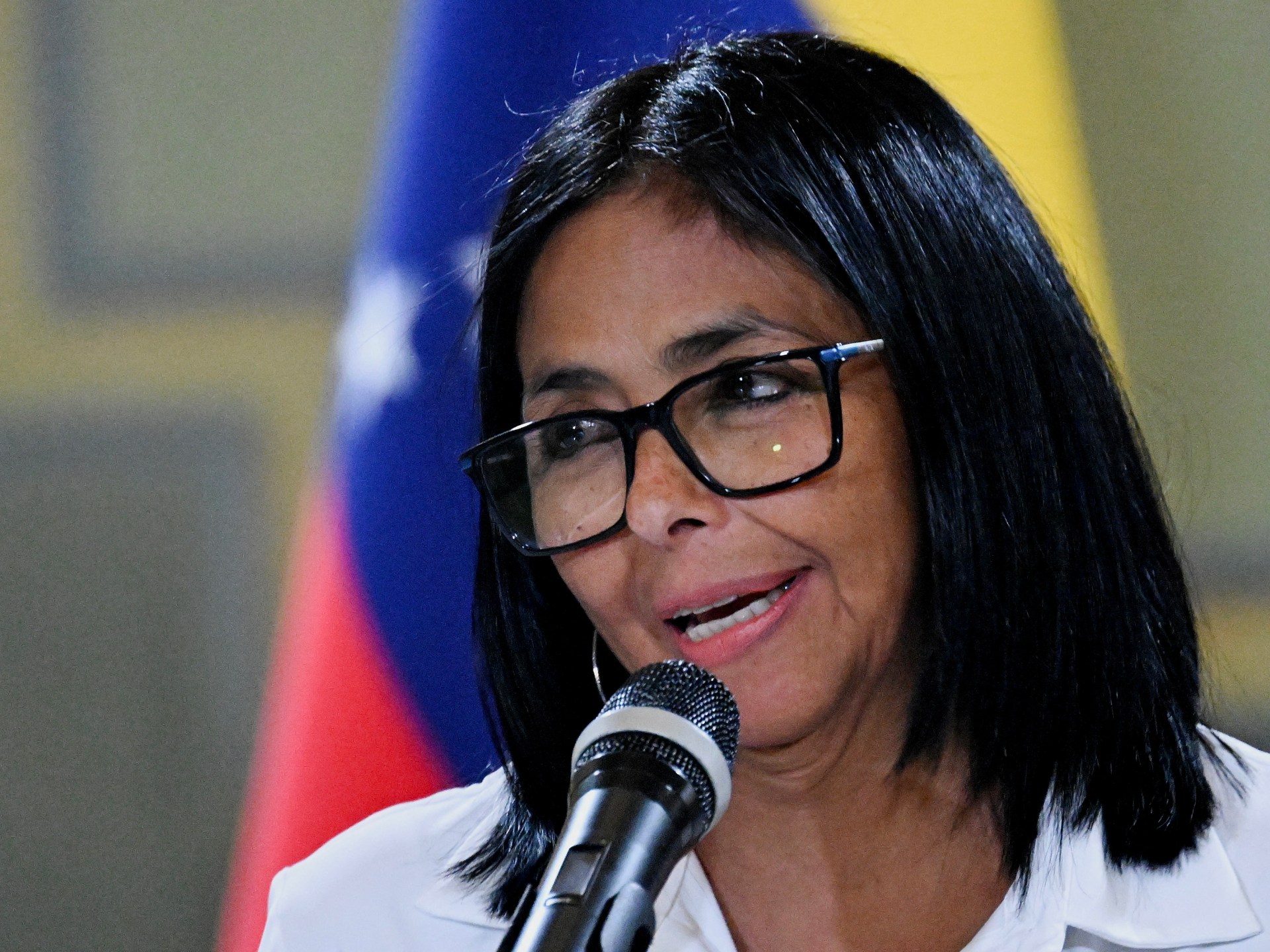

Venezuela’s acting President Delcy Rodriguez is heading to The Hague for a land dispute case with Guyana at the International Court of Justice (ICJ).
The trip to the Netherlands announced on Saturday will be the first time she’s left home since the abduction of President Nicolas Maduro by US forces in January.
- list 1 of 3Petro becomes first president to visit Venezuela since Maduro abduction
- list 2 of 3US to allow Venezuelan government to cover Maduro’s lawyer fees
- list 3 of 3US Senate blocks bid to stop Trump using military against Cuba
end of list
“It has fallen to me to travel in the coming hours to defend our homeland,” Rodriguez said in a televised speech.
The United Nations’ top civil court in The Hague has already been hearing arguments in the Venezuela-Guyana case, which relates to a centuries-old dispute over the oil-rich Essequibo region.
Venezuela claims the territory, currently administered by Guyana. The sprawling region bordering eastern Venezuela accounts for two-thirds of Guyana’s current territory.
The discovery by ExxonMobil of offshore oil deposits in Essequibo gave Guyana – with a population of less than a million – the largest per capita crude oil reserves in the world.
The case focuses on whether the current border, established between the two countries in 1899 under British colonial rule should remain valid, or if the border should be drawn in accordance with a later document from 1966 signed before Guyana gained its independence.
Rodriguez, who was Maduro’s vice president when he was captured and flown to the United States to stand trial, had long been under US sanctions. They were lifted when she became acting president. Regardless, officials attending ICJ proceedings are typically granted special legal protections.
Rodriguez, a supporter of Maduro’s Chavismo movement, has remained compliant to a list of US demands, including stopping oil deliveries to Cuba, opening Venezuela’s state-owned oil industry to foreign companies and releasing political prisoners.
Advertisement
At the same time, she has sought to strike a careful balance with Venezuela’s influential internal security apparatus and military.
Despite saying she was invited to the US by the Trump administration, she has so far not made the trip. But has visited the nearby Caribbean islands of Grenada and Barbados.
Related News
‘Starmer’s referendum’: How local elections could expose a fractured UK
Explosions heard in Iran as state media reports clashes with US Navy

Sudan blames Ethiopia, UAE for recent drone attacks: What we know