
Trump’s Iran War and Volatile Threats Fuel Impeachment Push and Growing 25th Amendment Calls
 08 April 2026
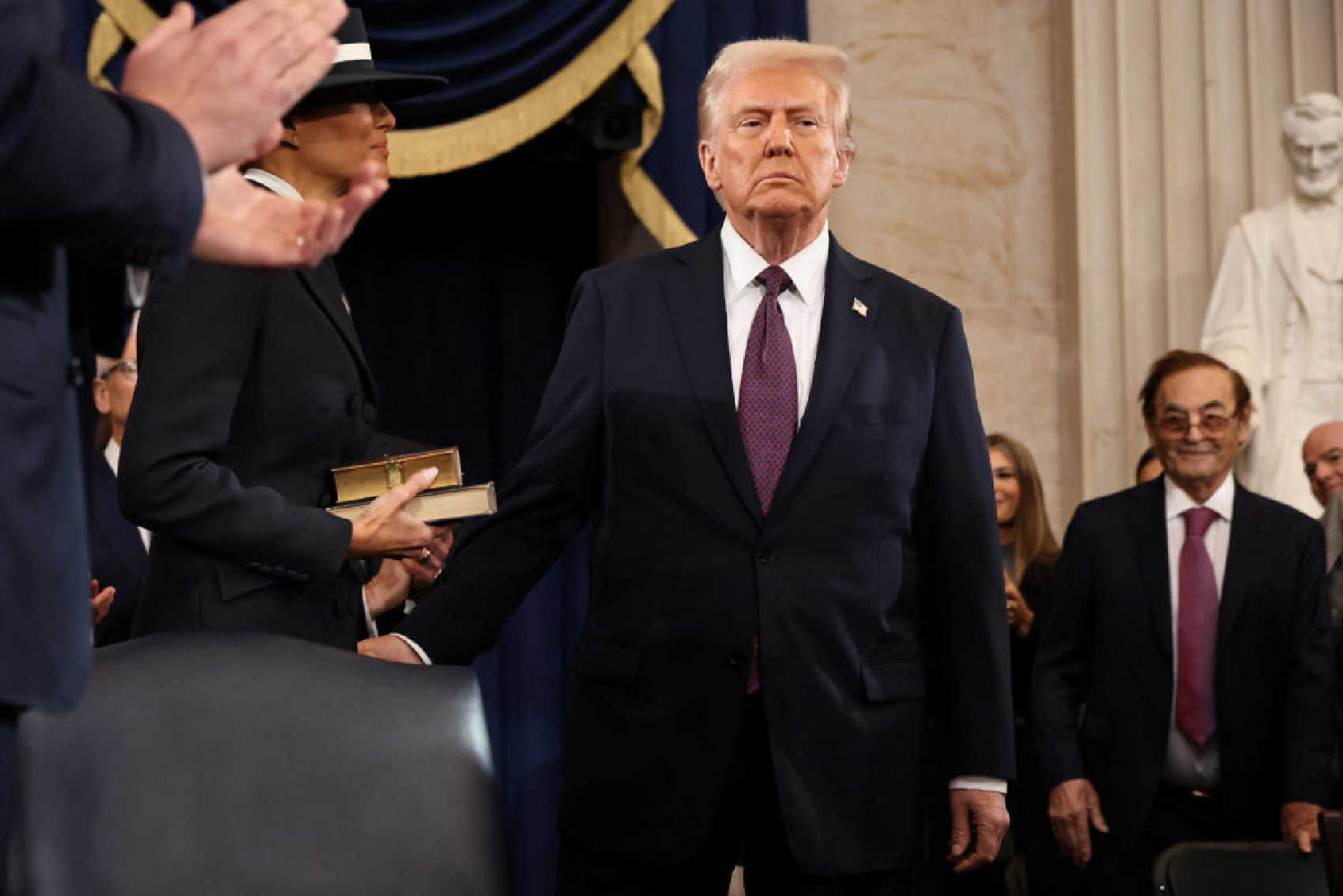

The impeachment effort now taking shape against President Donald Trump is being driven first and foremost by his conduct in the Iran war, with lawmakers and critics arguing that his threats, military actions, and increasingly volatile rhetoric have crossed a line from controversial policy into dangerous unfitness for office. That same concern is also fueling growing calls for the 25th Amendment to be invoked, with Connecticut Congressman John Larson saying Trump has become too unstable to continue carrying out the duties of the presidency. Larson filed articles of impeachment on Tuesday and, in a statement issued the same day, also urged members of Trump’s Cabinet to act. “They have an obligation to put patriotism over politics and invoke the 25th Amendment,” Larson said.

Larson’s filing came after Trump’s recent rhetoric on Iran, including threats that drew widespread alarm in Washington and beyond. In his statement, Larson said Trump’s “illegal war in Iran” has already cost American lives and put the nation’s safety and economy at risk. He also pointed directly to Trump’s “profane and sacrilegious Easter Sunday and subsequent threats,” including the warnings that “a whole civilization will die” and “open the Strait…or you’ll be living in hell,” saying those remarks not only foreshadowed war crimes but heightened the case for Trump’s removal.
The push for removal is not limited to Larson. Connecticut Public reported that Larson has joined what it described as a growing chorus of Democratic lawmakers calling for Trump’s removal through the 25th Amendment, including Senator Chris Murphy. Politifact also reported that Murphy, along with Representatives Yassamin Ansari and Melanie Stansbury, publicly raised the possibility of invoking the amendment after Trump’s Truth Social threats related to Iran. TIME separately reported that the calls gained traction as lawmakers reacted to Trump’s decision to join Israel in bombing Iran on Feb. 28 and to his subsequent statements about further destruction.
Against that backdrop, Larson’s impeachment filing argues that Trump’s behavior is not just reckless, but unconstitutional and unlawful on multiple fronts. According to the article of impeachment, the president stands accused of committing war crimes in connection with U.S. military actions in Venezuela and on the Caribbean Sea, including “initiating war and murdering scores of putative but unproved drug traffickers in the Caribbean and eastern Pacific.” He is also accused of blockading Venezuela, violating the War Crimes Act of 1996, and committing piracy by appropriating large quantities of Venezuelan oil.
Beyond foreign policy, the resolution accuses Trump of turning domestic law enforcement into a weapon against constitutional government. It points to Department of Homeland Security operations in California, Illinois, Maine, and elsewhere as evidence of what it describes as unlawful militarization of domestic policing. According to the draft resolution, those operations have been “subversive of constitutional government, to the great prejudice of law, liberty and justice, and to the manifest injury of the people of the United States.”
The impeachment articles also target DHS’s detention and deportation policies, describing them as illegal and unconstitutional. The broader list of charges includes retaliation against people exercising free speech rights, abuse of the presidential pardon power, illegal defunding of vital government programs, usurpation of congressional authority, contempt of Congress, politicization of federal law enforcement against perceived enemies, the unlawful firing of protected government workers, and constitutional violations including flouting the 14th Amendment.
Also included is Trump’s use of national emergency declarations. The articles characterize his energy emergency and illegal immigration declarations as “specious” and deliberately designed to evade federal law. They also argue that the administration’s designation of South American drug cartels as foreign terrorist organizations was not genuine, but instead served as a pretext for the invasion of Venezuela and the extrajudicial killing of suspected drug traffickers.
Larson’s statement makes clear that, in his view, the question is no longer simply whether Trump’s conduct is impeachable, but whether it reflects a broader inability to fulfill the office. “Donald Trump is unable or unwilling to faithfully execute the responsibilities of the office and he is putting the nation’s security and economy in jeopardy,” Larson said. That language is part of why the 25th Amendment has now entered the conversation alongside impeachment. While impeachment remains a congressional process, the 25th Amendment would require action by the vice president and a majority of the Cabinet, something experts note has never been used to remove a president against his will.
The draft resolution was written by former independent presidential candidate Ralph Nader and has been referred to the House Judiciary Committee for consideration, according to the material you provided. Larson, meanwhile, is now trying to persuade fellow lawmakers that Trump’s conduct “warrants impeachment and trial, removal from office, and disqualification to hold and enjoy any office of honor, trust or profit under the United States.”
Whether either effort gains real traction remains uncertain. But the politics around Trump’s Iran war have clearly moved into a more serious phase.

Related News
Magens Bay Authority Weighs Food Truck Proposal for South End of Beach

Link Up Lounge to Host ‘The Brand Lab’ on St. Croix, Blending Branding Insight With Li...

Two Events One Destination: Island Vybez Promotions Delivers Sunny Side Up and Midnight Op...