Trump Confuses Bahamas And Bermuda At White House Black History Month Event
 18 February 2026
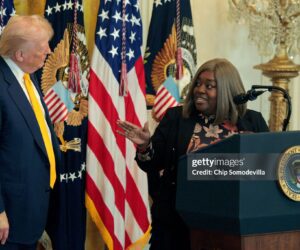

News Americas, NEW YORK, NY, Thurs. Feb. 19, 2026: US President Donald Trump is facing renewed criticism after appearing to confuse two nations in the Americas – The Bahamas and Bermuda – during of all events- a White House Black History Month event.
While recognizing former NFL star Herschel Walker, who currently serves as U.S. Ambassador to The Bahamas, Trump stumbled over the name of the country he represents.
“Herschel Walker… he’s ambassador to the Bahamas. I don’t know. Bahamas, Bermuda, Berhamas, whatever. A nice place!” Trump said, drawing attention for both the confusion and apparent dismissiveness.
The Bahamas and Bermuda are distinct nations with separate governments, histories, and geopolitical roles. The Bahamas is an independent Caribbean nation of roughly 400,000 people and a key U.S. regional partner. Bermuda, meanwhile, is a British Overseas Territory located in the North Atlantic and operates under a different constitutional and diplomatic structure.
For Caribbean observers, the moment carries deeper symbolic implications beyond a simple verbal slip.
Small island nations in the Caribbean have long played outsized roles in global finance, climate diplomacy, tourism, and regional security cooperation with the United States. The Bahamas in particular is central to U.S. maritime security, migration management, and financial regulation cooperation.
Such misidentifications risk reinforcing longstanding frustrations among Caribbean leaders and diaspora communities who have often argued that the region is treated as interchangeable or peripheral in global political discourse, despite its strategic importance.
Diplomatic recognition, Caribbean analysts say, is not simply about protocol but about respect.
In recent years, Caribbean nations have increased their influence globally, particularly through climate advocacy, financial diplomacy, and economic partnerships. Leaders such as Barbados Prime Minister Mia Mottley have emerged as prominent voices in international forums, while countries like Guyana, Trinidad and Tobago, and The Bahamas are playing expanding roles in energy, finance, and regional development.
The Bahamas itself maintains deep diplomatic and economic ties with the United States, including cooperation on banking regulation, tourism, law enforcement, and national security initiatives.
The appointment of Walker as ambassador underscored the importance of that bilateral relationship. However, public confusion about the country’s identity – especially at a Black History Month event intended to recognize Black leadership and contributions – has prompted broader reflection on how Caribbean nations are perceived within U.S. political consciousness.
For many Caribbean Americans, the moment highlights a larger issue of visibility.
The Caribbean diaspora has made enormous contributions to American society, from civil rights and politics to medicine, business, and culture. Yet, Caribbean nations themselves often remain misunderstood or overlooked in public discourse even as the US has turned the region from a zone of peace into a region where boats are being bombed without real cause, leaving several Caribbean nationals dead to date. Since September last year, the United States has carried out at least 36 similar strikes in Caribbean and Eastern Pacific waters, killing more than 120 individuals suspected of involvement in drug trafficking, according to U.S. military data.
The incident also comes at a time when the Caribbean is gaining increasing geopolitical relevance amid shifts in global energy markets, climate negotiations, and nearshoring strategies. Ultimately, while political misstatements are not uncommon, moments like these resonate deeply in regions whose histories have long been shaped by external powers.
For Caribbean nations that continue to assert their voice and sovereignty on the global stage, recognition – accurate and respectful – remains an essential part of partnership.
Support NewsAmericas

Related News
Caribbean Unity Tested As Election Interference Allegations Threaten Regional Trust
The Cuban Revolution Holds Out Against US Imperialism
Sinners, Vampires, Nicki Minaj & Trump