The people’s bridle on power
 15 June 2026

Former Ombudsman takes GoB to court for victimization
BELIZE CITY, Tues., June 9, 2026
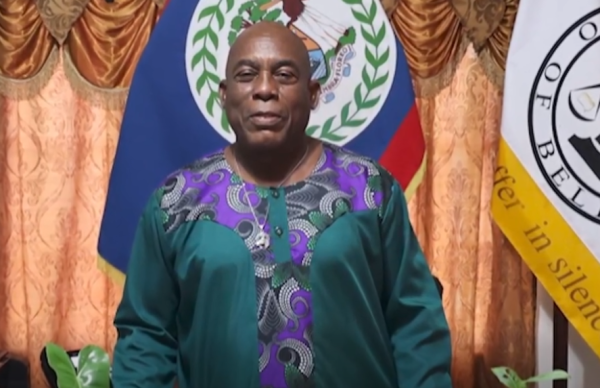
Former Ombudsman Major Gilbert Swaso (Ret’d.) is taking the Government of Belize to court, alleging that during his tenure he was underpaid and ultimately denied reappointment in violation of the Constitution and the Ombudsman Act. The claim seeks constitutional redress for what Swaso describes as unlawful treatment and retaliatory conduct after he issued a ruling on the politically sensitive Freedom of Information Act (FOIA) matter involving Jeremy Enriquez.
In the originating motion dated May 11, 2026, Swaso argues that the State failed to honour the constitutional and statutory framework governing the Office of the Ombudsman—an office specifically designed to operate independently of the executive and to protect the public from maladministration. He contends that instead of being appointed on the terms mandated by law, he was engaged on a contract that materially undercut the salary, emoluments, and conditions of service prescribed for the Ombudsman.
According to the Constitution and the Ombudsman Act, the Ombudsman is to receive emoluments “not less than” those of a Supreme Court judge. At the time of his appointment, that benchmark stood at BZ$175,000 per year. Swaso, however, was paid BZ$80,000 annually, plus allowances, under a contract he says was inconsistent with the law and could not legally override the statutory protections attached to the office.
The claim outlines nine letters sent between April 2023 and March 2026 to the Cabinet Secretary, the Prime Minister, and the Minister of the Public Service, in which Swaso repeatedly raised concerns about the discrepancy, and requested that his remuneration be aligned with the law. He says none of those letters received a substantive response. The only acknowledgment came in May 2026, when the Prime Minister replied via WhatsApp stating, “The Government is obligated to pay you whatever is stated in your contract,” and apologizing for the late response. By that time, Swaso’s attorney, Trinidadian Senior Counsel Anand Ramlogan, had sent the Attorney General a pre-action protocol letter which went unanswered.
Swaso’s appointment was approved by both Houses of the National Assembly with his term beginning January 1, 2023. Under the Ombudsman Act, the term of office is three years, and the Ombudsman is eligible for reappointment. The Act also provides that the Ombudsman’s emoluments “shall not be altered to his disadvantage” during his appointment.
The claim asserts that the Government not only failed to correct the alleged illegality in his contract, but also failed to meaningfully engage with him on the question of reappointment. Swaso says he notified the Government in October 2025 of his interest in serving a second term, as required by the contract. Two months later, on December 24, 2025, he received a letter from the Cabinet Secretary informing him that his tenure would end on December 31, 2025. He argues that the decision was made without proper parliamentary consideration, as required by law, and amounted to a denial of his right to the protection of the law. His contract stated, “Three (3) months prior to the completion of his engagement, the person engaged shall give notice in writing to the Clerk of the National Assembly whether he intends to remain in the post, and the National Assembly shall thereupon decide whether it will recommend to the Governor General that the person engaged be offered further employment. The re-engagement shall be for such period on such terms and conditions as may be approved by the National Assembly.”
A central element of the claim is the allegation that the non-renewal of his appointment was retaliatory. In October 2025, Swaso issued a ruling under the FOI Act recommending that the Attorney General disclose the legal fees paid to private attorneys retained by the Government in the redistricting litigation. Swaso found that the information was a matter of public interest and should be released, subject to limited redactions. Swaso says he made the decision “in the interest of transparency, public accountability and good governance, consistent with the oath I took when I was appointed Ombudsman.”
The Attorney General challenged that ruling in court shortly thereafter, and Swaso interpreted the Government’s reaction—combined with a December 22, 2025 meeting with Minister of the Public Service, Hon. Henry Charles Usher—as an indication that his independence was unwelcome. The claim describes the meeting as one that left him with the impression that his decision in the FOIA matter was not favourable to the Government “and hence he would be victimized for not toeing the line.”
The following day, Swaso wrote to Minister Usher thanking him for the meeting and addressing some of the issues raised. A week later, he was informed that his tenure would not be renewed.
While the Minister says the meeting was informal and that he did not think what they discussed would end up in an affidavit, Swaso told Amandala, “It would not have been entered into the case if, in fact, it is deemed to be a non-factor at all.”
Swaso argues that the sequence of events demonstrates that he was penalized for exercising his statutory powers independently, contrary to section 33 of the Ombudsman Act, which states that the Ombudsman “shall not be subject to the direction or control of any other person or authority.”
The claim seeks declarations that his constitutional rights to protection of the law and protection from arbitrary deprivation of property were breached, that the State acted contrary to section 8 of the Ombudsman Act and section 118 of the Constitution, and that he is entitled to damages, including vindicatory damages.
The matter is set for hearing by High Court Justice Rajiv Goonetilleke. The parties are to appear in court on July 14.
The Office of the Ombudsman, established in 1999, is intended to serve as an independent watchdog over public authorities, empowered to investigate maladministration, review FOIA decisions, and make special reports to the National Assembly when recommendations are not adhered to. The office holder can also summon public authorities and identify systemic issues resulting in poor service or breaches of justice. The claim emphasizes that the independence of the office is safeguarded through constitutionally protected terms of service, which cannot be altered to the Ombudsman’s disadvantage. We note that the Government is seeking to amend the Ombudsman Act to tie the office holder’s salary and benefits to experience and qualifications. Swaso told Amandala it is not his objective to become Ombudsman again, and that the reason for pursuing the claim is based on his concern about any public officer being victimized and punished for simply performing their duties “in a fair and fearless manner to protect the public interest.” He added, “Punishing someone for simply doing their job in an independent and fair manner compromises the constitutional independence of the office and undermines the very fabric of the Constitution.”
Related News

SSB appoints new Chair
DPW to Complete Striping at East Airport Intersection Sunday, With Lane Closures and Delay...
Districtwide Outage Gives Way to Load Shedding as WAPA Battles Generation Instability Into...