OECS meets amid US-Venezuela tension
 23 January 2026
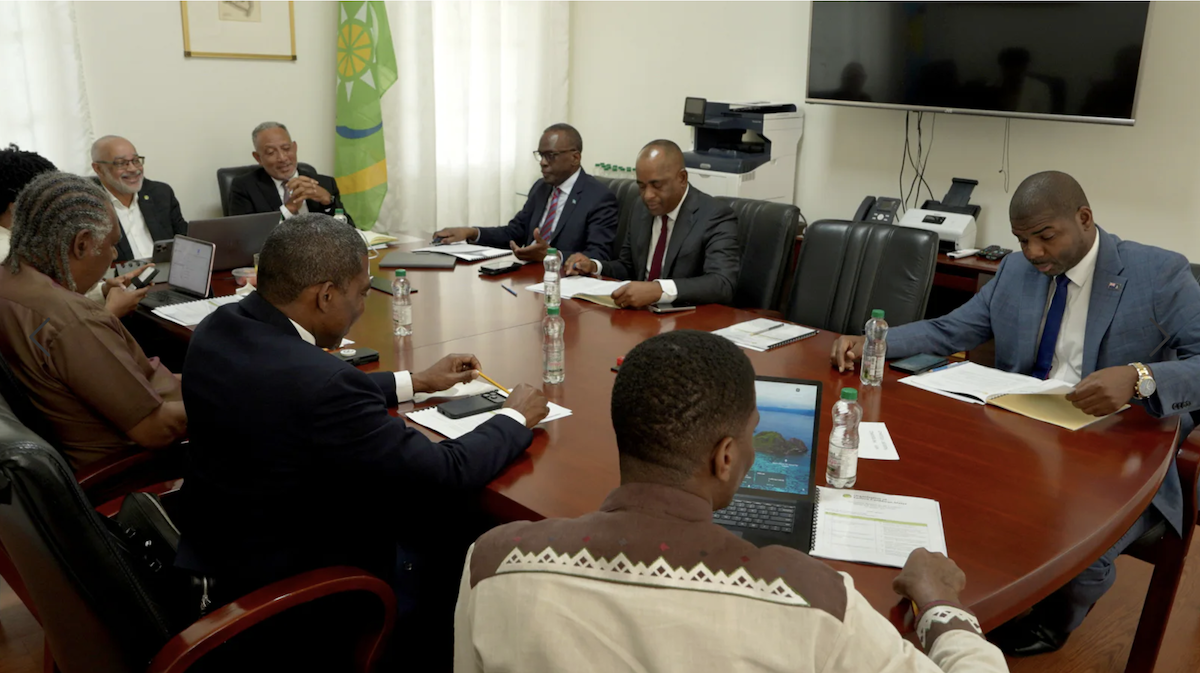

Tensions between the United States and Venezuela — and their potential fallout for the Eastern Caribbean — topped the agenda last week when leaders of the Organisation of Eastern Caribbean States met in St. Lucia, according to regional and local officials.
The session followed weeks of regional turmoil kindled when the US stormed the Venezuelan capital on Jan. 3 to capture President Nicolas Maduro and his wife and bring them to the US to face drug-trafficking charges.
Though the OECS did not directly respond to the US actions, it said its Jan. 13 closed-door meeting focused largely on the implications of US involvement in Venezuela, including possible impacts on regional security, economic and energy stability, migration flows and diplomatic relations. During the talks, heads of government reaffirmed their commitment to peace, stability and neighbourly relations within the hemisphere, the OECS said in a press release.
Premier Natalio “Sowande” Wheatley represented the Virgin Islands at the meeting.
“It was important for me to be there for this somewhat emergency meeting due to all of the developments which have been taking place,” Mr. Wheatley said, stressing the importance of regional coordination and pointing to the VI’s long-standing relationship with the OECS.
US request
During the meeting, the leaders also discussed requests from the US for certain OECS member states to accept third-country nationals.
To undertake technical negotiations with the US on the matter, the heads of government agreed to establish a “broad-based, high-level negotiating team” made up of representatives from OECS member states, the organisation stated.
Some member states have already signed non-legally-binding memoranda of understanding with the US to enter further discussions on the issue, according to the OECS.
CBI programmes
Also on the discussion agenda were the citizenship-by-investment programmes in five OECS jurisdictions.
Leaders reaffirmed their commitment to ongoing reforms designed to ensure best practices in the programmes, which have been linked to recent visa restrictions imposed by the US in several countries across the Caribbean.
The OECS heads also noted progress over the past nine months toward establishing an independent regional regulatory authority for CBI programmes; proposing related legislative changes; and strengthening engagement with international partners including the European Union.
Additionally, the leaders agreed to adopt traveller biometric systems across the OECS as part of efforts to enhance regional border security while facilitating hassle-free travel for citizens and visitors within the subregion.
They also agreed to convene in political caucus as frequently as necessary to ensure coordinated decision-making as the geopolitical situation continues to evolve, according to the press release.
Other OECS plans include improving public communication to ensure citizens across the region have timely access to accurate information on proposals and agreements under consideration.
Reflecting on the outcome of the discussions, Mr. Wheatley said he was encouraged by the level of unity among the regional leaders.
“I was very pleased with the resolve of the leaders there: their commitment to work even closer together in terms of our foreign policy objectives and even practical areas of functional cooperation,” he said. “I left the meeting very encouraged that we would have good follow-up and we would have very strong cooperation in areas of mutual benefit.”
The caucus was hosted by St. Lucia Prime Minister Philip Pierre and chaired by St. Vincent and the Grenadines Prime Minister Godwin Friday, who was presiding over his inaugural OECS heads-of-government meeting.
Mr. Wheatley praised Mr. Friday’s leadership style.
“He was humble; he was modest; he was measured,” the premier said. “He ensured that we stuck to the agenda and that every head of government had an opportunity to share their views.”
VI membership
Mr. Wheatley also addressed the VI’s 40-plus-year status as an associate member within the OECS and the prospect of deeper regional integration, according to government.
“We’ve been in discussions with the United Kingdom government … about full membership in [the Caribbean Community] and OECS,” he said. “Of course, that’s something that the United Kingdom has to give their sign-off on, and then we can go ahead and make an application.”