
Judge in Wisconsin, US faces trial over claims of aiding ICE evasion
 15 December 2025
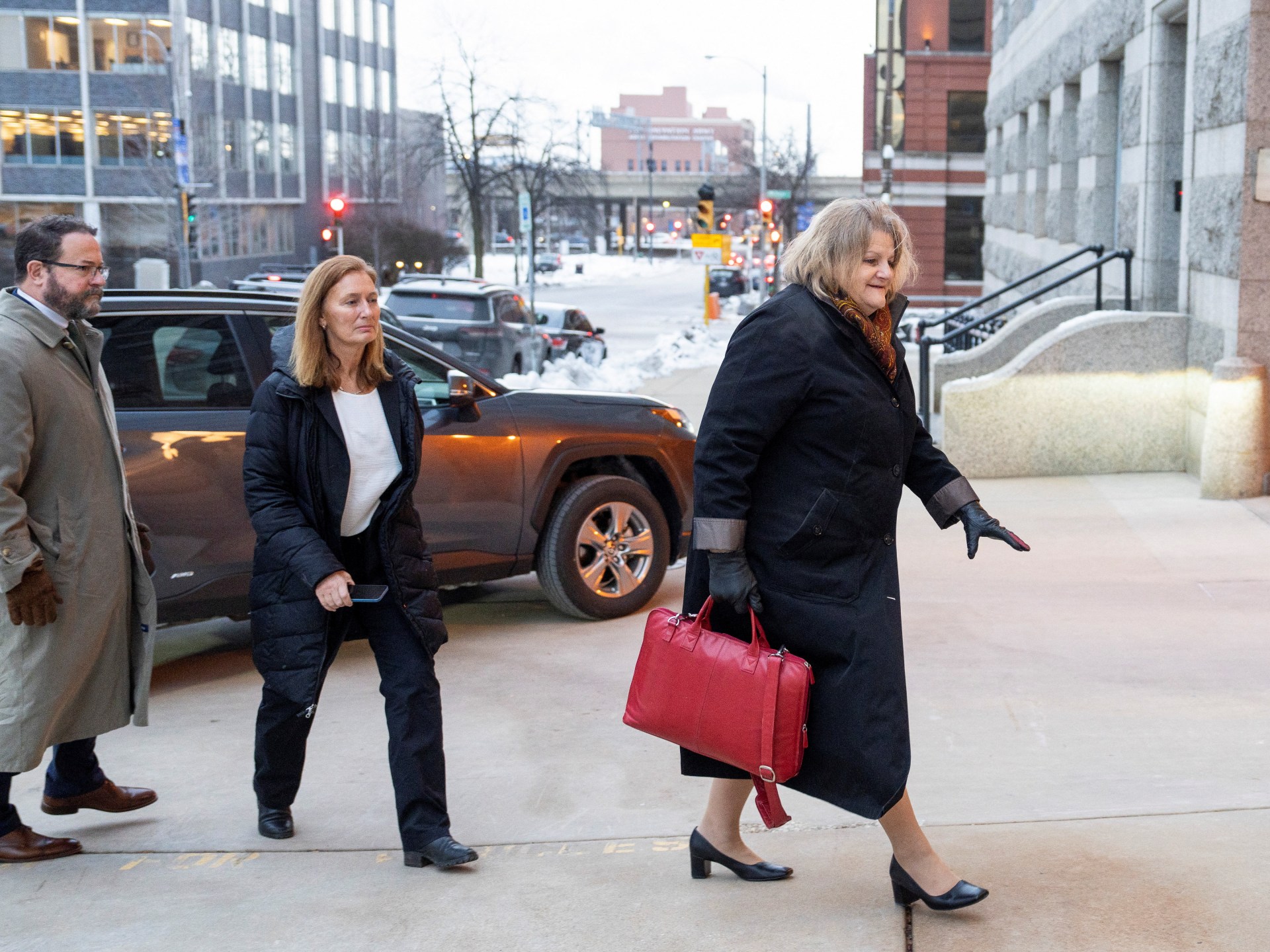

The trial has begun for a Wisconsin judge accused by the administration of US President Donald Trump of helping a man evade immigration authorities, and therefore obstructing the president’s mass deportation drive.
The proceedings, which began with opening statements from both federal prosecutors and lawyers for Milwaukee County Circuit Judge Hannah Dugan on Friday, could be a bellwether in Trump’s efforts to punish local officials for resisting his federal immigration campaign.
- list 1 of 3Kilmar Abrego Garcia freed from US immigration detention, returns home
- list 2 of 3Why is Trump demanding travellers’ social media handles; how will it work?
- list 3 of 3US judge arrested as immigration crackdown escalates
end of list
Prosecutors allege that Dugan led 31-year-old Eduardo Flores-Ruiz through a back door after she told agents from US Immigration and Customs Enforcement (ICE) to speak to the chief judge about whether they were allowed to arrest people in the courthouse.
Assistant US Attorney Keith Alexander alleged that Dugan said she would “take the heat” for helping Flores-Ruiz, who had appeared in court on a state charge.
“[The ICE agents] did not expect a judge, sworn to uphold the law, would divide their arrest team and impede their efforts to do their jobs,” Alexander said.
Defence attorney Steven Biskupic, meanwhile, said the judge had no intention of obstructing agents and was following the court’s policy in directing them to speak to the chief judge.
Dugan faces up to six years in prison if convicted on charges of obstruction and concealment. Flores-Ruiz was subsequently detained by immigration authorities and deported, officials said.
Critics have accused the Trump administration of using Dugan’s case to chill opposition among local officials.
Many jurisdictions across the country have policies that prevent local authorities from directly coordinating with federal immigration officials.
Advertisement
While those policies are not illegal, the Trump administration has vowed to prosecute anyone it considers to be obstructing enforcement.
The administration has also issued broad warnings to so-called “sanctuary cities” as it has ramped up enforcement at courthouses and loosened restrictions on making arrests at sensitive locations like churches or schools.
Immigration advocates have said such policies discourage people from interacting with the legal system.
Related News
Israel denies entry to Canadian MPs trying to reach occupied West Bank
El Chapo’s son pleads guilty in US drug case, cuts deal with prosecutors

RSF drone strike kills at least three in central Sudan, injures several