Iran war: What is happening on day 19 of US-Israel attacks?
 18 March 2026

EXPLAINER
Iran has pledged “revenge” after Israeli strikes killed security chief Ali Larijani and commander of Basij paramilitary forces Gholamreza Soleimani, with Foreign Minister Abbas Araghchi saying Tehran’s political system remains strong as the war entered its 19th day.
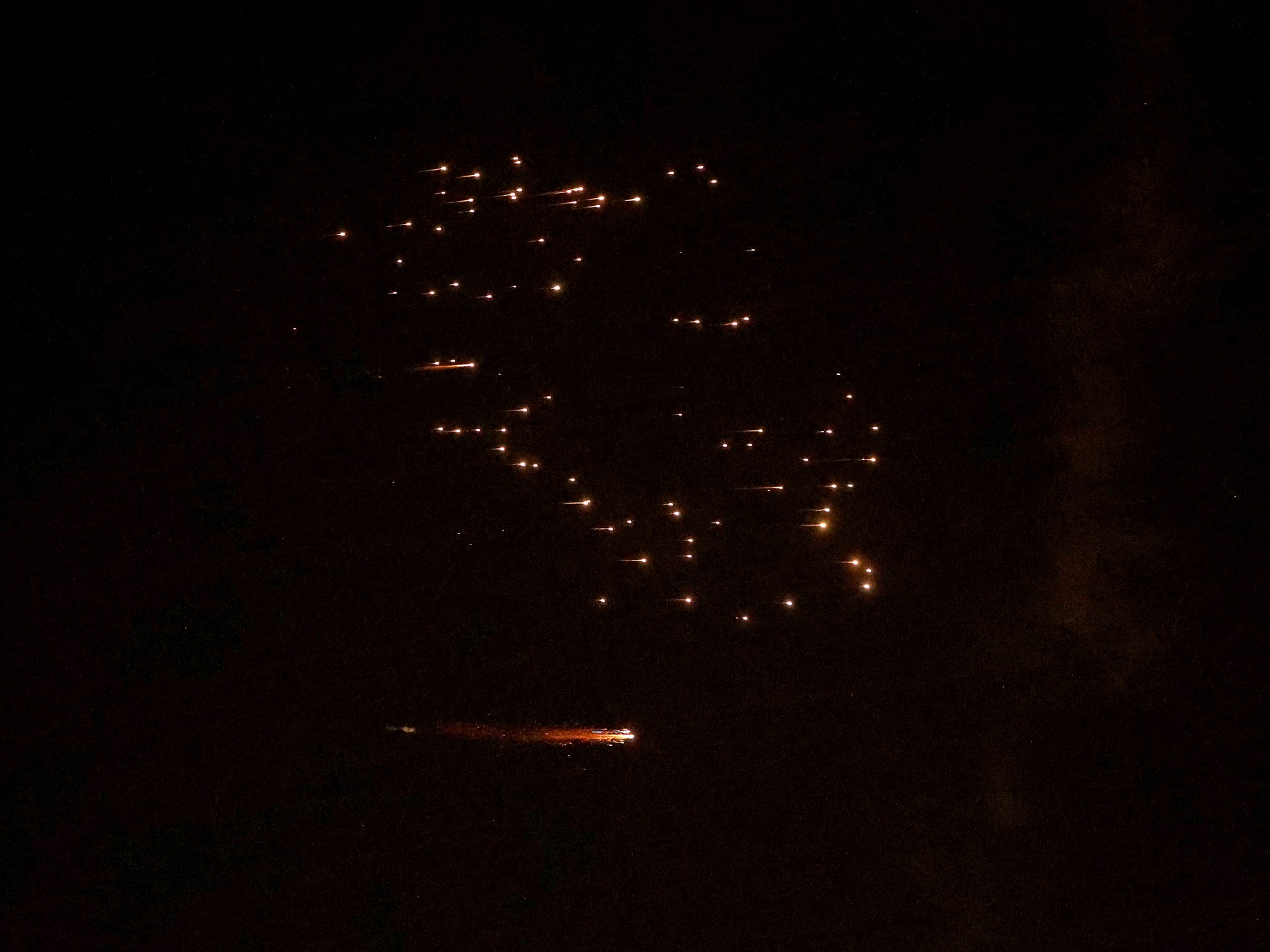
Iran launched more attacks on Israel, causing extensive property damage, after an earlier strike killed two people in Ramat Gan.
- list 1 of 2Iran vows ‘revenge’ for Larijani, Soleimani; 2 killed in attacks on Israel
- list 2 of 2Drone attacks hit near US embassy in Baghdad
end of list
The conflict is increasingly spilling across the region as Iran and allied groups have launched missiles and drones targeting Gulf countries, with attacks reported in Saudi Arabia, Kuwait and Jordan.
Political tensions are also rising in the United States, as senior counterterrorism official Joe Kent resigned, saying “we started this war due to pressure from Israel and its powerful American lobby”.
Meanwhile, President Donald Trump criticised NATO allies and partners for failing to provide stronger military support in efforts to end Iran’s chokehold on the Strait of Hormuz.
Here is what we know:
In Iran
- High-profile killings: Tehran is mourning the loss of two important figures: security chief Ali Larijani and Basij force commander Gholamreza Soleimani, both killed in Israeli strikes. Their deaths mark a severe blow to the Iranian establishment.
- Political fallout: Larijani was widely regarded as a pragmatic, seasoned politician who had the capacity to open windows for negotiation. He led the nuclear talks before the war started. Analysts say Israel’s move to kill him may be aimed at closing the diplomatic avenues to end the war.
- Iranian retaliation: In response to the strikes, Iran launched attacks on central Israel.
- Iran’s FM Araghchi told Al Jazeera that the US is responsible for the war engulfing the region. He denied targeting civilians, warning that the US military presence across the Gulf makes escalation unavoidable.
- Iran has executed a man it accused of spying for Israel’s Mossad intelligence agency, according to the semi-official Tasnim news agency.
- No change in World Cup venues: FIFA said the 2026 World Cup matches will proceed as scheduled, rejecting Iran’s request to move its games from the US to Mexico despite the ongoing war.
- Hormuz traffic resumes: Iran is allowing a small but growing number of commercial ships through the Strait of Hormuz, with eight non-Iranian vessels detected on Monday, according to maritime data.
- Rising death toll: At least 1,444 people have been killed and 18,551 injured in US-Israeli attacks on Iran since February 28, according to Iran’s Ministry of Health.

In the Gulf
Advertisement
- Saudi Arabia: The kingdom is hosting an emergency meeting of foreign ministers from Arab and Muslim countries in Riyadh to discuss the attacks.
- UAE interceptions: According to the Dubai Media Office, there were successful missile interceptions, with no injuries reported.
- Bahrain: Warning sirens sounded across Bahrain, prompting the Ministry of Interior to urge residents to head to the nearest safe place.
- Qatar’s flight suspensions: Due to the continuing uncertainty and instability of the airspace in the Middle East, British Airways has extended its suspension of flights to Doha until April 30.
- Qatar intercepts missiles: Qatar’s Ministry of Defence said missiles were intercepted on Wednesday as blasts were heard in Doha and other parts.
- Ukrainian anti-drone experts: More than 200 Ukrainian anti-drone military experts are in several Middle East countries to help defend against Iranian-designed drones, President Volodymyr Zelenskyy said.
In the US
- Resignation of US official: Top US counterterror official Joe Kent resigned from his position, saying Iran is “not a threat”.
- Tensions with NATO allies: President Trump has lashed out at NATO allies, as well as Japan, Australia and South Korea, over their reluctance to offer military support in the conflict.
- Heightened security at embassies: The Department of State has ordered all US embassies and consulates to immediately evaluate their security postures by convening emergency action committees.
In Israel
- Israel strikes Basij: The Israeli military said it was striking positions of Iran’s Basij force around Tehran, after announcing it had killed the volunteer top commander.
- The Israeli army claimed to have struck Iranian command centres, missile sites and other infrastructure in Tehran on Tuesday.
- Direct attacks and casualties: In response to these escalations, Israel is facing retaliatory bombardments. Two people were killed by severe shrapnel injuries in Ramat Gan, near Tel Aviv, following a rocket attack that heavily damaged an apartment building.
In Lebanon
- The Israeli military on Wednesday ordered residents of four Lebanese villages in the country’s south to leave their “homes immediately and move north of the Zahrani River”.
- Mass evacuation orders: The Israeli military issued its widest forced evacuation order in southern Lebanon since the 2006 war. Earlier, the military told residents of the city of Tyre, including three Palestinian refugee camps, to evacuate their homes.
- Deadly air raids in Bekaa Valley: At least four people have been killed in an Israeli attack that targeted four houses in the town of Sahmar in Lebanon’s Bekaa Valley.
- Hezbollah denial: The group denied it had any members in Kuwait after the Gulf country announced the arrest of 14 Kuwaitis and two Lebanese nationals allegedly affiliated with the group over a “sabotage plot”.
Advertisement
In Iraq
- US embassy struck: An Iraqi security source told Al Jazeera that air defences intercepted a drone in the vicinity of the logistics support centre near Baghdad airport. Explosions rocked Baghdad as there were more attacks on the US embassy. There was also an attack on an armed group’s base in the northeastern city of Kirkuk.
- Saraya Awliya al-Dam: Iraqi armed group Saraya Awliya al-Dam claimed responsibility for a multi-front wave of attacks against US targets.
- Iraq rerouting oil exports: With the Strait of Hormuz disrupted and output sharply reduced, Baghdad and Erbil have moved to restart exports via the pipeline through the Kurdish region to Turkiye’s Ceyhan port.
Related News
Turkiye says NATO bringing in more defences after missile interceptions
Xi Jinping’s anticorruption drive sweeps up senior Chinese military chiefs

Israel attacks Beirut in ‘targeted killing’ attempt, kills several in south