Iran strikes towns near Israel’s nuclear site in escalating tit-for-tat
 21 March 2026
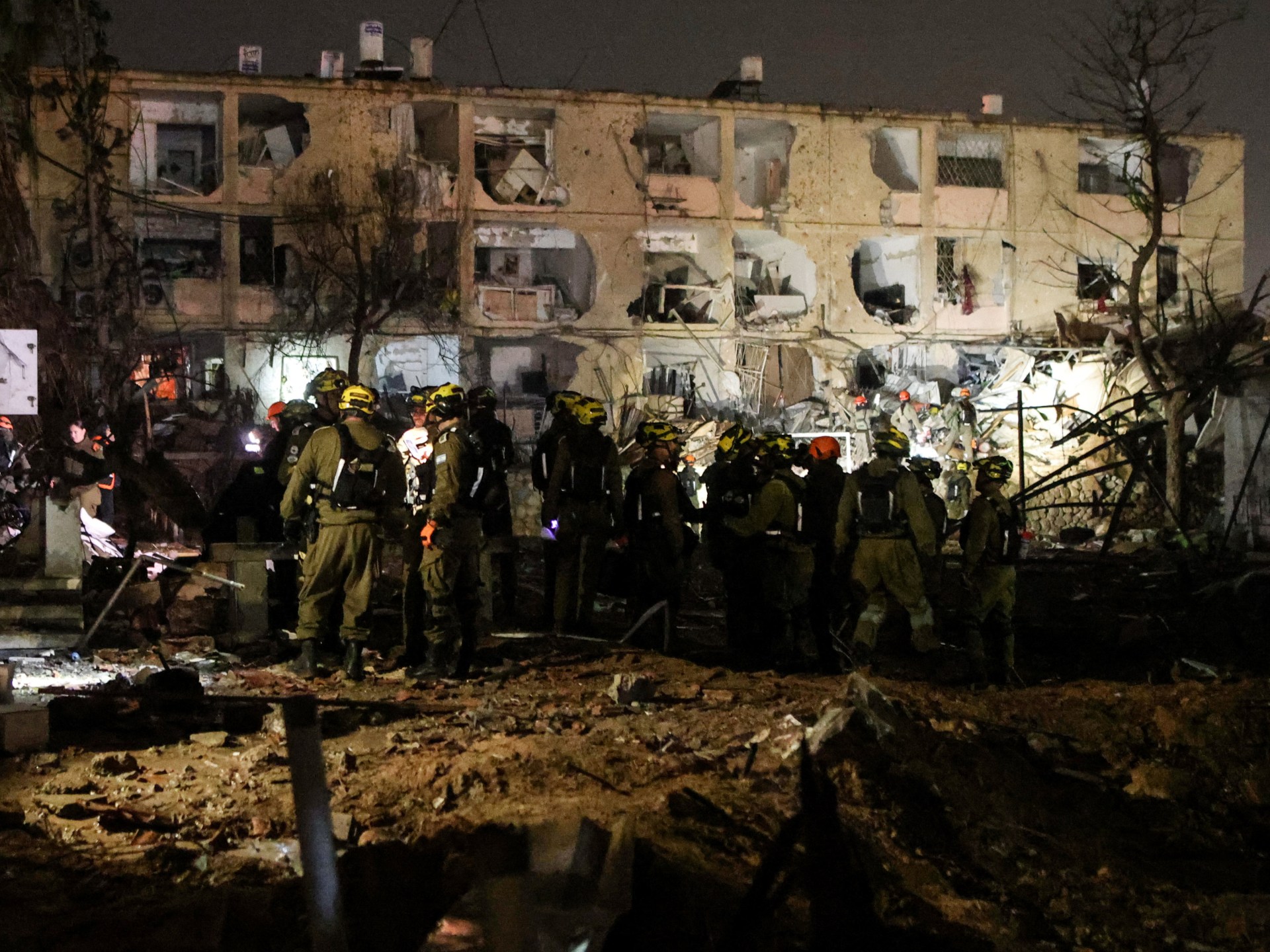

An Iranian missile has struck the southern Israeli cities of Dimona, home to the country’s main nuclear facility, and nearby Arad, wounding dozens of people and causing significant damage, in one of the most dramatic escalations since the US-Israel war on Iran began.
Iranian state television quickly reframed Saturday’s strikes as a “response” to what it said was a strike on Iran’s Natanz nuclear enrichment complex earlier in the day, marking a stark new phase of tit-for-tat targeting in the conflict, now in its fourth week.
- list 1 of 2Iran says US and Israel attacked Natanz nuclear facility
- list 2 of 2Joe Kent speaks out against Iran war at prayer event after resigning
end of list
Nearly 100 people were wounded in the attacks, according to Israel’s emergency services, including a 10-year-old boy who paramedics said was in critical condition with multiple shrapnel wounds. Seven others are also in critical condition.
An Israeli military spokesman said Israel’s air defence systems activated during the attacks, but failed to intercept some of the missiles, even though they were not “special or unfamiliar”.
The country’s Prime Minister Benjamin Netanyahu, addressing the attacks, called this evening a “difficult” one for Israel, and again vowed to continue attacking Iran.
The International Atomic Energy Agency (IAEA) said it had received no indication of damage to the Shimon Peres Negev Nuclear Research Center at Dimona itself, and that no abnormal radiation levels had been detected in the area.
The nuclear watchdog said it was closely monitoring the situation, with Director General Rafael Grossi urging that “maximum military restraint should be observed, in particular in the vicinity of nuclear facilities”.
Advertisement
Al Jazeera’s Nour Odeh, reporting from Ramallah in the occupied West Bank, said that three separate impact sites had been identified across Dimona, with one three-storey building having completely collapsed and several fires breaking out.
Witness footage verified by Al Jazeera, which is banned from operating inside Israel, showed a missile striking the city, followed by a large explosion.
School in the surrounding Ramat Negev Regional Council was cancelled for the following day.
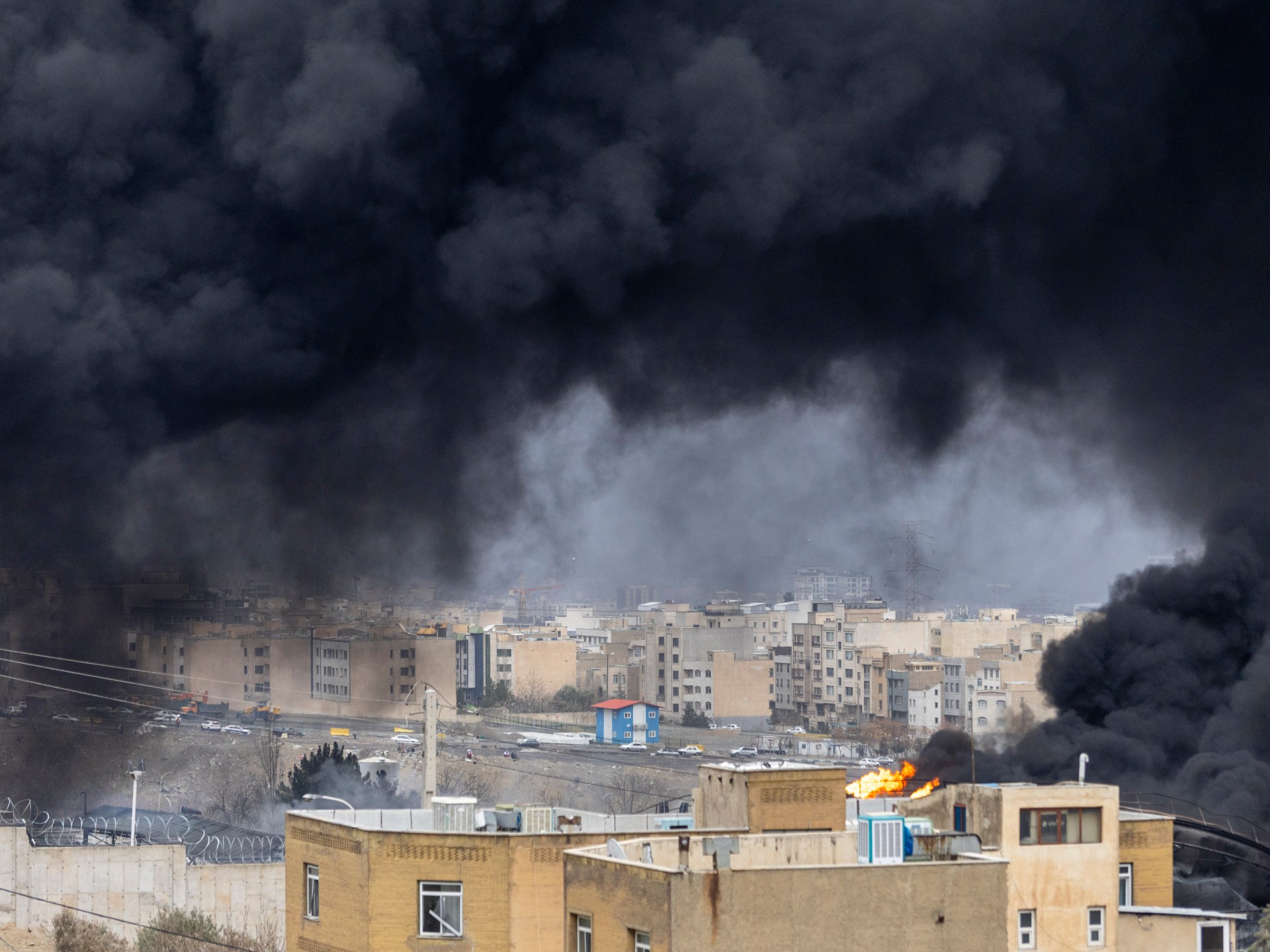
Earlier on Saturday, the Israeli military announced it had struck a research and development facility at Tehran’s Malek Ashtar University, which it said had been used to develop components for nuclear weapons and ballistic missiles.
The military said it “will not allow the Iranian regime to acquire nuclear weapons”.
Iran said that the US and Israel had targeted its Natanz enrichment complex that morning, though it reported no radioactive leakage.
An unnamed Israeli official, quoted by the Associated Press news agency, denied that Israel was responsible for the Natanz strike, but the Israeli army has not released a full statement on the matter.
Dimona has been at the heart of Israel’s nuclear programme since its research centre, built in secret with French assistance, opened there in 1958.
Israel is believed to have developed nuclear weapons by the late 1960s. Its policy of deliberate ambiguity, neither confirming nor denying their existence, was part of a deal quietly struck with Washington, which judged that an open declaration would risk triggering a regional arms race.
Abas Aslani, a senior fellow at the Centre for Middle East Strategic Studies in Tehran, told Al Jazeera that Iran has been pursuing an eye-for-an-eye approach designed to re-establish deterrence.
“Tehran wants to reduce the gap between words and actions,” he said, adding that Iran’s goal was to make its threats credible enough to underpin a new long-term security arrangement, not to simply force a ceasefire, but establish deterrence.
The Dimona strike comes as the broader war grinds through its fourth week.
Arad, another town near the nuclear facility, was also directly attacked, Israel’s firefighting service said in a statement.
“In both Dimona and Arad, interceptors were launched that failed to hit the threats, resulting in two direct hits by ballistic missiles with warheads weighing hundreds of kilograms”, firefighters said.
More than 1,400 people have been killed in Iran since the US and Israeli strikes began on February 28, including more than 200 children.
Advertisement
Iran has retaliated across the region, launching what it described as its 70th wave of attacks on Saturday, targeting Israeli and US military positions, as millions of Iranians marked the Persian New Year, Newroz, and Eid al-Fitr under the shadow of war.
Related News

Macron prepares France for ‘an age of nuclear weapons’ as Iran war rages

UN fact-finding mission warns of continued human rights abuses in Venezuela
US military announces loss of refueling aircraft over western Iraq