
Iran developing a ‘vetting system’ for Strait of Hormuz transit: Report
 20 March 2026
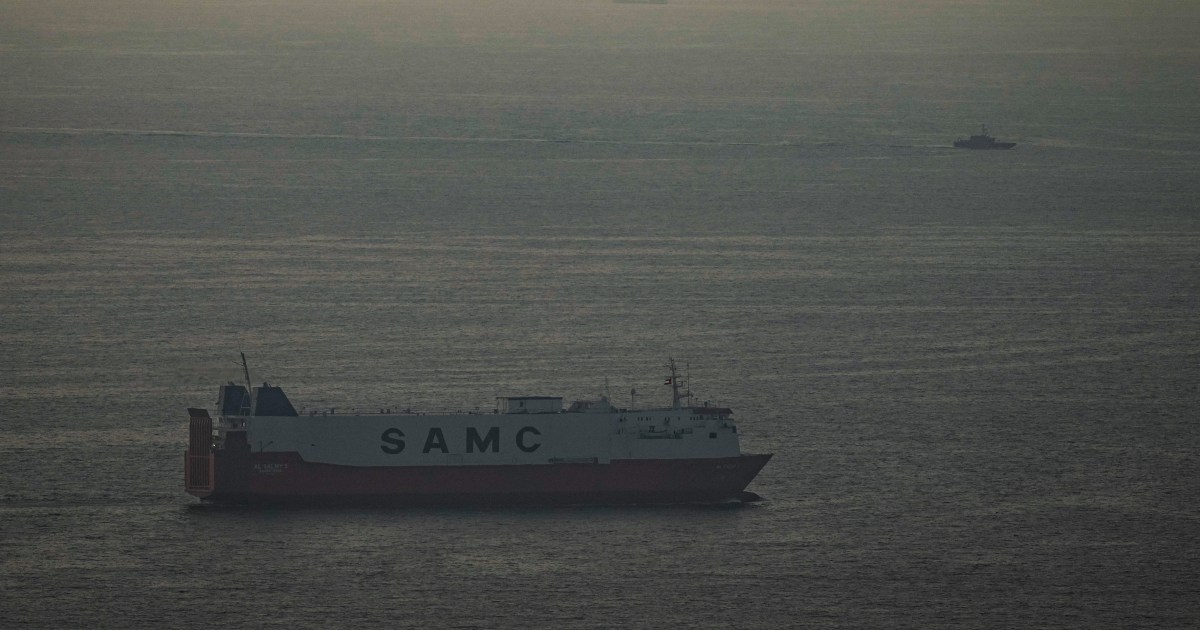

Iran is developing a new vetting and registration system for ships transiting the Strait of Hormuz as it transitions to a “selective” blockade of the strategic waterway, according to Lloyd’s List.
The maritime news and analysis service reported this week that several countries including India, Pakistan, Iraq, Malaysia and China, are in direct talks with Tehran to transit through its territorial waters in the Strait.
- list 1 of 4Three charged in the US with smuggling AI chips into China
- list 2 of 4‘It helps us survive’: Poverty forces children into mine work in DR Congo
- list 3 of 4Ukraine sends advisers to Gulf as it counterattacks Russian forces in south
- list 4 of 4Long before Trump: How US policy has harmed the environment for decades
end of list
Ships have been approved on a case by case basis, but a new vetting and registration system is reportedly under development by Iran’s Islamic Revolutionary Guard Corps (IRGC), Lloyd’s said.
“Ships hoping to use the pre-approved route are expected to have communicated extensive details regarding both the ownership of the vessel and destination of the cargo to the IRGC in advance of the transit. Those details are being communicated via a series of Iran-affiliated individuals operating outside of Iran,” Lloyd’s reported on Wednesday.
This week, Iran’s Foreign Minister Abbas Araghchi said that the Strait was “open, but closed to our enemies,” signalling a de-escalation from earlier remarks by the IRGC that any ship trying to transit the waterway would be set ablaze.
Traffic through the Strait has plunged 95 percent since the United States and Israel launched a war on Iran three weeks ago, with major repercussions for global energy markets. About one-fifth of the world’s oil transits through the Strait, which connects the Gulf and the Gulf of Oman.
Maritime data indicates that a small number of ships have managed to transit the Strait since the blockade began – mainly flagged to Pakistan, India or China – although numbers slowed more recently due to an increased risk of attack. Some ships have resorted to turning off their automatic identification system (AIS) while others have broadcast their Chinese credentials to Iranian authorities, according to media reports.
Advertisement
A new “safe” corridor running through Iran’s territorial waters has emerged in recent days, and at least nine ships have passed through, Lloyd’s said.
The maritime news service reported that one tanker is understood to have paid $2m for the right to transit, but it is unknown whether other vessels also paid fees.
Alex Mills, an international trade and maritime law expert, told Al Jazeera that the new registration system offers a short-term solution for some countries, but it may not make economic sense in the long run.
“The Iranian proposal to allow ships which travel through Iranian waters, call at Iranian ports, and declare all cargo destinations is interesting. It runs counter to the long-running approach of ‘going dark’ when entering Iranian waters and poses additional security risks for vessels while the conflict is ongoing,” Mills told Al Jazeera.
“I remain unconvinced this would enable vessels to operate due to insurance, operating safety and security, and existing sanction regimes, but as the conflict continues it might become a risk worth taking for some companies and vessels.”
Even if companies agree, insurers may not if they feel the risk is still too high, offering a financial disincentive to global shipping companies.
“Without operating companies feeling confident and seeing economic benefits to travel this route, ships won’t move,” Mills said. “Maritime supply chains are planned months in advance so even if it opens tomorrow, the adjustments to routes, bookings, and orders are already locked in. This isn’t something where firms simply turn the ship around. The impacts are baked in already.”
Related News
Is the Iran war really costing the US $2bn per day?

EU leaders reject military involvement in Strait of Hormuz amid war on Iran

Pakistan denies hospital strike in Afghanistan as death toll hits 400