
Indonesia counts human cost as more climate change warnings sounded
 08 December 2025
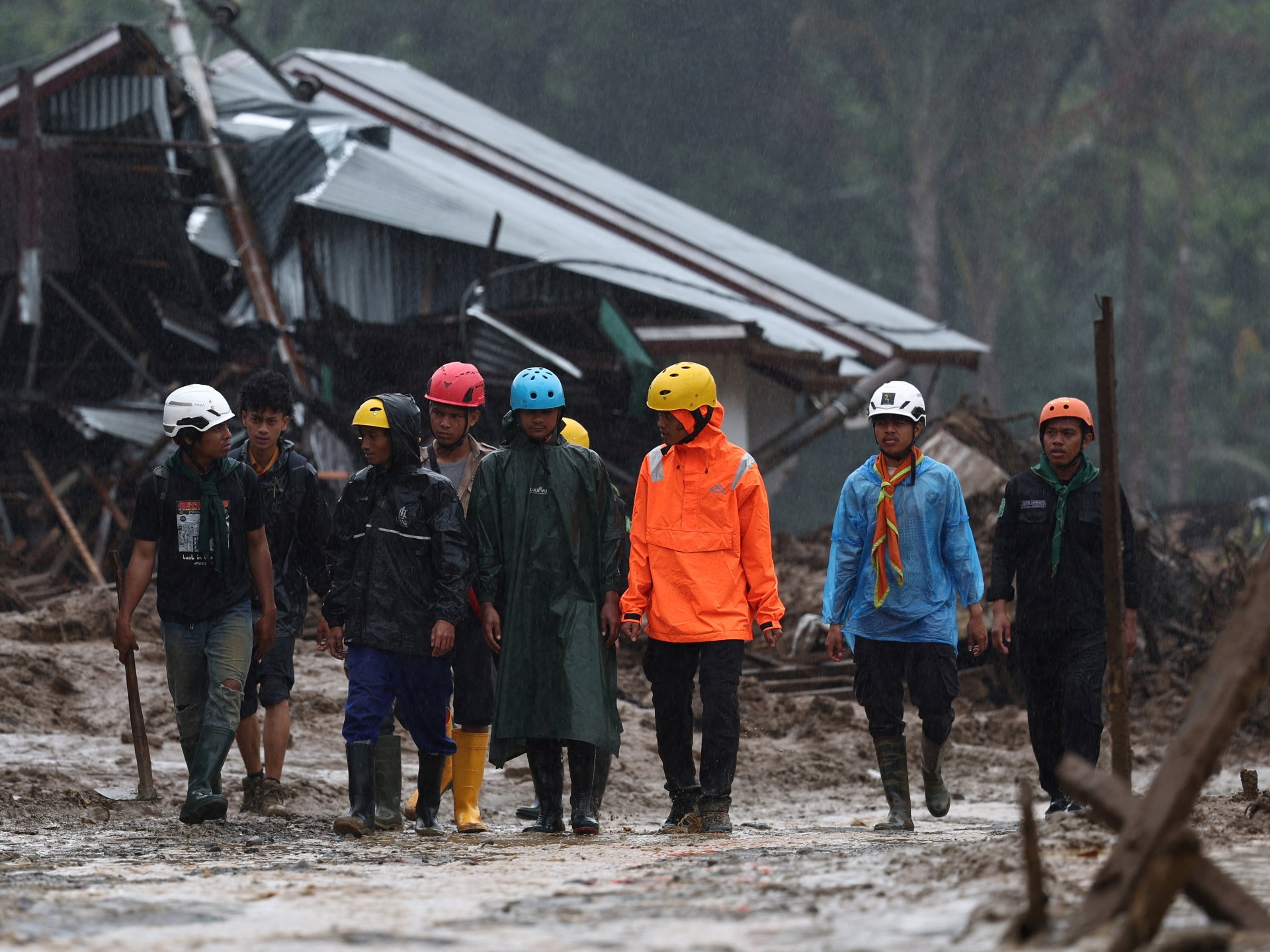

Nearly 1,000 people have been killed, and close to one million displaced, Indonesia has said a week after torrential rains triggered catastrophic floods and landslides.
The National Disaster Management Agency (BNPB) reported late on Sunday that 961 people had been killed, with 234 people missing and about 5,000 injured across the Aceh, North Sumatra and West Sumatra provinces.
- list 1 of 4At least 1,250 people dead: What caused the devastating Asia floods?
- list 2 of 4More heavy rain slows Sri Lanka’s recovery after deadly cyclone
- list 3 of 4Heavy rains hamper recovery as death toll from floods in Asia exceeds 1,750
- list 4 of 4Sri Lanka landslides feared as toll hits 618, widespread loss sweeps Asia
end of list
The agency also recorded damage to more than 156,000 homes, and 975,075 people had taken refuge in temporary shelters.
Floodwaters have begun to recede in several coastal districts, although large areas in the central highlands are still cut off, BNPB said. However, heavy rain is forecast for parts of the island in the coming days, raising concerns for displaced people.
Indonesia’s rainy season, which usually peaks between November and April, frequently brings severe flooding.
Environmental groups and disaster specialists have warned for years that rapid deforestation, unregulated development and degraded river basins have increased the risks.
Several other countries in Southeast Asia, including Sri Lanka and Thailand, have been hit hard by storms and floods in recent weeks.
Risk to billions
The Asian Water Development Outlook 2025, published by the Asian Development Bank (ADB) on Monday, warned that the impact of climate change on Asia’s water systems poses a risk to billions.
The research said accelerating ecosystem decline and funding shortfalls for investment in critical water infrastructure threaten to plunge many in the sprawling region into water insecurity.
Advertisement
That could jeopardise gains over the past 12 years that have seen more than 60 percent of Asia-Pacific’s population – about 2.7 billion people – escape extreme water insecurity, the report says.
“Asia’s water story is a tale of two realities, with monumental achievements on water security coupled with rising risks that could undermine this progress,” said Norio Saito, the ADB’s senior director for water and urban development.
“Without water security, there is no development,” Saito said, adding that the report showed that urgent action was needed to restore ecosystem health, strengthen resilience, improve water governance, and deploy innovative finance to deliver long-term water security.
Rising disaster threat
The report said extreme weather events such as storm surges, rising sea levels, and saltwater intrusion, along with rising water-related disasters, threaten the region, which already accounts for more than 40 percent of the world’s floods.
That includes the disasters that ravaged Indonesia and other countries in the region in recent weeks.
From 2013 to 2023, the Asia Pacific region experienced 244 major floods, 104 droughts, and 101 severe storms, causing widespread damage to life and property and undermining crucial development gains.
The report said accelerating ecosystem decline was also a serious threat to water security in the region, with rivers, aquifers, wetlands and forests that sustain long-term water security deteriorating rapidly.
It said water ecosystems were deteriorating or stagnating in 30 of the 50 Asian countries it looked at, as they face threats from pollution, unchecked development and the conversion of land to other uses.
Underinvestment in water infrastructure is another threat to water security.
Asian nations will need to spend $4 trillion for water and sanitation between now and 2040, an outlay of about $250bn a year, the report said.
Currently, governments are collectively spending about 40 percent of that, an annual shortfall of more than $150bn.
Related News
Sudanese women in Chad grapple with trauma of wartime violence

Peruvian ex-President Martin Vizcarra sentenced to 14 years in prison

Pentagon says it is investigating US senator over ‘illegal orders’ video