HOA moves to align courts’ rules
 06 February 2026

The rules governing the Magistrates’ Court will better align with those governing the Eastern Caribbean Supreme Court under a bill passed last week by the House of Assembly, leaders said.
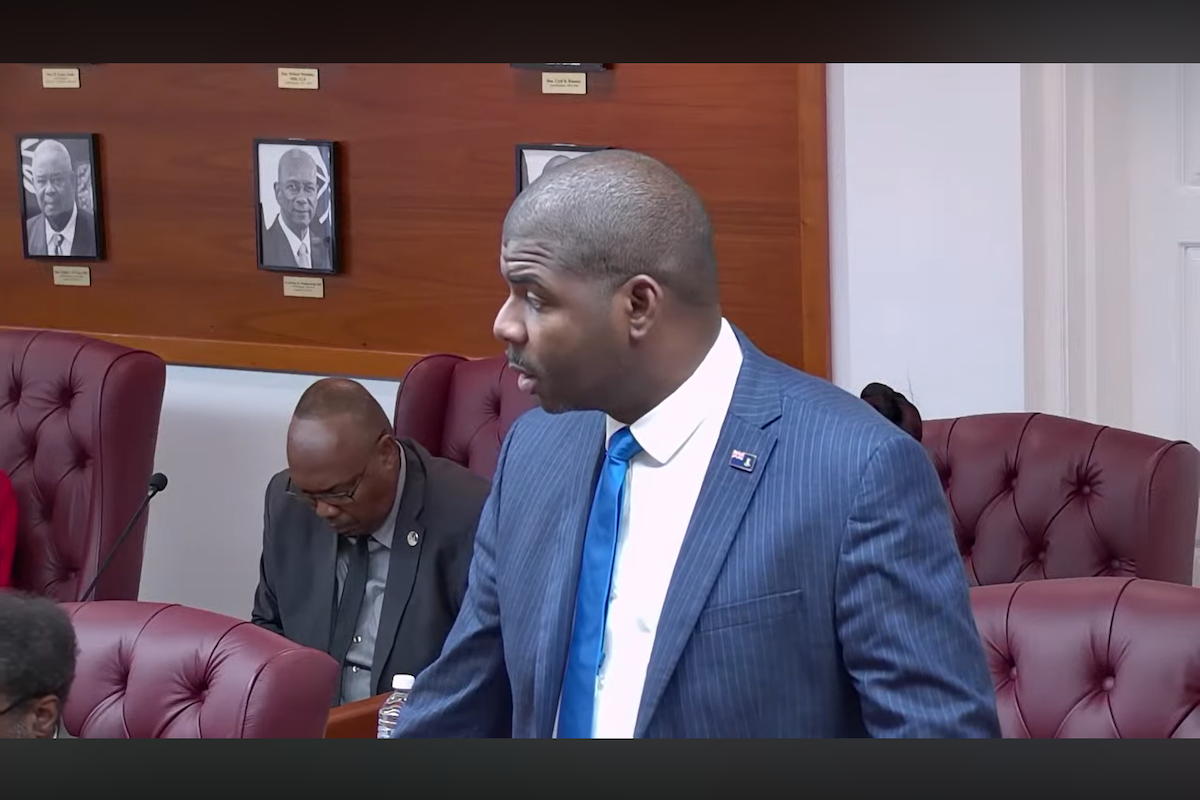
“Passage of this legislation is critical to ensure that the magistracy operates under the same procedural framework as the Supreme Court,” Premier Natalio “Sowande” Wheatley said last Thursday while introducing the Magistrate’s Code of Procedure (Amendment) Bill, 2025. “Without this amendment, there will be two separate rules governing the courts, creating inconsistency [and] procedural confusion that could undermine the administration of justice.”
After a short public debate and less than half an hour in closed-door committee, HOA members passed the law unanimously. It now awaits the governor’s assent.
Two systems
During his introduction, the premier said the magistracy — which is currently overseen by the governor — is responsible for the administration of the Magistrates’ Court, which handles criminal, civil and family matters.
However, the Eastern Caribbean Supreme Court, which presides over civil and criminal cases for the six island states within the Organisation of Eastern Caribbean States, has its own set of protocols — some of which differ from the magistracy’s, Mr. Wheatley said.
The amendment passed last week allows for the magistracy to consider and incorporate the rules of the ECSC within its own system.
“It is important that this amendment is enacted in advance of the implementation of the Eastern Caribbean Supreme Court rules to ensure that the magistracy has the appropriate legislative framework to adopt and operationalise those rules in a manner that respects its distinct structure and mandate,” Mr. Wheatley said.
‘Equal rights’
Following the premier’s introduction, Health and Social Development Minister Vincent Wheatley and Opposition Leader Myron Walwyn rose to voice their support.
Mr. Wheatley said he was pleased to stand and support the amendment, while also alluding to the 1977 Peter Tosh song “Equal Rights.”
“[In the song], he doesn’t want peace: All he really wants is equal rights and justice,” Mr. Wheatley said, adding, “Here we are today, and we are doing just that: trying to make sure justice is not delayed and that it becomes more efficient.”
Mr. Walwyn echoed Mr. Wheatley’s sense of urgency while also stressing the need to create distinctions between the courts and the other branches of government.
“We must address this matter swiftly so that the courts may operate independently without the executive making rules for the judiciary,” he said. “It is not the right approach. We are where we are, but we have to get this fixed.”
Mr. Walwyn then named Jamaica’s system as an example for the territory to emulate.
“So the best practice in other countries, Jamaica for instance, is that the rules are made by a committee,” he said. “Or you will have the rules made by a chief justice or a judicial council. That is the way it’s supposed to be done. And what Cabinet should be doing is creating the legal framework authorising the rules. That is really what should happen.”
Transition plan
The premier concluded the debate by looking ahead.
“We want to transition … from having the magistracy fall under the responsibility of the governor, to then have that magistracy fall under the Eastern Caribbean Supreme Court system,” he said. “The criminal procedure rules are soon to be agreed, and we cannot have a situation where the magistracy and the supreme court are operating based on different rules. This is happening for expediency’s sake.”
Related News

Former chief minister’s home coming down

VI National Guard Exits Federal Oversight After Six Years of Transformation
VI National Guard Exits Federal Oversight After Six Years of Transformation