
Exodus of ISIL-linked detainees from Syria camp sparks security concerns
 17 February 2026
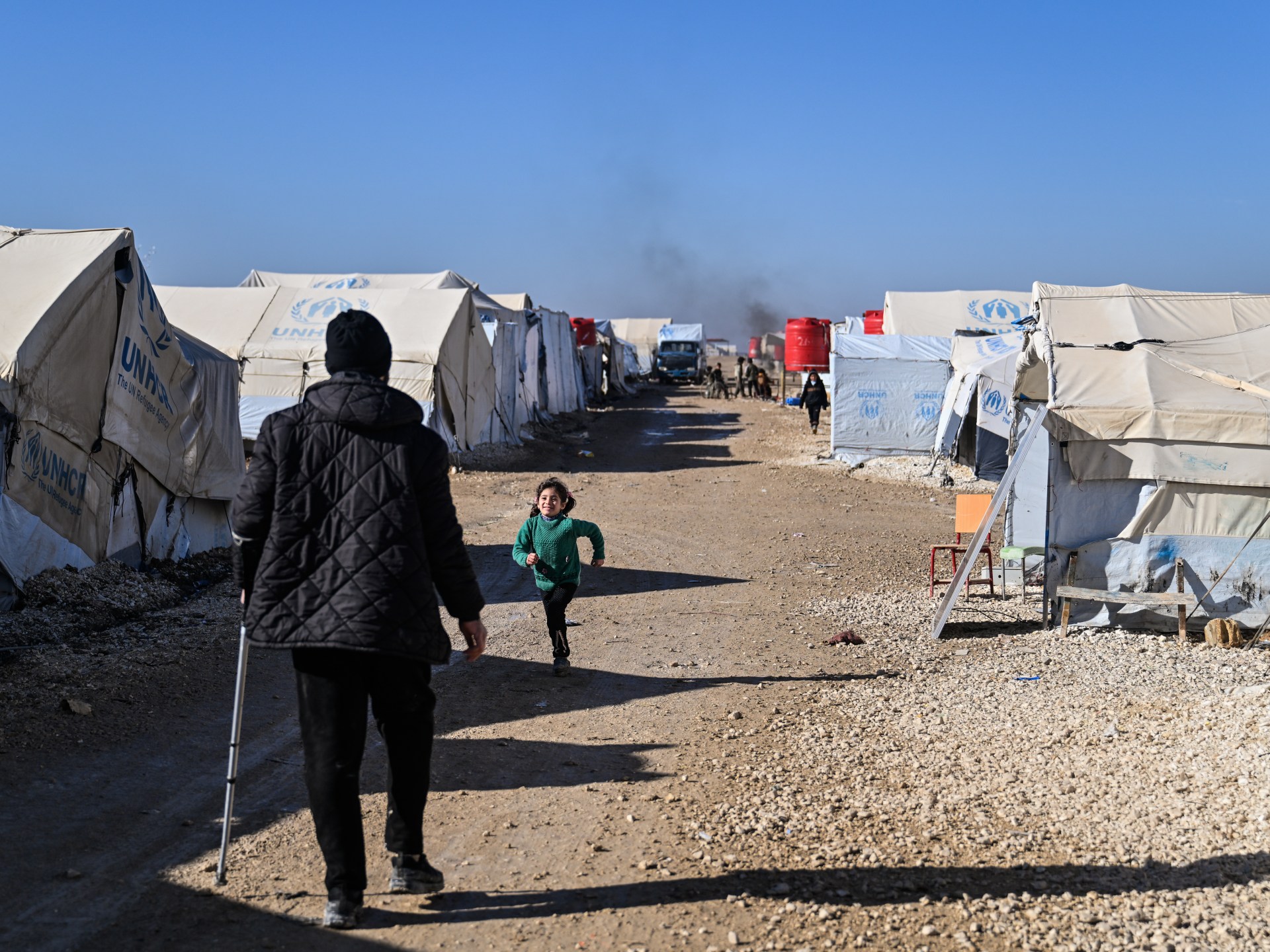

The number of residents at one of Syria’s most notorious camps has dropped rapidly, going from about 24,000 earlier this year to the low thousands at most, humanitarian, diplomatic and local sources from the country’s northeast have told Al Jazeera.
The al-Hol camp, near the Syria-Iraq border, had held mostly internally displaced Syrians and approximately 6,000 third-country nationals with links to ISIL (ISIS). It was managed by the Kurdish-led Syrian Democratic Forces (SDF) before a government offensive in Syria’s northeast in January forced the SDF to withdraw.
- list 1 of 3Australian ISIL relatives sent back to Syria’s Roj camp after release
- list 2 of 3Israel’s move to register land ‘systematises dispossession’ of Palestinians
- list 3 of 3Israel bombs Lebanon-Syria border, kills four people
end of list
Since then, the camp has ostensibly come under government control.
Details and accounts about how families and individuals exited the camp, which at its peak in 2019 held about 73,000 families, are contradictory. What is clear, according to sources on the ground, is that most Syrian nationals left al-Hol for their home towns, while many of the foreigners have travelled west to the government strongholds of Idlib or Aleppo governorates.
The uncertainty and lack of information have left analysts, diplomats and humanitarian workers with security and human rights concerns.
Freed or kidnapped?
In 2019, ISIL was defeated in Syria by a United-States coalition, which included the SDF. Al-Hol, located in the Hasakah governorate, was then established by the SDF after it took control of large parts of northeast Syria, with backing from the US.
It became the largest camp housing people suspected of links to ISIL. Of the total number of people in al-Hol in January, Syrians made up 14,500, and Iraqis made up 4,000. Approximately 6,200 people from other nationalities were also held in a highly securitised section of the camp, with more than 95 percent of them being women and children, according to Save the Children.
Advertisement
The SDF maintained control of al-Hol throughout the last years of Syria’s al-Assad regime, which ultimately fell in December 2024. And the SDF only relinquished the site after the new Syrian government’s offensive forced them to.
The Syrian government’s security forces entered al-Hol on January 21 to take control of the site. But humanitarian organisations were forced to stop working in the camp in recent days due to the conditions that followed the SDF’s abandonment and the government’s attempts to reestablish security.
It is unclear exactly how people housed in the camp left. Some of those held there told aid workers that they were directed – it is unclear by whom – to board buses. Others said that people pushed their way out of the camp and that guards were unable to stop them.
Smugglers are also reported to have transported Syrians and foreigners alike.
Al Jazeera could not confirm any of the reports, but aid workers and diplomatic sources believe the methods of escape described are feasible due to the size of the camp.
“There is still no clear, verified information about how the mass transfers from al-Hol to Idlib, and possibly other parts of Syria, took place after the SDF left the camp,” Beatrice Eriksson, spokesperson of the Swedish branch of Repatriate the Children, told Al Jazeera.
She said the information she was able to gather suggested that the movement of families “did not happen in a controlled or officially coordinated manner”.
“Families who were moved cannot be certain whether they have been liberated or effectively kidnapped,” she said. “That level of uncertainty alone illustrates the acute protection risks facing these families.”
A source with the SDF’s former administrative body told Al Jazeera there had been no “prior coordination between the SDF or the Autonomous Administration and Damascus” over al-Hol.
“Unfortunately, everything happened suddenly,” he said.
Major security and humanitarian concerns
With so many families leaving the camp in unspecified and seemingly uncoordinated methods, analysts and diplomatic sources say they have serious security and humanitarian concerns.
Shortly after news broke of families leaving al-Hol, a video emerged online of a man in the office of former camp director Jihan Hanan. The man, who identified himself as Abu Sleiman al-Haskawi, called Hanan a pig and threatened her.
“Unfortunately, everything has ended, and I have become afraid for myself and my children,” Hanan told Al Jazeera.
The man in the video did not declare an affiliation. Analysts and diplomatic sources worry that some of the people who escaped would join groups seeking to undermine Syria’s stability.
Advertisement
A UN report released last Wednesday found that Syrian President Ahmed al-Sharaa and two of his senior cabinet ministers were targeted by ISIL in five foiled assassination attempts in the last year alone.
“If radicalised detainees are able to support ISIS attacks, or a resurgence in the next year or two, this could represent a major blow to the Syrian government,” Caroline Rose, director of the Crime-Conflict Nexus and Military Withdrawals portfolios at the New Lines Institute, told Al Jazeera.
“Already, during the transfer of detention centres with the SDF, there was a breakout attempt under the government’s watch. There have been ISIS attacks on both government and civilian targets as well. If this trend severely increases in the next year, I think the Syrian government will have to face mounting… distrust.”
For years, rights groups and international organisations called for the global community to act on the problem of al-Hol. Many people were detained there without ever facing trial. Many could not be repatriated because their countries of origin refused to receive them.
And now that many of the families are no longer there, new humanitarian concerns have emerged.
“While ending arbitrary, indefinite detention in places like al-Hol is important, the way this has unfolded is incredibly risky,” Sarah Sanbar, a researcher at Human Rights Watch, told Al Jazeera.
“When women and children leave in a chaotic, unplanned way, they often just become more vulnerable to trafficking, exploitation, or recruitment by armed groups. So the immediate priority should really be about identifying and protecting them.”
Sanbar added that “countries whose nationals are involved need to step up and repatriate them in a coordinated, safe, and dignified way. Women and kids should not be left to navigate smuggling routes and shifting front lines on their own.”
‘I fall asleep in fear’
Conditions in al-Hol have also been criticised by rights groups and people familiar with the camp.
A 2022 report from Doctors Without Borders, known by its French initials MSF, said that people were not given adequate food or water, phones were banned, and medical care was insufficient. People interviewed by MSF for the report described the camp as a prison.
A little more than 40km (25 miles) away from al-Hol is the Roj camp, which also houses ISIL-linked people. Like al-Hol, it is based in Hasakah province, but Roj is still under SDF control. And following the recent developments at al-Hol, residents at Roj wonder what is next for them.
A European woman at the camp told Al Jazeera that detainees fear the camp may be dismantled and they will have to leave.
“I’m with my children,” she said. “Honestly, at night, there’s a lot of raids by the SDF. Sometimes they even hit the women… To be honest, I often fall asleep in fear.”
The woman in Roj said she wanted to be repatriated, but feared she would be sent to Idlib and get stuck in Syria. Her compatriots who were in al-Hol are now in Idlib, she said. “They’re being held captive and have not yet been registered. They want deportation; they don’t want to stay in Syria.”
Advertisement
“Our [home country] authorities are not responding. We’re asking them for guidance on this situation, but they’re not commenting,” she said. “We’ve been begging them to deport us for years.”
Related News
Deadly Islamabad bombing sharpens focus on cross-border attacks in Pakistan
South Africa’s Ramaphosa says troops will deploy to tackle crime gangs
Palace says King Charles will ‘support’ police probe into ex-Prince Andrew