EU remains divided over trade sanctions on illegal Israeli settlements
 03 September 2026
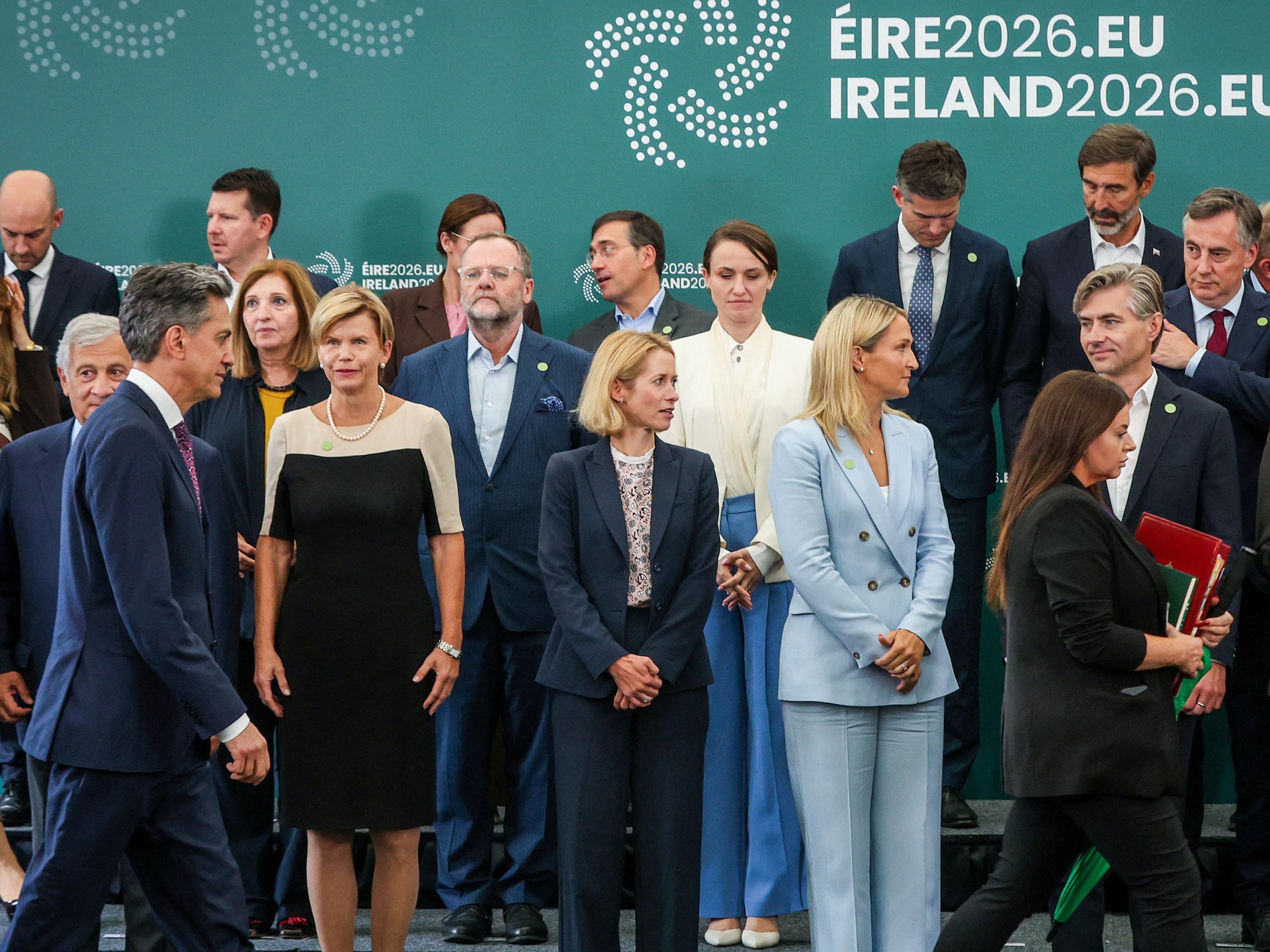

European Union foreign ministers remain divided after talks on imposing trade sanctions against Israel amid increasing settler violence in the occupied West Bank.
Ireland, the current holder of the EU council presidency, hosted an informal meeting of EU foreign ministers in Wicklow on Tuesday and Wednesday.
- list 1 of 4Will the EU take action against Israel?
- list 2 of 4Two Palestinians killed as settlers, Israeli forces raid West Bank village
- list 3 of 4EU eyes more Russia sanctions after failed drone attack in Germany
- list 4 of 4EU or Eurasia: Why Putin sparred with Armenia’s PM
end of list
Reporting from Wicklow, Al Jazeera’s Peter Smith said Ireland and Spain, with the support of Belgium and the Netherlands, led the call for EU-wide restrictions against goods imported from illegal Israeli settlements at the meeting.
He said that Germany, Austria, Czechia and Hungary are clear that they would oppose any attempts to sanction illegal settlements, saying such a move would upset diplomatic channels with Israel.
Ireland was the first EU country to ban imported Israeli settlement goods. The country recognised a Palestinian state in 2024 amid Israel’s genocidal war against Palestinians in Gaza and continues to criticise Israel’s expansion of illegal settlements in the occupied West Bank.
Ireland has also pushed for a review of the EU-Israel Association Agreement, a cooperation deal signed in 2000 that forms the basis for trade ties with Israel.
The EU bloc is Israel’s largest trading partner as bilateral trade of goods reached nearly $50bn last year. The volume of trade has increased since 2023. EU exports to Israel increased from nearly $30bn to about $32bn in 2025.
“We should be moving collectively … It is not credible for us to say we should uphold international law in one form and not do it in the other,” Irish Foreign Minister Helen McEntee told reporters after the meeting.
![Ireland's Defence and Foreign Minister Helen McEntee takes part in a joint press conference following an informal meeting of EU Foreign Affairs ministers. [AFP]](https://www.aljazeera.com/wp-content/uploads/2026/09/afp_6a98d494a3dc-1788400788.jpg?w=770&resize=770%2C486&quality=80)
“We’re hearing that at the meetings of the foreign ministers in Wicklow this week, only Ireland raised the issue of the illegal settlements,” Irish Member of the European Parliament Lynn Boylan told Al Jazeera.
Advertisement
EU foreign policy chief Kaja Kallas did not address the prospect of trading sanctions in a news conference after the informal meeting.
She previously commented on proposals to curb trade with illegal Israeli settlements at a previous Gymnich meeting in July and said at the time that the ministers debated three options, which included an import licensing system, prohibitive tariffs or a ban, Reuters reported.
Kallas said at the time that a plan for a ban received the strongest backing at the gathering that took place in Brussels, but there was no clear majority for any single option.
There is also debate on whether the imposition of trade restrictions requires unanimity from the ministers. EU trade decisions can be passed by a simple majority vote, but major political or policy decisions require a unanimous vote.
Several protesters demonstrated near the golf resort where the meeting was held and were seen holding signs that read “You need to boycott Israel now” and “Sanction Israel”.
![An Israeli military bulldozer uproots olive trees on a Palestinian farm area in the village of Arraba, near the West Bank city of Jenin. [Majdi Mohammed/AP Photo]](https://www.aljazeera.com/wp-content/uploads/2026/09/ap_6a98d4b04aa26-1788400816.jpg?w=770&resize=770%2C513&quality=80)
Related News
In maps and charts: Russian and Ukrainian attacks on civilian targets
US envoys headed to Russia and Ukraine to relaunch mediation
How significant are the Yemeni government’s military gains against the Houthis?