Direct-rule threat finally lifted, Continue reading “Direct-rule threat finally lifted”
 19 March 2026


The United Kingdom’s long-running threat to implement direct rule over the Virgin Islands through a draft order in council officially ended Friday, closing a controversial chapter that began with the 2022 Commission of Inquiry report and continued for nearly four years.
Premier Natalio “Sowande” Wheatley celebrated with a triumphant public statement calling the development “a national achievement” and “a national victory.”
The move, however, was expected.
United Kingdom Foreign Secretary Yvette Cooper decided on Sept. 22, 2025, to revoke the draft order in council after Overseas Territories Minister Stephen Doughty concluded that the VI had made sufficient progress on governance reforms recommended by the COI. The formal revocation order was then approved by the UK Privy Council and laid in the UK Parliament on Feb. 10 before taking effect on Friday.
That process means Friday’s announcement was the final legal step in a decision made months ago.
Still, Mr. Wheatley stressed that the milestone was a significant moment in VI political history.
The order in council was drafted in 2022 after the COI uncovered widespread governance failures and recommended sweeping reforms.
But Britain agreed not to impose direct rule immediately, instead holding the order in reserve while the VI government worked to implement reforms.
Had the order been activated, it would have temporarily suspended key parts of the Constitution, dissolving the elected House of Assembly and handing the governor direct control for long enough to push through the COI recommendations.
‘Under the shadow’
Mr. Wheatley, who has for years painted the issue in existential terms, revisited that theme Friday.
“For nearly four years, the Virgin Islands lived under the shadow of a constitutional threat — an order that, if activated, would have taken away the democratic rights that generations of Virgin Islanders fought to build and protect,” he said.
He also framed the outcome as vindication for local self-government. “Today, the Virgin Islands stands tall,” he said. “Our Constitution stands firm. Our democracy remains intact. And we, the people of these Virgin Islands, stand vindicated in our belief that we are capable of governing ourselves.”
The premier also used the moment to praise the cross-party unity government formed shortly after the release of the COI report — which itself came the day after the Miami arrest of then-premier Andrew Fahie on drug-trafficking charges.
“In response to this threat to democracy, the Government of National Unity was formed,” said Mr. Wheatley, who led the unity government as premier. “Leaders from different political backgrounds, with different philosophies and different histories, put aside personal and political differences for one purpose: to protect the Virgin Islands from direct rule and to preserve our democracy.”
He added that the unity government “was one of the main reasons the UK agreed to allow the Virgin Islands to continue governing itself while reforms were implemented.”
Years of pressure
The road to Friday’s revocation began in the aftermath of the COI report, which led to 48 key recommendations being accepted under an agreed reform framework between the VI and UK governments in June 2022.
The reform effort touched wide-ranging aspects of government and public administration. In his Friday statement, the premier said the work “demanded time, energy and resources on a scale that few fully appreciate” and praised public officers who he said worked “long hours under intense pressure.”
In September 2024, he reported to Mr. Doughty that the government had substantially implemented the 48 key recommendations. Mr. Doughty agreed that enough progress had been made to set conditions for lifting the order, including a final report from the governor; a public survey; a review by Foreign, Commonwealth and Development Office officials; and a self-assessment by the VI government.
That self-assessment was submitted in May 2025, according to Mr. Wheatley.
But when Mr. Doughty announced in September 2025 that the UK would proceed with the revocation, he also made clear that London still had concerns.
Reform progress had been “slower than initially envisaged,” he warned, even while acknowledging that major legislation had passed and the agreed framework had been carried forward.
He also called for continued scrutiny, asking Governor Daniel Pruce to publish reform assessments every six months and proposing annual public surveys on implementation and governance.
‘A new chapter’
On Friday, the premier pledged that his government will continue reforms through its Governance Reform Transition Programme.
“As premier, I assure the public that my government and I remain committed to good governance and leading this territory with honesty, integrity and democratic accountability,” he said.
But he also acknowledged that the revocation does not end the broader discussions over governance and oversight.
“While we celebrate this moment, we recognise that the revocation of the order in council is not the end of the journey: It is the beginning of a new chapter,” he said. “We must proceed with vigilance.”
Related News
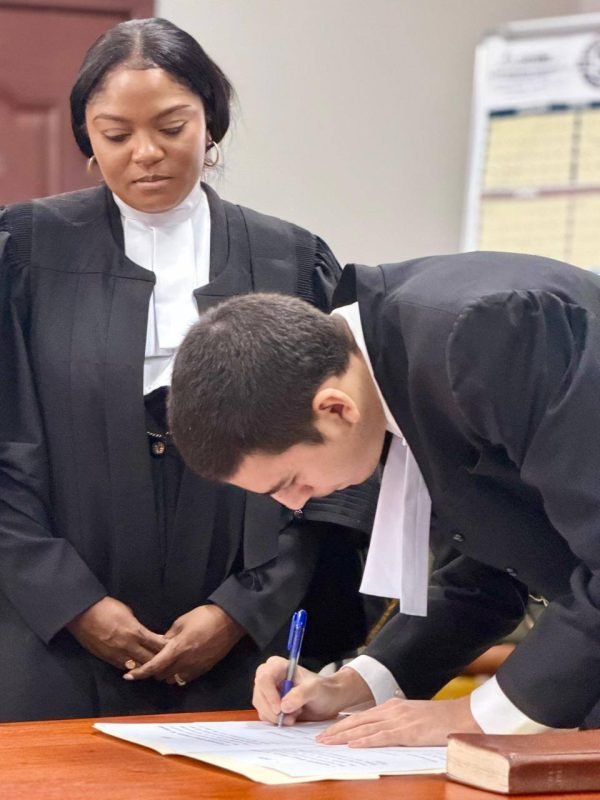
Attorney Alex Fonseca called to the Bar

Sports, arts and more in Education Month, Continue reading “Sports, arts and more in Edu...

La Ruta Maya paddlers and fans boycott Love TV