
Caribbean Unity Tested As Election Interference Allegations Threaten Regional Trust
 12 February 2026

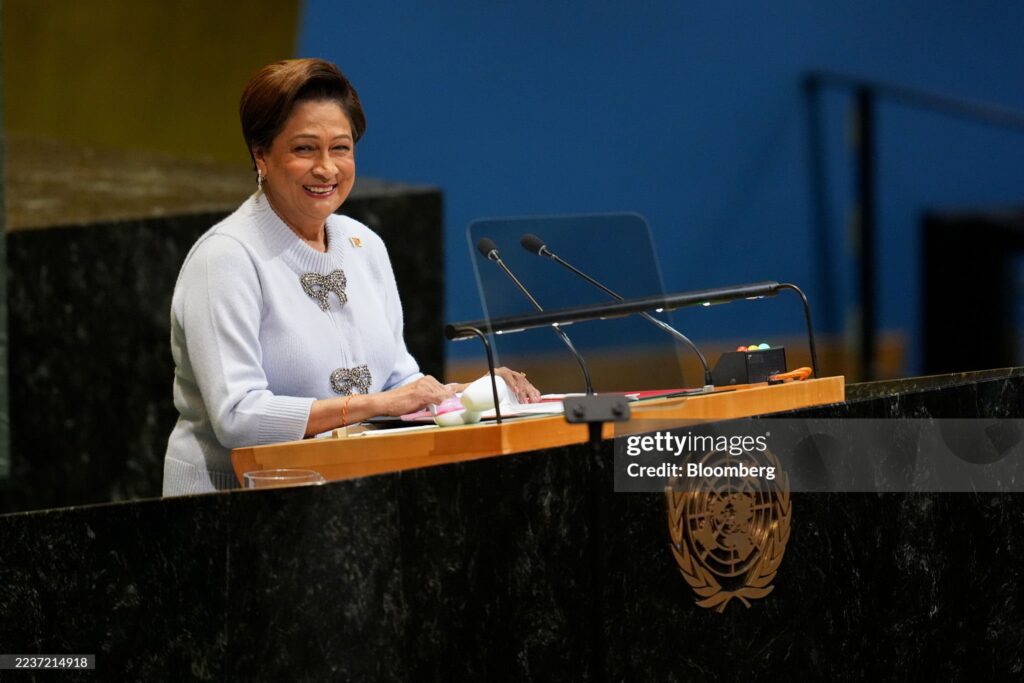
News Americas, NEW YORK, NY, Thurs. Feb. 12, 2026: The recent report regarding Prime Minister Kamla Persad-Bissessar’s denial of UNC interference in the upcoming Barbados elections is more than a simple political rebuttal; it is a signal of a deepening fracture in our regional diplomatic fabric. The narrative unfolding here suggests a shift from mutual respect to a more interventionist style of Caribbean politics. When allegations arise that a governing party in Trinidad and Tobago is actively backing a specific side in a neighbor’s election – particularly just forty-eight hours before the polls opened on February 11th – it casts a long shadow over the sanctity of sovereignty.
This pattern of alleged cross-border political interference echoes troubling precedents from other regions that should serve as cautionary tales. Consider Russia’s documented interference in the 2016 U.S. presidential election through disinformation campaigns and cyberattacks- operations that fundamentally undermined public trust in American democratic institutions and poisoned relations between Washington and Moscow for years to come. Or examine China’s increasingly assertive influence operations across the Pacific Islands, where Beijing has allegedly used economic leverage and political donations to sway electoral outcomes in nations like the Solomon Islands and Kiribati, effectively reshaping regional alliances and threatening the traditional influence of Australia and the United States.
Even within democratic blocs, such interference creates lasting damage. The European Union has grappled with accusations that Hungary and Poland have attempted to influence each other’s domestic politics through coordinated media campaigns and financial support for allied parties, weakening the union’s cohesion at precisely the moment it needs solidarity to address migration crises and security threats from Russia. In Latin America, Venezuela’s alleged support for sympathetic political movements in Bolivia, Nicaragua, and Ecuador during the height of the “Pink Tide” era created a polarized hemisphere where accusations of foreign meddling became routine, making genuine regional cooperation nearly impossible.

The creation of a dangerous precedent is perhaps the most worrying aspect of this unfolding story, as the lines between national interests and regional “bloc-building” are becoming dangerously blurred. If we allow the perception to take root that political machinery can be exported across waters to sway local outcomes, we risk turning our neighbors into proxies. This doesn’t just threaten the immediate peace between Port of Spain and Bridgetown; it sets a template for a future where the wealthiest or most organized regional parties can dictate the leadership of smaller nations.
The consequences of such precedents extend beyond bilateral tensions to fundamentally destabilize regional security architectures. When Saudi Arabia and Iran engaged in proxy political warfare across the Middle East – supporting opposing factions in Lebanon, Yemen, Iraq, and Bahrain – the result was not merely diplomatic friction but actual armed conflicts that have cost hundreds of thousands of lives and displaced millions. The Sahel region of Africa offers another stark example: external powers including France, Russia, Turkey, and Gulf states have all sought to influence the political trajectories of Mali, Burkina Faso, and Niger through combinations of military support, political backing, and economic inducements, contributing to a cycle of coups and instability that has made the region a breeding ground for extremism.
Furthermore, we must consider the heavy cost of distrust and the resulting erosion of the CARICOM spirit. Integration depends on the firm belief that each nation’s democratic process is its own, yet by the time a Prime Minister has to issue a “categorical denial” of meddling, the seeds of suspicion have already been sown. History demonstrates how quickly such suspicions can unravel decades of cooperation. The African Union’s effectiveness has been repeatedly undermined by accusations that larger powers like Nigeria, South Africa, and Egypt use their economic weight to influence the domestic politics of smaller member states, making collective action on issues like the Libya crisis or conflicts in the Horn of Africa nearly impossible to coordinate. ASEAN’s principle of non-interference has been tested to breaking point by allegations that Thailand and Cambodia, or Vietnam and the Philippines, have supported opposition movements in each other’s territories, paralyzing the organization’s ability to present a united front on critical issues like the South China Sea disputes or the Rohingya crisis.
The economic consequences alone should give us pause. When members of the Gulf Cooperation Council – supposedly one of the world’s most integrated regional blocs – accused Qatar of political interference in their internal affairs in 2017, the resulting diplomatic crisis and blockade cost the regional economy billions of dollars, disrupted trade networks built over decades, and weakened the GCC’s collective bargaining power vis-à-vis Iran and global energy markets at a critical moment.
Our region cannot afford a narrative of interference; we face collective threats – economic volatility and climate change—that require absolute unity. The stakes for the Caribbean are existential in ways that dwarf even these examples. Small island developing states facing rising sea levels, hurricane intensification, and economic marginalization in global trade systems simply cannot afford the luxury of political division that larger regions might weather. When the Pacific Islands Forum nearly collapsed in 2021 over accusations that Australia and New Zealand were manipulating the selection of the Secretary-General to serve their interests rather than those of smaller island states, it paralyzed the organization’s climate advocacy at precisely the moment when COP26 required maximum Pacific unity. The Caribbean cannot repeat such mistakes when our very existence as viable nations may depend on presenting a coordinated front on climate finance, debt relief, and preferential trade access.
To see our leaders embroiled in accusations of electoral tampering suggests we are looking inward and backward, rather than moving forward as a unified community. The lesson from every region that has traveled this path is clear: once the poison of interference takes hold, it requires years or even decades to restore trust – time we simply do not have.
Related News
When Skills Matter More Than Passports: A Caribbean Reckoning
St. Vincent and Grenadines New Government Lays Out New Budget

Haitian American Congresswoman Salutes TPS Ruling As Little Haiti Prays