As Lebanon tests US-Iran deal, Trump must rein in Netanyahu, analysts say
 19 June 2026

It is not another anonymously sourced report about a rift between the United States and Israel. This time, the administration of President Donald Trump appears genuinely frustrated with Prime Minister Benjamin Netanyahu’s war in Lebanon.
The opening of the memorandum of understanding (MoU) between the US and Iran calls for the “permanent termination of military operations on all fronts, including in Lebanon”, but the Israelis are not stopping their attacks in the country.
- list 1 of 3Pro-Israel hawks in US criticise Iran MoU but avoid clashing with Trump
- list 2 of 3MoU’s $300bn Iran reconstruction fund becomes US political flashpoint
- list 3 of 3Are prices really dropping in the US, as Trump claims?
end of list
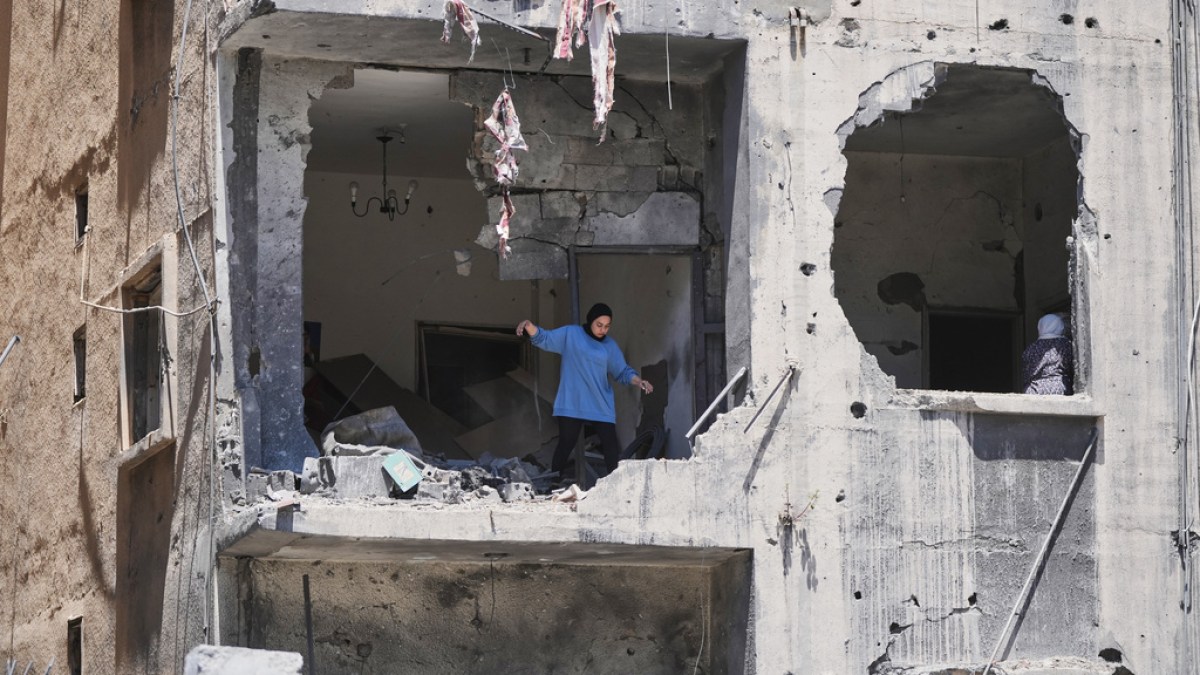
The Israeli military is continuing its deadly strikes in Lebanon and trying to advance further with its invasion, vowing to keep hold of the territory it has conquered, amounting to nearly 20 percent of the country.
The Trump administration is making it clear that it is irked by Israel’s behaviour.
“The United States is committed to PEACE, and we encourage everyone in the Middle East Region to maintain their commitment to allowing our negotiations to beautifully unfold,” Trump wrote in a social media post on Thursday.
“The Markets are loving what is happening with Oil Prices way down, and Stocks way up. We expect a complete Ceasefire on all fronts, including Lebanon, Hezbollah, and Israel.”
For their part, the Iranians have said repeatedly that they will not finalise a ceasefire deal while Lebanon is under fire. This condition appeared to come into play on Friday when talks between the United States and Iran to discuss the technical terms of their ceasefire deal were postponed after overnight Israeli attacks on Lebanon killed dozens of people.
Advertisement
While US officials have said that yet another ceasefire was agreed in Lebanon after the spike in violence on Friday, Israel has continued its attacks.
Supreme Leader Mojtaba Khamenei said on Thursday that he received assurances from President Masoud Pezeshkian about safeguarding the rights of “the Iranian nation and the resistance front” in talks with the US.
The resistance front, also known as the axis of resistance, is a network of regional Iranian allies that includes Hezbollah in Lebanon.
Trita Parsi, executive vice president of the Quincy Institute for Responsible Statecraft, said Tehran is “not joking” about its commitment to a ceasefire and Israeli withdrawal from Lebanon.
“Lebanon has always been the greatest vulnerability to this deal because this is really crucial to the Iranians,” Parsi told Al Jazeera.
When the MoU was announced, Israel’s allies in the US rushed to criticise the Lebanon stipulations, arguing that Israel must have freedom of military action to respond to “threats” in the country. The deal stressed Lebanon’s sovereignty and territorial integrity.
“The language would appear to mandate Israel end efforts to disarm Hezbollah, despite Israel not being a party to the MoU and ongoing Hezbollah attacks,” The American Israel Public Affairs Committee (AIPAC) said on Thursday.
Ryan Costello, the policy director at the National Iranian American Council (NIAC), an advocacy group that promotes diplomacy, told Al Jazeera that Lebanon poses the “greatest test” for the ceasefire deal.
“I would not be surprised at all if there is a breakdown in the broader negotiations, and we see at least Israel and Iran return to fighting,” Costello said. “I think what Trump has signalled is that if you do that, Israel, you’re going to be on your own.”
Lebanon and the ceasefire
Israel’s assault on Lebanon has been a major fault line in the ceasefire for months. From the outset of the conflict, Iran has linked the war in Lebanon to its own confrontation with the US and Israel.
But Israel has insisted that it can attack Lebanon independently, without affecting the broader ceasefire talks between the US and Iran.
When the US and Israel launched their initial attacks on Iran in February, the war quickly mushroomed into a regional conflict.
The Lebanese group Hezbollah joined the fighting in March as a response to the killing of Iranian Supreme Leader Ali Khamenei, as well as to Israel’s daily violations of the ceasefire with Lebanon forged in November 2024.
The US and Iran reached their initial ceasefire on April 8. In announcing that deal, Pakistan, the lead mediator, said the ceasefire would apply to the entire region, including Lebanon.
Advertisement
But Israel almost immediately said it would not abide by the agreement in Lebanon.
The Trump administration took the side of the Netanyahu government, with US Vice President JD Vance warning Iran that it would be “dumb” to let the broader ceasefire collapse over Lebanon.
Separately, Washington brokered direct talks between the Lebanese government and Israel, away from the diplomatic process mediated by Pakistan.
Iran, however, has consistently maintained that Israeli attacks in Lebanon are a violation of the April 8 ceasefire, and it sprang into action, launching missiles at Israel when Beirut was bombed again earlier this month.
Israel has destroyed entire towns in Lebanon, killed thousands of people and displaced more than one million residents.
After the recent MoU was reached, Tehran has reiterated its position, with the Iranian military saying that Israel “should expect a harsh response” if it continues to bomb Lebanon.
This time, however, there is no US manoeuvre to side with Israel in pushing to decouple the fronts.
While the stipulations of the April ceasefire – including Lebanon’s inclusion – were released by Pakistani Prime Minister Shehbaz Sharif on X, this time there is more than a social media post by a third party.
The MoU, signed by Trump and Pezeshkian, is public, and stopping the war in Lebanon is stated prominently and explicitly in the document.
On Thursday, Vance stressed that Israel has to respect “the peace process” with Iran.
“What the president is getting frustrated with sometimes is we seem to be right on the cusp of a major breakthrough in the agreement, and all of a sudden, a major explosion goes off in a civilian population centre in Beirut, and a lot of people who have nothing to do with Hezbollah lose their lives,” Vance told reporters.
“That’s not acceptable.”
US leverage
Beyond words, analysts say, the US must use its leverage – including military and diplomatic support to Israel – to rein in Netanyahu and compel him to change his approach to Lebanon.
In a message to critics of the Iran deal within the Israeli government, Vance alluded to that leverage on Thursday, reminding Israel that the US is the superpower in the relationship.
“What is your exact proposal? You’re a country of nine million people. You can’t just kill your way out of solving every single national security problem that you have,” the US vice president told The New York Times.
Parsi said Vance’s statement reflects actual tensions between the US and Israel, not the usual mild criticism by Washington that fails to affect policy.
“We have seen that the volume, the decibel, the aggressiveness of the American public message is now more or less at an unprecedented level,” he told Al Jazeera.
“It shows that I think the paradigm of US-Israeli relations is about to change, and that this is because Trump is looking at the agreement as part of his key legacy, and he is willing to fight for his legacy.”
Matthew Duss, the executive vice president at the Center for International Policy, also said that Trump appears increasingly aware that Netanyahu may spoil the ceasefire with his campaign in Lebanon.
Advertisement
“It’s been clear for a while that Netanyahu himself is one of the main sources of instability in the Middle East right now. He’s been the main reason why we couldn’t get a ceasefire in Gaza, and why it took so long to get a ceasefire with Iran,” Duss told Al Jazeera.
“So, as always, the question is: Okay, we know that there are differences of opinion between the president and the Israeli prime minister, but do we finally have an American president who’s willing to put real pressure on Netanyahu when he misbehaves?”
Related News
Clashes break out at DRC rally against presidential term-limit change
US raises pressure on Cuba as it sanctions President Diaz-Canel

Three killed in Ukraine a day after drone attack kills child in Moscow