
Are rainforests now a cause of, rather than the answer to, climate change?
 12 December 2025
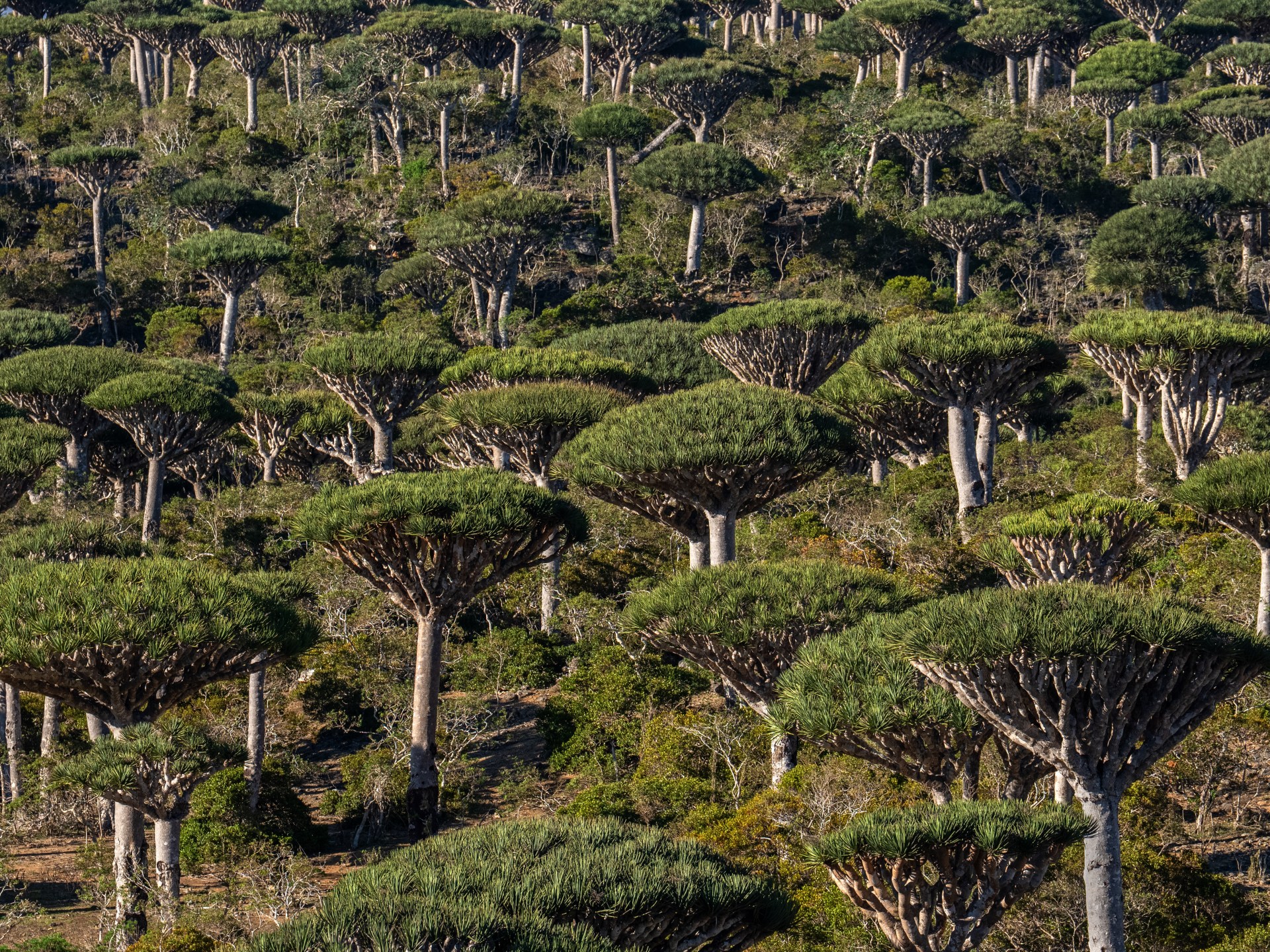

Human activity has caused some rainforests to switch from being a solution for climate change, to a source of it, a new study has found.
The study, published in the scientific journal Nature, discovered that Africa’s forests and woody savannas, which “historically acted as a carbon sink, removing atmospheric carbon and storing it as biomass” made “a critical transition from a carbon sink to a carbon source between 2010 and 2017”.
- list 1 of 3UN climate talks go into overtime as divisions over fossil fuels persist
- list 2 of 3World leaders, rights groups react to COP30 climate deal
- list 3 of 3COP30 deal urges more funds for poorer countries, omits fossil fuels
end of list
Using satellite data, researchers at the National Centre for Earth Observation at the Universities of Leicester, Sheffield and Edinburgh in the United Kingdom were able to track the changes in the amount of carbon being absorbed by trees and woody areas.
“The implications of this shift are profound. Africa’s forests and woodlands have historically served as a carbon sink. Now, they are contributing to widening the global greenhouse gas emissions gap that needs to be filled to stay within the goals of the Paris Agreement,” the report stated.
The 2015 Paris Agreement is a treaty between 196 countries acting to mitigate climate change and to keep the world’s temperature from rising more than 2 degrees Celsius (3.6 degrees Fahrenheit) above pre-industrial levels.
What has the study found?
In short, Africa’s forests are facing “increasing pressures” which have led to a decline in their ability to remove carbon from the atmosphere.
Currently, Africa’s forests are responsible for about one-fifth of global carbon removal. The largest of the continent’s forests is the Congo rainforest – the second largest in the world after the Amazon, and often dubbed the “lungs of Africa”.
Advertisement
The report found that between 2011 and 2017, Africa’s forests lost 106 million tonnes in biomass – living organisms such as plants – each year. This means their ability to absorb carbon from the atmosphere has been severely reduced.
The worst-affected areas were reportedly the tropical broadleaf forests in the Democratic Republic of the Congo, Madagascar and other parts of West Africa.
What has caused this?
Carbon output has risen exponentially in the industrial age and is largely caused by burning fossil fuels such as coal, oil and gas.
While forests were adept at absorbing this excess carbon for some time, their ability to do so has been impacted by increased logging to make way for agricultural land and to provide materials for infrastructure projects.
“The observed trends may be further exacerbated in the future by population growth in Africa, the increasing export demand, particularly from Asia, and the resulting pressure on natural resources (agricultural expansion for commodity crop, timber and fuelwood),” the report found.
“The long-term persistence of these trends will depend on local governance and whether resources are used sustainably,” it added.
What is a carbon sink, and how does it work?
A “sink” is any area of land or sea that absorbs more carbon dioxide than it produces.
On land, these areas tend to be abundant in bio material such as plants and trees, which absorb carbon dioxide through photosynthesis and store it in their biomass and in the soil. Farming, however, can disrupt this process in the soil.
The largest carbon sink in the world is the ocean, which absorbs about one-quarter of the Earth’s carbon output, according to ClientEarth, an environmental organisation. Carbon dioxide dissolves on the surface of the water and marine organisms absorb it via photosynthesis.
Which other areas of the world are at risk?
The Amazon rainforest is another area of concern.
Last year, the United States-based nonprofit Amazon Conservation found that deforestation in the Amazon rainforest was also eliminating trees that could absorb carbon.
Cleared land is often used for farming and livestock. These also tend to produce more emissions of greenhouse gases, which trap heat and produce carbon dioxide.
But due to the Brazilian government’s crackdown on deforestation, fears that the Amazon could also stop being a carbon sink have so far been averted.
According to the World Resources Institute (WRI), an environmental non-governmental organisation, the loss of the world’s forest carbon sinks will have “catastrophic consequences for people and the planet”.
Advertisement
What’s the solution?
The authors of the report noted that a Brazilian initiative, known as the Tropical Forest Forever Facility (TFFF), is trying to raise $100bn, which will be used to compensate countries that leave their forests untouched. So far, however, only $6.5bn has been raised by a small number of donor countries.
The report, therefore, called for more efforts to be focused on protecting Africa’s carbon sink and countering climate change.
“The world otherwise risks losing an important carbon sink needed to achieve the goals of the Paris Agreement,” the report found.
“Reversing biomass losses in Africa requires actions in the political, economic and societal spheres, to promote capacity building [and] improve forest governance,” it added.
Ultimately, however, more must be done to reduce our reliance on fossil fuels, experts say.
Heiko Balzter, professor of physical geography at the University of Leicester and one of the authors of the report, told New Scientist magazine: “If we are losing the tropical forests as one of the means of mitigating climate change, then we basically have to reduce our emissions of greenhouse gases from fossil fuel burning even faster to get to near-zero emissions.”
Related News

Witkoff to meet Putin for talks on Trump plan to end Ukraine war

Israeli forces continue demolition, destruction around Gaza City

Zelenskyy says territorial concessions remain Ukraine’s ‘biggest challenge’
