
After 20 years of delays, freedom-of-info bill published
 16 January 2026
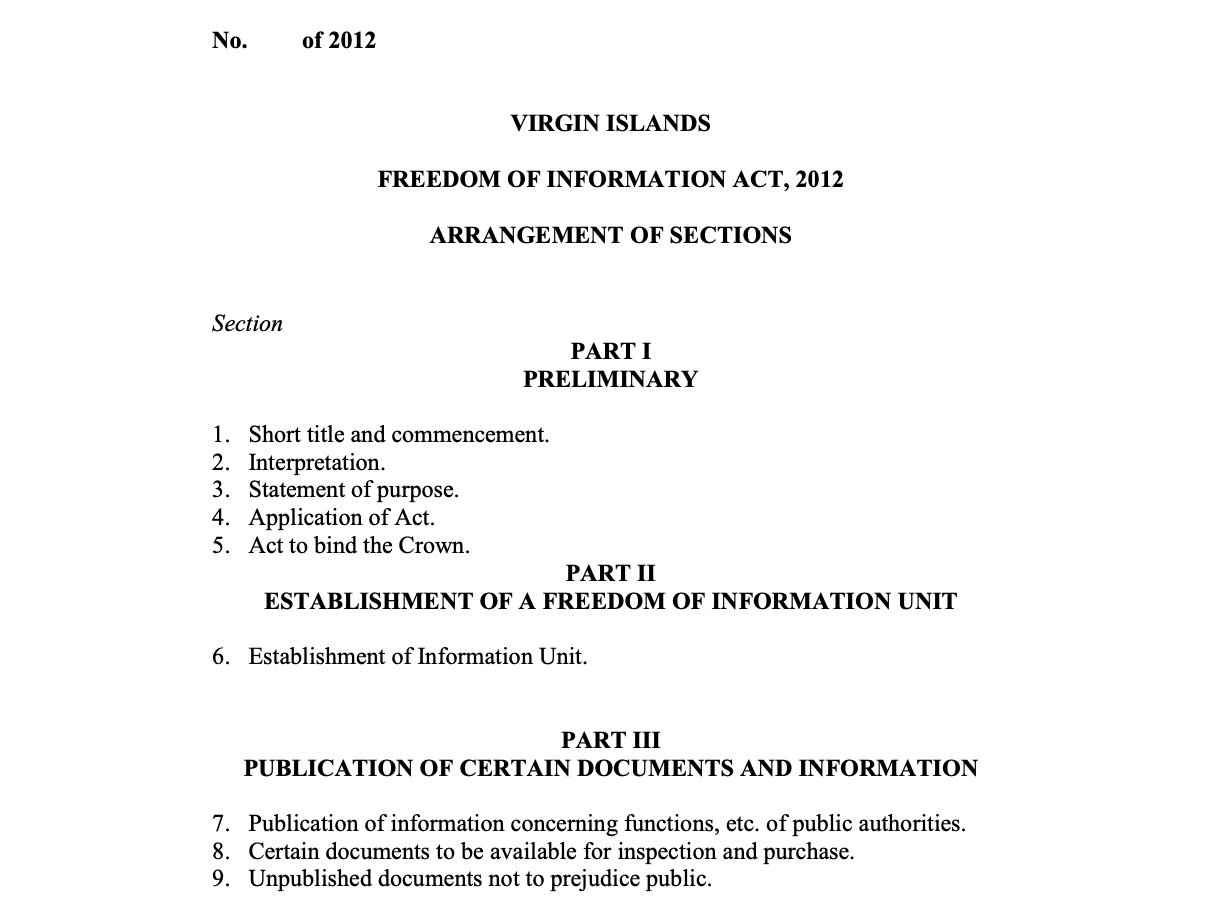

A freedom-of-information law promised by successive governments for more than two decades is finally back on the table with the release of a draft bill that would give the public a legal right to access government records.
For the first time on Jan. 12, the government circulated the draft Freedom of Information Act, 2012, inviting public feedback as part of a consultation process being led by the Premier’s Office.
If enacted, the law — which is on the House of Assembly’s legislative agenda for 2026, according to the Tuesday Speech from the Throne — would require government agencies and statutory bodies to disclose official documents on request, subject to specific exemptions.
Government officials described the move as a major step toward improving transparency, accountability and public participation in governance.
“The draft Freedom of Information Act is intended to provide the public with a clear legal right to access official documents held by government ministries, departments and public authorities, subject to carefully defined exemptions that protect essential public interests, personal privacy and national security,” Premier’s Office Permanent Secretary Carolyn Stoutt Igwe said in a Jan. 12 press release.
She added that the bill goes beyond requiring reactive disclosure.
“The legislation also establishes systems and obligations to proactively publish key government information, promote sound record-keeping, and ensure timely responses to information requests,” she said.
Proposed rules
The bill would apply broadly across government while carving out exemptions for information linked to Cabinet deliberations, the governor’s constitutional functions, national security, law enforcement, personal privacy and confidential communications.
The bill would also establish a Freedom of Information Unit to manage requests and support access, and it would grant oversight and enforcement powers to the complaints commissioner.
Members of the public would not be required to give a reason for requesting information, and government agencies would be bound by specific response timelines.
Other provisions include a public-interest test for certain exemptions, whistleblower protections, mandatory training for public officers, and requirements for improved records management.
UK law compared
The draft bill, however, falls short of the freedom-of-information regime in the United Kingdom, which has narrower exemptions and stronger enforcement mechanisms.
Unlike the UK’s Freedom of Information Act, which applies retroactively to historical documents, the VI draft would grant access only to historical documents created or held within five years before the law’s commencement.
And while the VI bill would place enforcement largely in the hands of the complaints commissioner, the UK law provides for stronger oversight by an independent information commissioner with sanctioning powers.
Also under the proposed VI law, government ministers would be granted the power to conclusively determine whether certain information is exempt from disclosure by signing a certificate.
The governor would have even broader powers to withhold information from the public through decisions that would not be subject to judicial review.
Decades of delay
The release of the draft legislation comes after years of stalled reform. A version of a freedom-of-information law was drafted by the now-disbanded Law Reform Commission in 2004.
Since then, successive governments have repeatedly promised such a law, but no bill was ever brought to the House of Assembly for debate.
In recent years, calls for the move have mounted from civil society, and the Constitutional Review Commission recently urged the adoption of a freedom-of-information regime ahead of constitutional negotiations with the UK.
Meanwhile, such laws have become standard across much of the world, and more than 125 countries now have one in place, according to the United Nations.
This region is no exception. A 2024 report by the Jamaica-based Media Institute of the Caribbean found that nine of the 17 English-speaking Caribbean countries and territories — including Jamaica, Trinidad and Tobago, the Cayman Islands and the Bahamas — had enacted freedom-of-information laws.
Public consultation
This week, Ms. Stoutt Igwe said the VI’s draft legislation reflects technical work already completed, drawing on previous recommendations from the former Law Reform Commission.
Though the draft aligns with internationally recognised open-government standards, she said, it is tailored to the VI’s constitutional and administrative frameworks.
Now, the Premier’s Office is urging members of the public, civil society organisations, the private sector and other stakeholders to review the draft bill and submit feedback before it is finalised and brought to the HOA.
Comments can be emailed to [email protected]. The government did not provide a timeline for submissions.
Related News

Sunset Soca Wine Festival Returns to Frederiksted, Blending Culture, Cuisine, and Music fo...

Man Hospitalized After New Year’s Day Shooting in Estate Contant

Amandala #3896 Tuesday, January 9, 2026