Spain votes in snap election dominated by housing and immigration issues
 29 November 2026
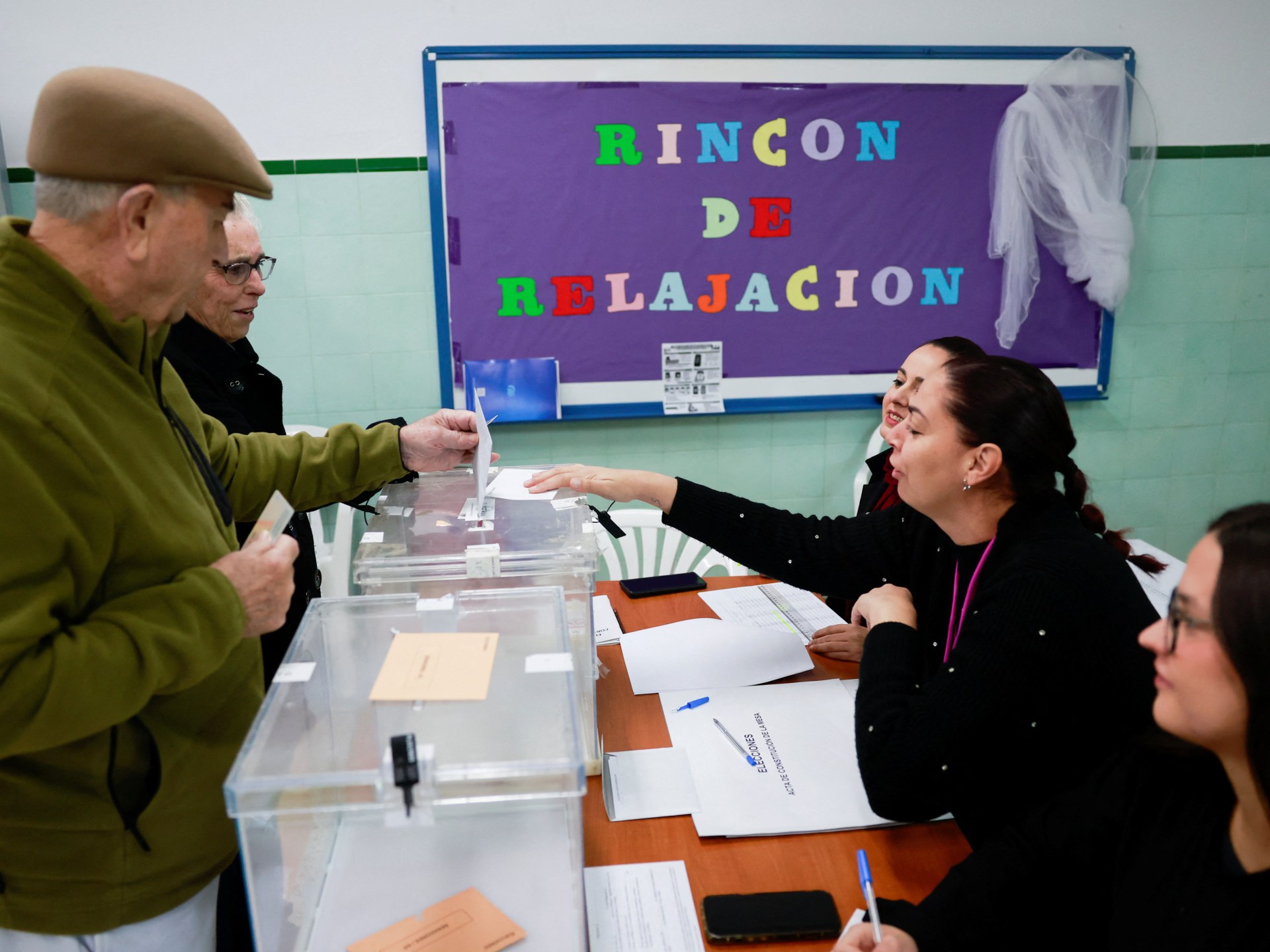

Socialist PM Pedro Sanchez hopes to secure another term, but some surveys suggest a coalition between conservatives and far right could win absolute majority.
Madrid, Spain – Voters across Spain are heading to the polls in a snap election that will decide whether Prime Minister Pedro Sanchez’s socialist-led government will stay in power or be replaced by a conservative, and possibly far-right, coalition.
Polling stations opened at 9am local time (08:00 GMT) and will close at 8pm (19:00 GMT). Official provisional results will start trickling in immediately after polls close, with the overall picture expected to be clear before midnight.
Pre-election surveys suggested the conservative People’s Party (PP) would win most seats but would likely need the far-right Vox party – projected to finish third – to secure the 176 seats required for an outright majority in the 350-seat Congress of Deputies.
Most projections said the PP and the Vox would reach that number together, giving PP leader Alberto Nunez Feijoo a path to power through either a coalition or a minority government backed by the far right.
Some opinion polls have projected turnout as high as 74 percent, levels not recorded in decades. Sanchez, who has been in power for eight years, is hoping that a strong turnout could help him defy the gloomy predictions that his party would finish second and be unable to secure a ruling coalition, as he has done in previous elections.
A popular figure among Europe’s progressives, Sanchez has been an outspoken critic of the Israeli government and a supporter of Palestinian statehood, which placed him on a collision course with United States President Donald Trump. They locked horns on other issues too, from trade to NATO defence spending.
Advertisement
Domestically, supporters point to his track record of overseeing Spain’s strong economic growth and implementing one of Europe’s most progressive immigration policies. But critics say his tenure has been tarnished by a wave of corruption scandals within his inner circle and a sense that basic services have been overstretched and not serving people well enough.
In September, the eviction of 87-year-old Maricarmen Abascal, who could no longer afford her rent, touched a nerve in a country grappling with a chronic housing shortage and soaring rents. Images of the pensioner being carried out of her home on a stretcher prompted mass protests.
Days later, Sanchez called a snap election eight months early after his government failed to pass several bills meant to tackle rising rents and evictions through parliament.

Immigration is another main talking point, especially for Vox, a once-fringe party that broke through national politics by staunchly opposing Catalonia’s attempt to break away in 2017.
Led by Santiago Abascal, Vox has recently made the reversal of Sanchez’s immigration policy its main raison d’etre. Its campaign was dominated by calls for an end to mass regularisation and the “remigration” of migrants who do not contribute to Spain’s wealth.
Abascal’s message appears to resonate with a growing number of Spanish people who feel the country’s public infrastructure is overwhelmed and that migrants have been receiving too many benefits.
“There are people who have many rights but no duties,” said Carmen Arcala, a pensioner from Matadorna, a small town in the southern region of Andalusia where Vox has been polling strongly. “I’ve worked all my life to have a small pension, but others don’t work, and they have the same rights as me. And that cannot be.”
Related News

Netanyahu’s last stand and the dangerous politics of survival

EU tells TikTok to fix ‘harmful’ For You feed, threatens fines

How can Israel break its election deadlock?