Belize stands up for Cuba
 04 November 2026
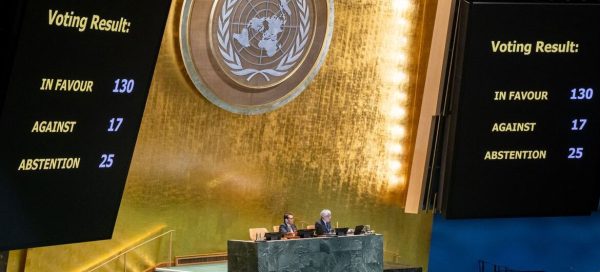

Belize votes, along with 129 other nations, to lift US economic embargo against Cuba at UNGA
BELMOPAN, Thurs. Oct. 29, 2026
Belize has maintained its support for lifting the United States’ economic embargo against Cuba, voting in favour of a United Nations General Assembly (UNGA) resolution on October 28. There were 130 votes in favour of the resolution, 17 against and 25 abstentions at the UN headquarters in New York. The outcome represents a notable drop from 2025, when 165 countries supported the resolution, 7 voted against and 12 abstained.
Oscar Arnold, Chief Executive Officer in Belize’s Ministry of Foreign Affairs, told reporters that Belize’s position remains rooted in the country’s foreign policy principles, which support lifting the embargo and related sanctions. He noted, however, that individual countries are entitled to determine how they vote on matters before the international body.
“Belize’s foreign policy remains grounded on some very basic principles, and so that is why we continue to support the lifting of the embargo and the sanctions,” Arnold said. He acknowledged the changing voting pattern at the United Nations, including an increase in abstentions and votes against the resolution, but said such differences fall within the normal process of countries deciding how to approach international resolutions.
There were also divisions on the vote within the Caribbean Community (CARICOM). Belize supported the resolution, while Trinidad and Tobago voted against it, and Jamaica and Guyana abstained, highlighting differing positions among regional countries on the longstanding dispute between Washington and Havana.
The resolution, presented by Cuba, calls for an end to the United States’ economic, commercial and financial embargo, citing principles of sovereign equality, non-interference in the internal affairs of states, and freedom of trade and navigation under the UN Charter. It also raises concerns about the extraterritorial effects of US legislation, including the 1996 Helms-Burton Act, which can affect businesses and individuals in third countries.
The latest vote took place at a critical point in Cuba’s existence as it faces a severe energy crisis and worsening economic difficulties. Cuban Foreign Minister Bruno Rodríguez Parrilla blamed the embargo for further straining the country’s healthcare system, citing delays and cancellations of medical procedures and difficulties obtaining medicines. His remarks underscored Havana’s argument that the restrictions have far-reaching consequences for the Cuban population.
The decline in support for the end of the embargo this year, including abstentions by several Western countries, marks a significant shift in voting patterns on an issue that has repeatedly come before the United Nations for more than three decades. For Belize, however, the latest vote reaffirms its continued support for ending the embargo, despite the growing differences among UN member states over how the decades-long dispute should be resolved.
(AMANDALA Ed. Note: From cpa.org.au/guardian – “The relations between Belize and Cuba go beyond diplomacy and trade links, as Cuba has always supported unconditionally the independence and sovereignty of Belize.” – Graham Holton, The Guardian, November 28, 2022.)
Related News

USDA Proposes Stronger SNAP Card Security to Combat Benefit Theft, Including in Virgin Isl...

Two Men Found Dead in St. Croix Gunshot Incidents Sunday Morning; Homicide Toll Reaches 40

Man Charged With Attempted Murder After Two Brothers Stabbed in Anna's Retreat; Judge Orde...