King Charles’s Caribbean tour: Will he discuss slavery reparations?
 27 October 2026
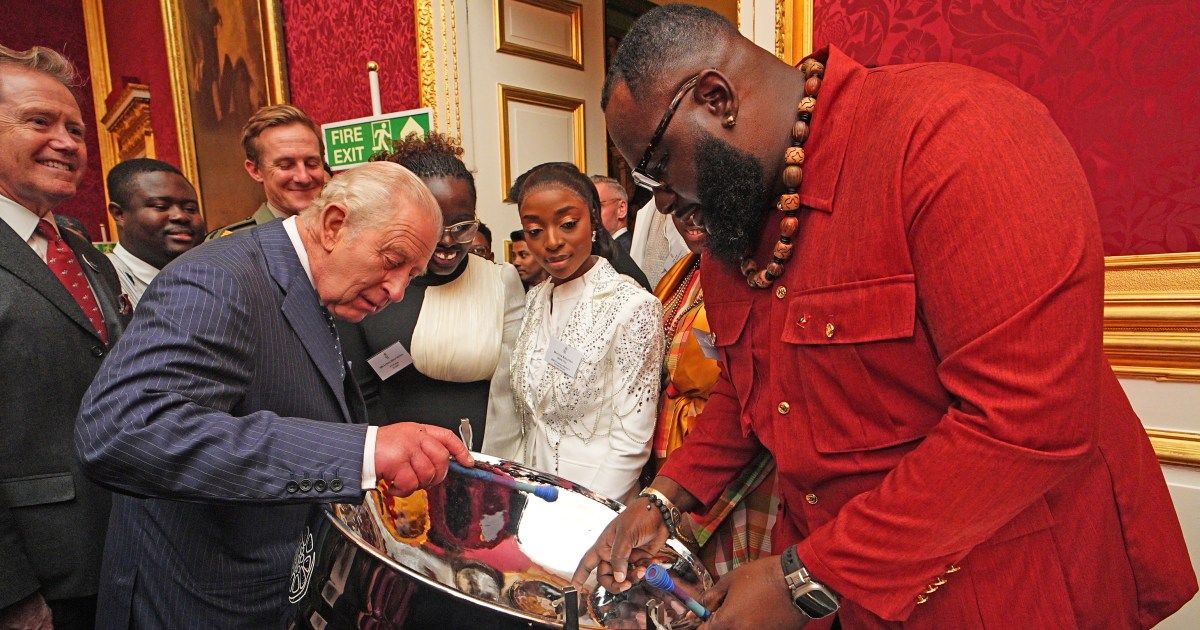

The United Kingdom’s King Charles lll is travelling to the Bahamas on Tuesday, where he will begin a nine-day tour of the Caribbean.
The tour will take him to the Bahamas, Guyana, and Antigua and Barbuda, where he will attend the Commonwealth Heads of Government Meeting (CHOGM) from November 1-4.
- list 1 of 4The UK’s King Charles warns AI leaders of ‘existential dangers’
- list 2 of 4UK ex-prince Andrew search warrants quashed after police accept legal error
- list 3 of 4Three months of PM Andy Burnham: Can he sustain the ‘hope vibe’?
- list 4 of 4King Charles welcomes Omani sultan, hails peace efforts in UK state visit
end of list
This comes as demands for reparations over Britain’s notorious role in the slave trade grow louder, and as the monarchy faces questions about its future in the region.
So what is the significance of this tour? And what does the Caribbean want?
Here’s what we know.
What’s on the itinerary?
King Charles will visit three countries in nine days.
His tour begins on Tuesday with the archipelagic country of the Bahamas, where he will be staying for three days.
Then he will make his way to Guyana, a former British colony that had more than 100,000 slaves when the trade was abolished in 1807.
After two days in Guyana, where he is expected to meet the president and elected leaders of Amerindian villages, he will head to Antigua and Barbuda for the Commonwealth Heads of Government Meeting (CHOGM).
The meeting, from November 1-4, is expected to include discussions about the environment and trade and development, although the question of British reparations for slavery is also likely to feature.
What do the countries King Charles is visiting want?
Government officials in the Bahamas and in Antigua and Barbuda – both of which are part of the British Commonwealth with King Charles as their ultimate head of state – have signalled that they want to become republics. Guyana gained independence from the UK in 1966, and has a president as its head of state.
Advertisement
Guyanese President Mohamed Irfaan Ali said in an interview with ITV News that while Charles “rightfully” recognised slavery as the “darkest days in human history” during a visit to Barbados in 2021 when he was still the prince of Wales, an apology should be his next step.
“You exploited the region. You destroyed lives. You created underdevelopment,” Ali said, in a reference to the lingering legacy of the British Empire and the slave trade.
In 2023, a Lord Ashcroft Poll revealed that 51 percent of surveyed respondents in the Bahamas wanted to become a republic, while 27 percent preferred to retain the British monarchy as head of state.
Niambi Hall Campbell-Dean, chair of the Bahamas National Reparations Committee, was critical of the king ahead of his arrival. “Why do we still have a king? What does this person really represent to us? Why is he coming and how will that benefit us?” she asked.

Jamaica, which is not on the itinerary for this trip by King Charles, made its stance clear in September, when it filed a $10bn slavery reparations petition in London, addressing it to the king.
That was the first time a British Commonwealth state has taken legal action pursuing “the cause of reparatory justice”, as the Jamaican delegation called it.
The petition is due to be heard by a UK privy council in March next year. The UK has, so far, refused to formally apologise or pay reparations for slavery.
Also in September, Caribbean Community and Common Market (CARICOM) Secretary-General Carla Barnett said reparations are “fundamentally about justice”.
“It is about recognition, accountability and transformation, and about building a just and equitable future for the descendants of those who, as the chattel of colonial owners, endured untold suffering, loss of life and freedom,” she said.
The transatlantic slave trade was recently declared the “gravest crime against humanity” in a United Nations resolution in March this year.
The last time a British royal visited Jamaica was when Prince William and Kate Middleton, then the duke and duchess of Cambridge, toured the island in 2022 during their Caribbean Platinum Jubilee tour.
The more memorable moment of the trip was when the couple was pictured shaking hands with Jamaican children with a fence separating them, which many criticised for being “tone-deaf”.

What’s likely to happen at the Commonwealth meeting?
The meeting in Antigua and Barbuda is expected to cover climate resilience as well as trade and development.
Advertisement
Leaders and representatives of 56 Commonwealth countries will be attending. Many want an apology for slavery from the king, but Buckingham Palace recently announced that will not be happening.
“The visit programme will…not shy away from ‘the darkest days of our past’, as his majesty has described them, but – in keeping with the wishes of our host nations – it will principally be oriented to the vibrant present and promising future of each country,” a palace spokesperson said in a statement.
The palace added that it is “important” to acknowledge the “creative” ways that Charles has tried to right “enduring inequalities”.
The chair of the UK’s All-Party Parliamentary Group (APPG) for Afrikan Reparations, Labour MP Bell Ribeiro-Addy, said the royal family and the UK government had failed to recognise the demands of those wanting reparations.
“I think it would be wrong to think that we can continue with platitudes. You’ve got ‘atrocity’, ‘deep regret’, ‘sorrow’, and now they’re going to say ‘darkest days’,” she said. “I think the king needs to realise that people wouldn’t keep raising it if what he was doing was anywhere near enough.
“You can tell that the Commonwealth means something to the monarchy, and I’m sure he would not want to be the monarch under which it crumbles.”
Related News
Spain’s parliament rejects gov’t housing decrees amid mass protests
Ukraine launches major drone attack on Russia’s Moscow region, killing two
Syrian families demand release of detainees held by Israel