US judge blocks Trump’s latest effort to limit birthright citizenship
 02 September 2026
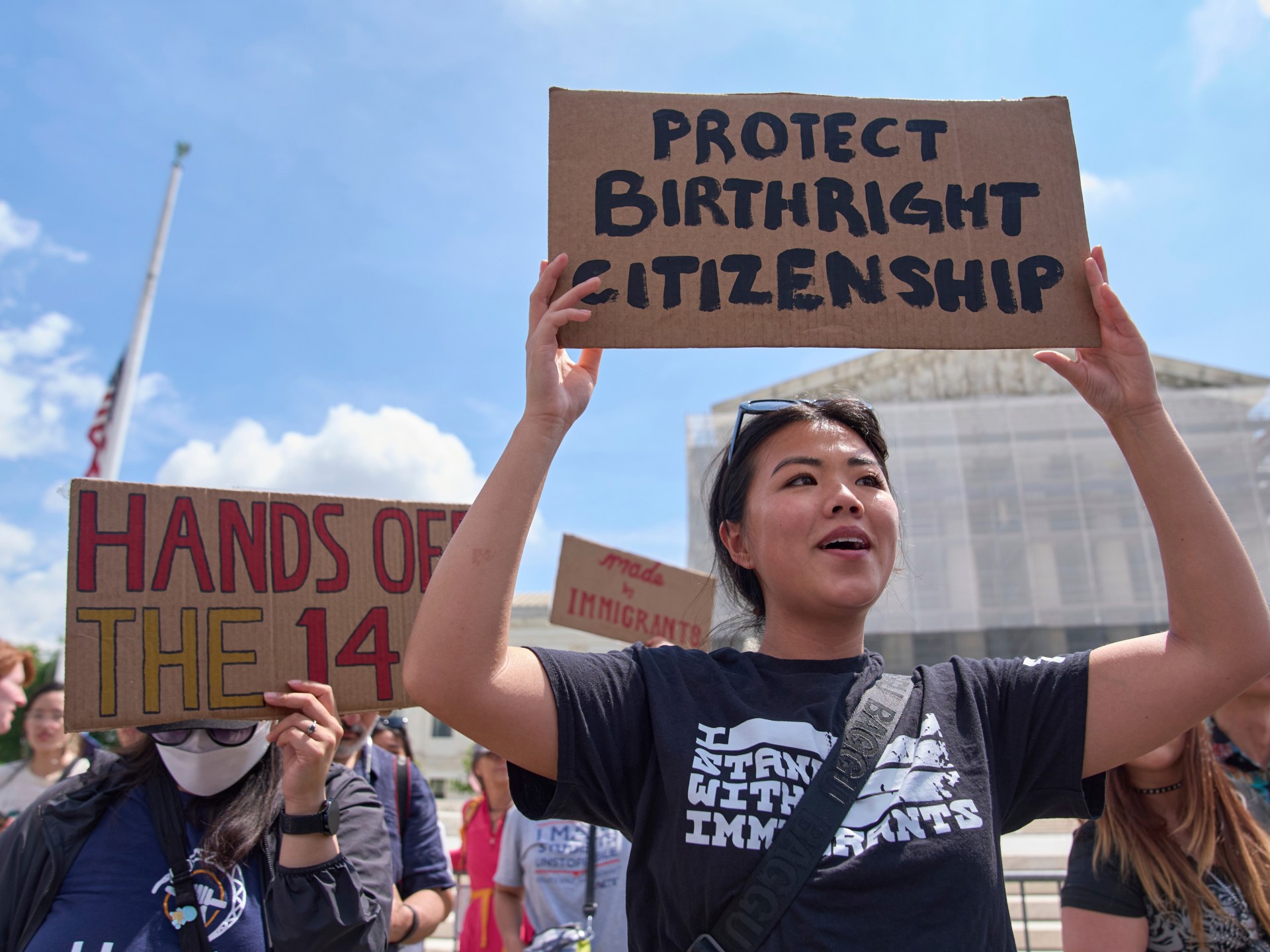

A United States federal judge in Maryland has blocked President Donald Trump’s latest effort to roll back birthright citizenship, after the Supreme Court ruled that his last attempt violated the Constitution.
District Judge Deborah Boardman issued a preliminary injunction on Wednesday against Trump’s new executive order, which was issued on August 6.
- list 1 of 3What is birthright citizenship, and what does the Supreme Court ruling say?
- list 2 of 3Trump to ask US Supreme Court for new hearing on birthright citizenship
- list 3 of 3Trump faces lawsuit over push to limit birthright citizenship
end of list
The new order took aim at what Trump has called “birth tourism”, the practice of intentionally giving birth on foreign soil.
It sought to deny citizenship to children of foreign nationals in certain groups, including those accused of engaging in a commercial transaction to obtain citizenship or classified as an “alien enemy”.
Boardman, however, said the order was unconstitutional for the same reason Trump’s previous effort failed. She cited the Supreme Court’s June decision in the case Barbara v Trump.
The order “is almost certainly unconstitutional as applied to the certified class for the simple reason that the Supreme Court in Barbara already decided that the children in the class are citizens at birth”, she wrote.
“This Court must, once again, preliminarily enjoin enforcement of the President’s most recent attempt to strip the right to citizenship from them.”
In the Barbara case, the Supreme Court ruled six to three that birthright citizenship was protected under the Fourteenth Amendment of the Constitution.
Birthright citizenship confers automatic citizenship on anyone born in the US, outside of a handful of narrow exceptions, such as the children of diplomats or invading armies.
Advertisement
The constitutional basis for birthright citizenship has been upheld in several Supreme Court cases over the years, most notably in US v Wong Kim Ark, the case of an American man born to Chinese parents.
But Trump campaigned for a second term as president on the pledge to crack down on immigration into the country.
One of his promises was to reform the concept of birthright citizenship. Trump and his allies have argued that children of temporary or undocumented immigrants do not qualify for the right, as they are not under the “jurisdiction” of the US.
Since the Supreme Court defeat in June, Trump and his allies have continued to probe for ways to challenge the constitutional protections for birthright citizenship.
Wednesday’s legal challenge was brought by immigrant rights advocates and families, including groups like the Asylum Seeker Advocacy Project.
They had previously won an injunction from Boardman last year, blocking the Trump administration from enforcing his initial executive order about birthright citizenship.
Last week, Boardman instructed the plaintiffs to revise their complaint to specifically address the second executive order, rather than relying on the same material used for the first.
But she signalled scepticism at the time about the constitutionality of Trump’s latest attempt, calling it “unprecedented”.
“The Supreme Court has spoken: Children in the certified class are ‘citizens at birth’,” she wrote in Wednesday’s decision.
Related News

Gaza forced to use unreliable online payments amid ‘cash famine’

Palestinian artist Saint Levant delays tour amid US visa complications
Cambridge professor Jason Arday quits amid plagiarism allegations