Knesset dissolves: How will Israel vote in October’s general election?
 17 July 2026
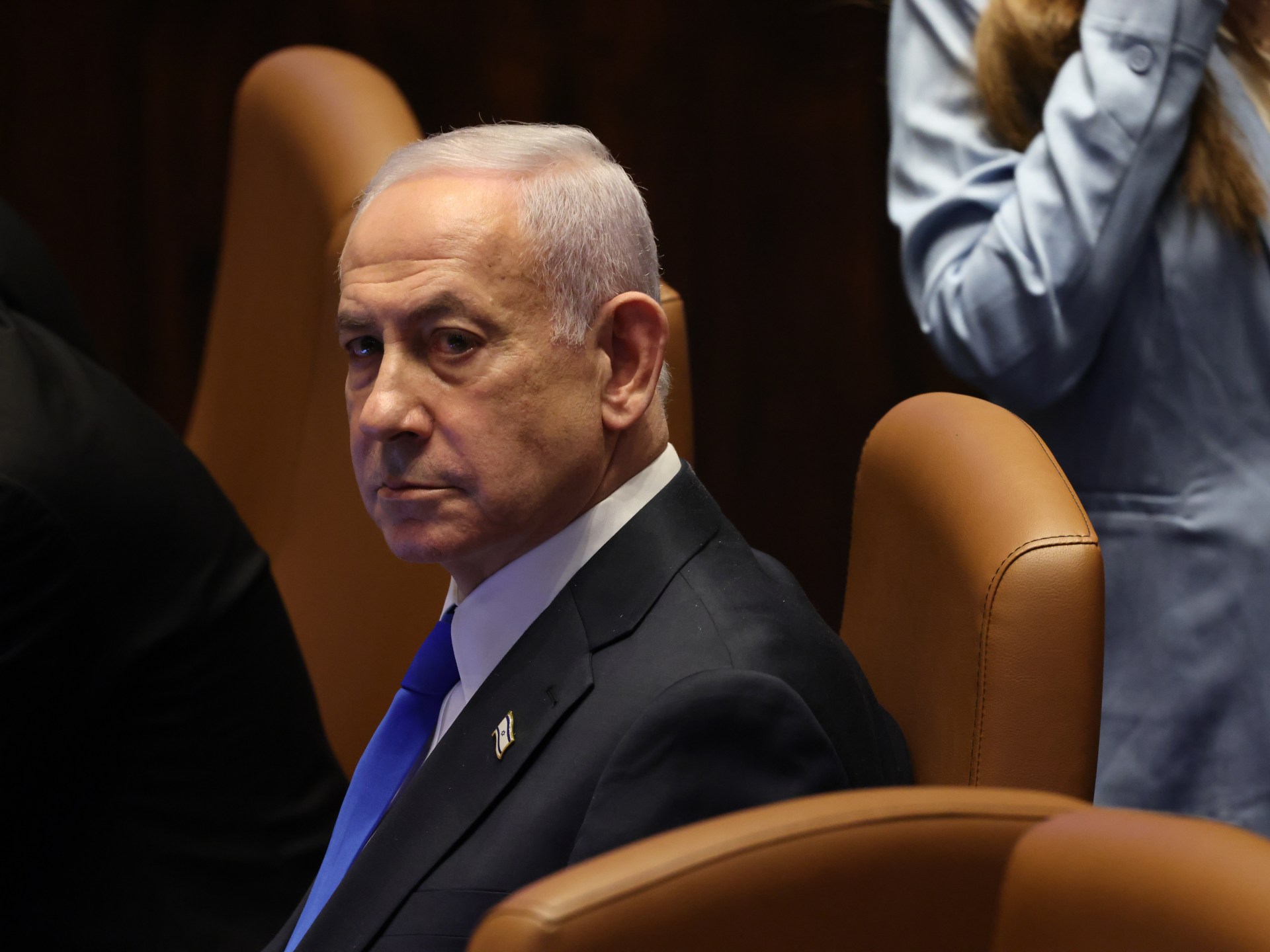

The Knesset, Israel’s unicameral parliament, will dissolve on Friday before national elections slated for October 27, 2026, marking the first time the body has seen out its full term since 1988.
It has coincided with one of the most eventful and controversial periods in the country’s history, with many of the political events hotly debated in the Israeli parliament.
- list 1 of 4Israeli opposition signal foreign policy change in style, but not substance
- list 2 of 4Ultra-Orthodox conscription dispute pushes Israeli government to brink
- list 3 of 4Netanyahu’s Christian comments ‘aimed at sowing strife’: Lebanese analysts
- list 4 of 4Israel to hold national elections on October 27, parliament says
end of list
It has backed Israel’s genocidal war in Gaza, which began following Hamas-led attacks into southern Israel on October 7, 2023, and wars on Iran and Lebanon. Closer to home, it has supported the unparalleled and violent expansion of illegal settlements on Palestinian land across the occupied West Bank.
Even Israel’s allies, in the US and elsewhere, have criticised this government for an unparalleled array of accusations of torture, sexual abuse, and the systematic killing of civilians, including children.
This has been overseen by Israel’s most right-wing government, led by Prime Minister Benjamin Netanyahu, who has been accused of corruption, waging a domestic war on Israel’s judiciary, and radically politicising the country’s security services to suit his political agenda.
How these events will affect voting in the October election is still unclear, with opinion polls suggesting that Israeli society continues to lurch to the right.
Here’s what we know.
Here’s what we know.
How will the vote work?
Israel’s electoral system is based on nationwide proportional representation, with voters choosing party lists rather than individual candidates.
Advertisement
The country functions as a single electoral district, with seats in the 120-member Knesset allocated according to each party’s share of the vote, provided it clears the 3.25 percent electoral threshold.
Since no party has won an outright majority in the country’s history, coalition-building is central. After elections, the president asks the politician best placed to form a government to assemble a coalition.
Who are the main candidates?
According to the most recent poll by Israel’s Channel 12, former Chief of Staff Gadi Eizenkot and his newly formed Yashar party appear best placed to challenge Netanyahu and his Likud party. Yashar is projected to win 23 seats, compared with 22 for the incumbent’s party, although both would have to form a coalition to govern.
Eizenkot, a former military commander described by Israeli media as centrist, has criticised Netanyahu’s handling of regional wars and domestic divisions.
Also in contention are former Prime Ministers Naftali Bennett and Yair Lapid, campaigning jointly on the Together ticket, with this political alliance projected to win 16 seats. Bennett, a right-wing politician, has presented himself as a pragmatic alternative to Netanyahu, while Lapid, a centrist former opposition leader, has focused on institutional reform and secular issues.

Are the opposition radically different from Netanyahu on Gaza?
While the opposition might offer a softening of Netanyahu’s far-right line on domestic issues, none of the candidates for government has offered any real criticism of the multiple wars that Israel has embarked upon under the current government.
They have also not significantly urged restraint in the country’s ongoing genocide in Gaza.
Instead, much of the criticism of the Netanyahu government has focused on the management of wars – and the effect they have had on Israel’s relations with allies and international standing – rather than the conflicts themselves.
What issues will parties campaign on?
So far, much of the opposition’s rhetoric has focused on the nature and style of Netanyahu’s right-wing government, accusing him of weakening state institutions and deepening social divisions in order to ensure his political survival.
Closely related to Netanyahu’s political survival is the issue of whether the country’s growing ultra-Orthodox minority should be conscripted into the military. Netanyahu’s coalition has relied on the support of the Knesset’s ultra-Orthodox parties in return for softening measures aimed at forcing their members to serve in the army.
![Ultra-Orthodox Jewish men gather on and below the Chords Bridge during the "Million Man" protest against Israeli military conscription [Ammar Awad/Reuters]](https://www.aljazeera.com/wp-content/uploads/2025/10/2025-10-30T152925Z_1381634771_RC2EMHA0QTYR_RTRMADP_3_ISRAEL-PALESTINIANS-CONSCRIPTION-PROTEST-1761838434.jpg?w=770&resize=770%2C513&quality=80)
The issue of ultra-Orthodox recruitment has become increasingly contentious among a public wishing for that part of society to play a role in Israel’s regional wars.
Advertisement
Eizenkot, Lapid, and Bennett have all ruled out continuing the Netanyahu policy of fudging the issue to maintain the support of ultra-Orthodox parties in the Knesset.
Eizenkot, in the eyes of many, has become closely associated with the issue, after having lost his son, Gal, and two nephews while taking part in the killing of more than 73,000 people in Gaza.
How could that affect the outcome?
According to the Channel 12 poll, even with the backing of the ultra-Orthodox parties, neither side would secure a governing majority.
Parties opposed to Netanyahu are projected to win 59 of the Knesset’s 120 seats, falling two short of the 61 needed to form a government.
The pro-Netanyahu bloc, including the ultra-Orthodox bloc, would take 51 seats, while Arab parties – which have historically played only a limited role in coalition governments – would hold the remaining 10.
Related News
In Pictures: Hunger, despair as Venezuela quake death toll rises
What is birthright citizenship, and what does the Supreme Court ruling say?
Sheinbaum rejects US claim that Mexico’s government is linked to cartels