
‘Will not leave’: Is Israel killing the US-Iran MOU by staying in Lebanon?
 01 July 2026
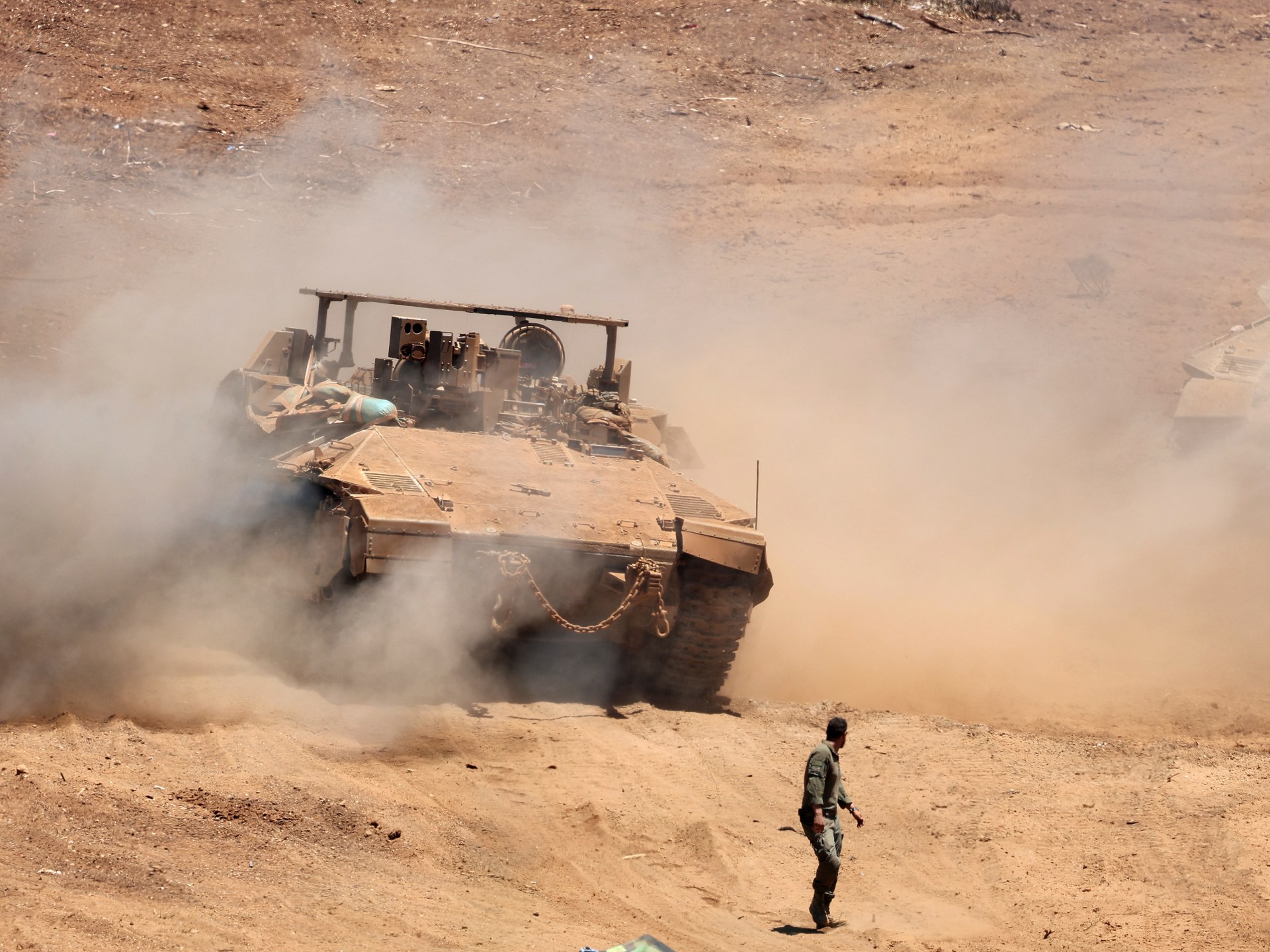

As he visited troops in southern Lebanon on Tuesday, Israeli Prime Minister Benjamin Netanyahu declared that the military “will not leave” the area as long as the Iran-backed armed group Hezbollah remains a “threat” to his nation.
A day earlier, Israeli Defence Minister Israel Katz also said Israel’s military will not withdraw “a millimetre” until Hezbollah is disarmed.
- list 1 of 3Evolution under fire: Iran’s ‘axis of resistance’ in a post-war era
- list 2 of 3The Lebanon-Israel agreement is paving the way for the next war
- list 3 of 3US-Iran negotiations: What’s the latest?
end of list
But the Israeli stance is squarely at odds with the first clause of the US-Iran Memorandum of Understanding (MOU), which provides for an immediate, permanent halt to fighting on “all fronts”, including in Lebanon where Israeli forces have occupied approximately one-fifth of the country since early March.
That provision has since been undercut by a separate US-brokered framework agreement between Israel and the Lebanese government, which doesn’t require Israeli forces to leave southern Lebanon or halt attacks – a deal Hezbollah has denounced.
The result has been an entrenchment of Israel’s military presence in Lebanon, even as strikes have eased to avoid reigniting direct conflict with Iran.
That leaves an open question: Is Israel’s position bluster for a domestic audience, or a hard line that could unravel the fragile MOU? We spoke to analysts to find out.

‘Lose-lose’ for Netanyahu
Behind Netanyahu’s combative language is an embattled prime minister managing a difficult balancing act, Cyrus Schayegh, professor of international history and politics at the Geneva Graduate Institute, told Al Jazeera.
On the one hand, domestic politics has made Netanyahu reluctant to be seen as backing down from the war with Hezbollah, which began firing rockets into northern Israel soon after the first US-Israeli strikes on Tehran on February 28, in which Iran’s Supreme Leader Ayatollah Ali Khamenei was killed. Israel responded with force and has launched near-daily strikes, as well as an expanding ground invasion, ever since.
Advertisement
With elections expected around October, a hasty withdrawal from Lebanon could look like capitulation – and worse, an implicit admission that he only fell into line because of pressure from US President Donald Trump.
But the other side of that “lose-lose” is Washington. Netanyahu, Schayegh says, understands exactly what Trump wants from him: to prevent the Israel-Hezbollah front from unravelling the broader US-Iran negotiations.
Defying that expectation risks a rupture with the US at a moment when Israel can least afford one.

Iran’s ‘deep commitment’
Tehran has explicitly and repeatedly stated that Israel must fully withdraw from all occupied Lebanese territories before it will entertain signing any sort of peace deal with the US.
Schayegh said this reflects Iran’s deep commitment to Hezbollah’s survival – the group has proven itself a vital strategic partner over the years, and the ties between Hezbollah’s leadership and the Iranian regime run deeper than pure strategy, reaching into socio-cultural and even family bonds.
Hezbollah is a major issue for Iran, particularly the Islamic Revolutionary Guard Corps (IRGC), and it has shown this by its willingness to strike northern Israel and block the Strait of Hormuz over the issue before, geopolitical analyst Joe Macaron told Al Jazeera.
But that doesn’t mean Iran expects, or even wants, a full return to the pre-Gaza war status quo, Schayegh says.
At least some in Tehran, he believes, understand that getting Israel out of Lebanon won’t mean restoring the arrangement that held before 2023, when the Lebanese army played little to no role in the south, and Hezbollah operated largely unchecked, a dynamic dating back to the 2006 war in which Israel also occupied southern Lebanon.
That recognition, Schayegh argues, means the form Hezbollah’s precise posture and footprint in southern Lebanon takes isn’t treated by Tehran as non-negotiable.
Instead, it functions as a bargaining chip, one Iran could potentially use incrementally, trading concessions step by step in a slow, deliberate, diplomatic process, he says, adding that although it’s “a delicate path” for Tehran to walk. Diminishing the power of Hezbollah in Lebanon, therefore, it is a path Iran may be prepared to navigate around rather than resist outright.
Advertisement
Still, Iran holding on to the Lebanon issue “as much as it could” was reportedly a sticking point that delayed the MOU in the first place, according to Ronnie Chatah, a political commentator, writer and host of The Beirut Banyan podcast.
He told Al Jazeera it’s conceivable Iran could still make Lebanon “a heightened problem”, slowing a permanent deal with Washington unless there’s added pressure on Israel to at least appear to be withdrawing.
Even so, Chatah doesn’t believe the current situation is enough to derail the MOU altogether.
In the days since both agreements were signed, he said, there’s been no serious push by Iran to make Lebanon a priority and, despite Israel’s clear insistence it will stay as long as it sees a threat, he does not believe it will “jeopardise” the MOU.
Hezbollah’s exclusion: ‘humiliating, shameful and a surrender’
Hezbollah was not involved in the framework agreement between Israeli and Lebanese officials. In fact, it was entirely excluded from the negotiations, which led to a deal being signed in Washington, DC.
Hezbollah leader Naim Qassem has adamantly rejected the framework agreement, calling it “humiliating, shameful and a surrender of sovereignty”.
As a party which has held seats in the Lebanese parliament since the mid-2000s, Schayegh noted, Hezbollah is not simply a “marionette” of Iran. But since Israel’s 2024 campaign in Lebanon, amid the Gaza war, which has massively weakened the armed group and killed much of its leadership, Iran has organisationally assumed a greater role.
For Chatah, the real answers, therefore, lie not in Lebanon but in Iran.
As the most important player in its “axis of resistance” across the region, Hezbollah represents Iran’s most “advanced investment” beyond its borders over the past four and a half decades, he said. The armed group also remains “a very valuable asset for security leverage” across the region, even after being hit hard, degrading its capabilities.
He said it is unlikely Tehran could be persuaded to abandon Hezbollah anytime soon, or in the long term – the group is simply too important for the Iranian regime to give up, and may ultimately be “the lifeline for the Iranian regime” itself.
Meanwhile, Israel also refuses to back down on the disarmament and removal of Hezbollah.
Chatah points to a historical precedent for this kind of impasse: a 1983 tripartite agreement between Lebanon and Israel ultimately collapsed, followed by a wave of attacks, including on international peacekeepers and the US embassy, after which Hezbollah emerged as a dominant security actor in Lebanon as Israeli forces later withdrew.
Still, without Hezbollah’s buy-in, the deal will be “difficult to implement” and could trigger further conflict, Macaron said.
A framework that sidesteps the core issues, the Lebanese army’s role and an Israeli withdrawal, isn’t built on solid ground, Macaron said, adding that it is merely the start of a process rather than a long-term resolution.
Trump’s priority: the nuclear file
For Washington, Macaron says, the priority is clear: The nuclear issue with Iran takes precedence over everything else, and the US isn’t willing to be flexible on that front.
Advertisement
Avoiding a return to escalation with Iran matters more than pressing hard on Lebanon – meaning the US doesn’t want Hezbollah “under complete pressure” either, he said.
If Washington and Tehran can make progress on the bilateral nuclear talks in the coming weeks, Macaron suggests, the US is likely to show more flexibility on the Lebanon issue as a result.
Schayegh also noted that the US has much riding on the outcome, and the balance of leverage between the two sides is tilted more towards Iran than before – partly because Iran can now hurt the US in ways it previously couldn’t or wouldn’t, such as by closing the Strait of Hormuz, which directly harms Americans and the wider global economy.
Related News
Israeli forces block activists from reaching besieged Qusra families
France’s Morocco reset: What French PM Lecornu’s visit signals
Israeli attacks on Gaza kill 14, including mourners attending funeral