European election monitor dismisses rumours of fraud in Colombia’s election
 02 June 2026
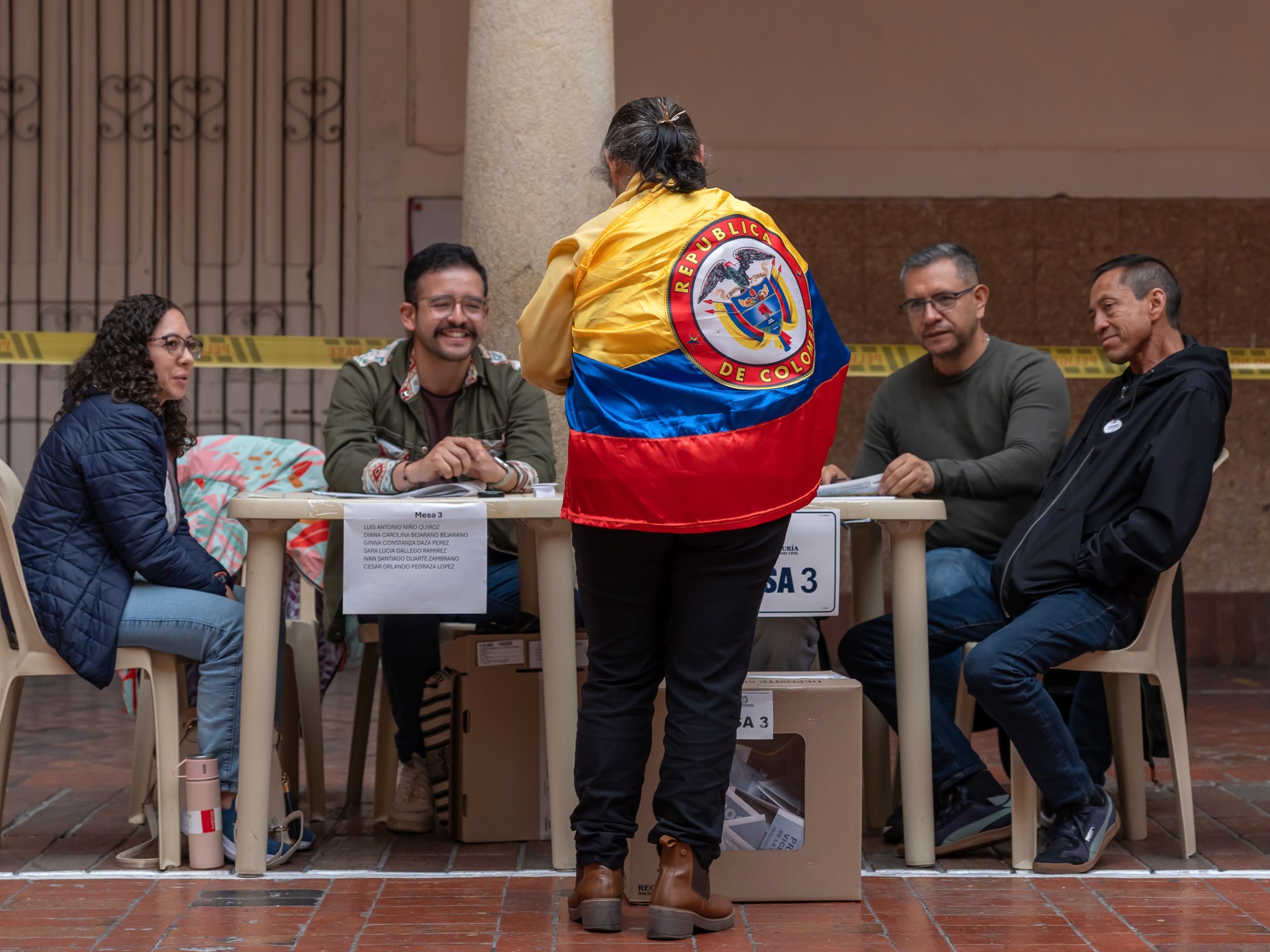

An election observation mission from the European Union has denied reports of malfeasance in Colombia’s recent presidential race, despite rumours to the contrary.
On Tuesday, the head of the EU Election Observation Mission, Esteban Gonzalez Pons, announced the group’s preliminary assessment.
- list 1 of 3Tense election night in Colombia as country heads to presidential runoff
- list 2 of 3Video: Presidential election has Colombia on edge
- list 3 of 3Celebration, shock and scepticism follow Colombia’s presidential election
end of list
Election observers found that Sunday’s election was “transparent, orderly, and smooth”, and Gonzalez Pons hailed it as a success for democracy.
“Once again, Colombia has given a lesson in democracy,” Gonzalez Pons said in a statement.
“Despite the presence of illegal armed groups in parts of the country, despite questions about the electoral system, and despite growing polarisation, Colombia has brought the ballot boxes to every corner of the country.”
The mission sent 143 observers to monitor 591 polling stations in Colombia, as voters cast their ballots in the first round of a heated presidential race.
After polls closed on Sunday, two frontrunners quickly emerged: far-right lawyer Abelardo de la Espriella and left-wing Senator Ivan Cepeda. They will proceed to a June 21 run-off.
But despite pre-election polls showing Cepeda to be the favourite, the results put de la Espriella, a political newcomer, ahead in the ballot count.
The lawyer won 43.7 percent of the vote, compared with Cepeda’s 40.9 percent.
Cepeda ran as the representative for the governing Historic Pact party, founded by outgoing President Gustavo Petro, who has reached his term limit.
As the results became clear, Petro took to social media to raise questions about the vote tally.
Advertisement
“As President, I do not accept the results of the preliminary count,” Petro wrote on Sunday, pointing to the involvement of private firms. He accused their software of adding “hundreds of thousands of votes” to the election tally.
“Therefore — and in accordance with the law — the only binding results that the President will acknowledge and accept are those produced by the oversight commissions, which are presided over by judges of the Republic.”
In the days since, Petro has continued to post about “potential fraud” and accused de la Espriella of buying votes.
While Cepeda himself initially declined to comment on the results, he has since conceded no irregularities in the race.
De la Espriella, meanwhile, has seized on Petro’s remarks to accuse the outgoing leader and Cepeda of attempting to subvert Colombia’s democracy.
“Petro and his puppet — as I have been warning since before the campaign began — intend to steal our democracy,” de la Espriella posted.
Colombia is no stranger to claims of vote-buying and election fraud. After the 2014 legislative election, for instance, Colombia’s Council of State found certain irregularities in the results, including discrepancies in the tally sheets.
But in its assessment on Tuesday, the European Union mission found no such evidence.
“Despite the polarization, disinformation and tensions that marked the campaign, election day — based on what we have observed on the ground — proceeded peacefully, in an orderly manner, with broad citizen participation and respect for democratic institutions,” said Leire Pajín Iraola, who headed a European Parliament delegation as part of the mission.
She added that she hoped the second round of voting would unfold equally smoothly.
“We trust that the second round will also unfold peacefully and democratically, without interference of any kind, and with full respect for Colombia’s sovereignty and the will of its citizens .”