Tens of thousands rally in Serbia for antigovernment demonstrations
 23 May 2026
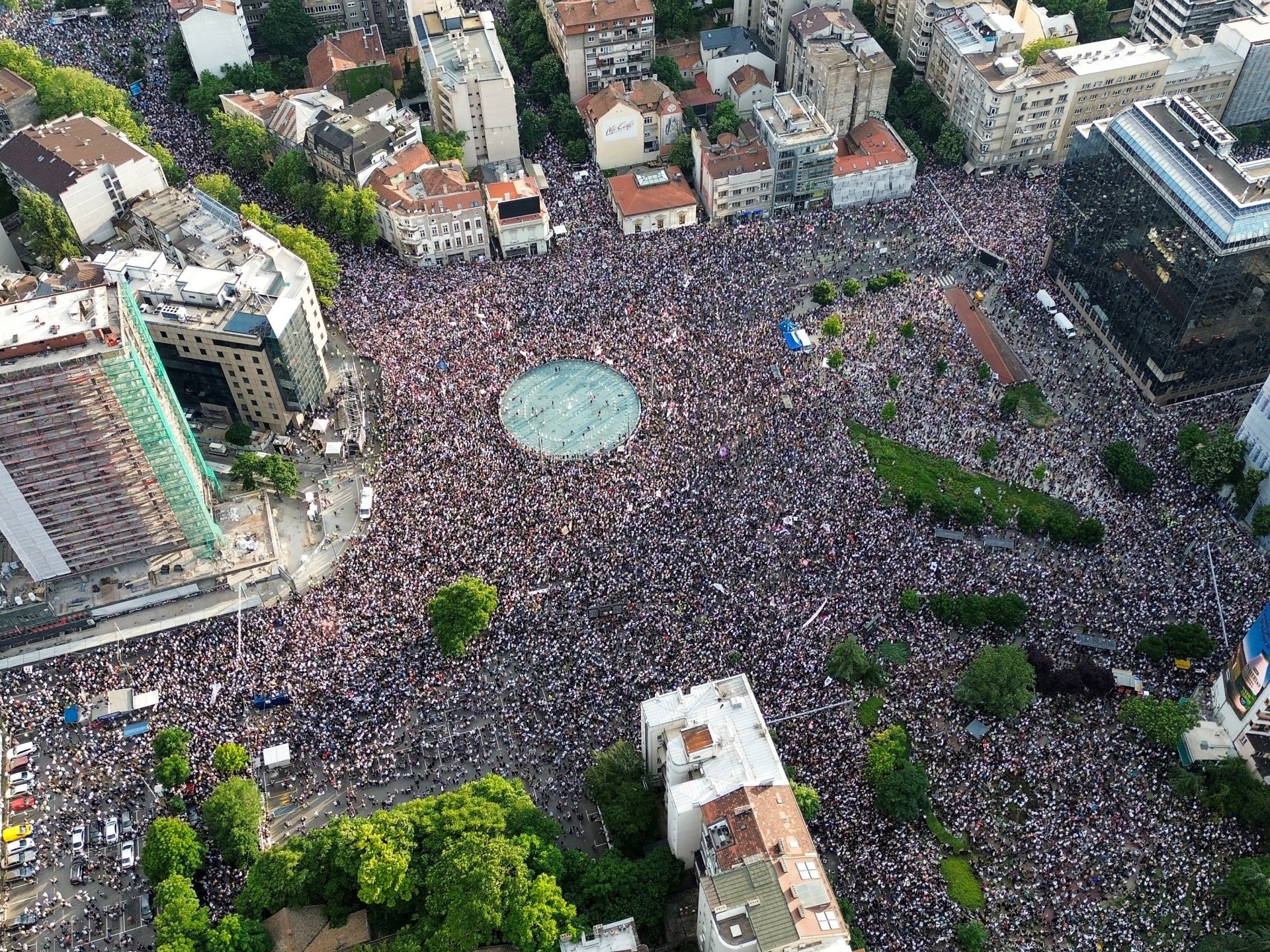

Tens of thousands of people, led by university students, have rallied in the Serbian capital to protest against the government and call for early elections.
The Novi Sad rail station disaster in November 2024, which killed 16 people, sparked anticorruption protests, calling for a transparent investigation, forcing then-Prime Minister Milos Vucevic to resign.
- list 1 of 4Beaten, left to die, robbed: Refugees tell of violence on Croatian border
- list 2 of 4Can Hungary wean itself off Russian energy, as its new leader has promised?
- list 3 of 4Kosovo court jails three Serb separatists over 2023 Banjska attack
- list 4 of 4Serbia hosts first joint military exercise with NATO
end of list
Serbia’s President Aleksandar Vucic later pushed back hard against the protesters.
With students leading the anticorruption movement, the demonstrations have snowballed into a campaign to push Vucic to call early elections.
Vucic said this week that the ballot could be held between September and November this year.

‘Students win’
Protesters streamed into a central square in the capital, Belgrade, from several directions, many carrying banners and wearing T-shirts inscribed with the “Students win” motto of the youth movement.
Columns of cars drove into Belgrade from other Serbian towns earlier in the day.
Protester Maja Milas Markovic said students “managed to gather us here with their youth and wonderful energy; I really believe that we have [the] right to live normally.”
Serbia’s state railway company cancelled all trains to and from Belgrade on Saturday, in a bid to stop at least some of the people from coming from other parts of the Balkan country.
Vucic’s loyalists, meanwhile, gathered in a park camp outside the Serbian presidency building that he set up before another big antigovernment rally last March as a human shield against protesters. Folk music blared from a fenced area surrounded by riot police in full gear.
Advertisement
Students have said their rally will be peaceful. But there are concerns of violent conflict with Vucic’s loyalists, who are often hooded and masked and who have attacked student protesters in the past.

The protests have “huge support from the public, and that’s because they’re an all-encompassing movement … against the government,” Tetyana Kekic, a journalist in Belgrade, told Al Jazeera.
She said the challenge for the protesters is that they do not have a “clear political platform or policies … and they do not have a leader or a personality which could really challenge the president”.
Serbia’s push to join the EU
The Serbian president has faced international scrutiny for his hardline approach towards the demonstrators.
The Council of Europe commissioner for human rights, Michael O’Flaherty, criticised Serbia’s government in a report this week and said he “will monitor the situation closely” on Saturday.
Serbia is formally seeking entry into the European Union, but it has maintained close ties with Russia and China.
The democratic backsliding under Vucic could cost the country about 1.5 billion euros ($1.8bn) in European Union funding, the EU’s top enlargement official warned last month.
The venue on Saturday is Belgrade’s Slavija Square, the scene of a huge antigovernment protest in March 2025. That rally ended in sudden disruption that experts later said – and the government denied – involved the use of a sonic weapon against peaceful demonstrators.
Students now say they plan to challenge Vucic in approaching elections later this year or next, which they hope will oust the right-wing populist government.
Vucic, government officials, and the pro-government media have branded critics as “terrorists” and foreign agents who wish to destroy the country – rhetoric that has ramped up political polarisation.
Related News

Some fear US-Philippines war games are drawing conflict closer to home

British climber sets record with 20th Everest summit
Nigeria says joint US strikes kill 175 ISIL fighters in country’s northeast