Rubio kicks off India visit, invites Modi to the White House
 23 May 2026
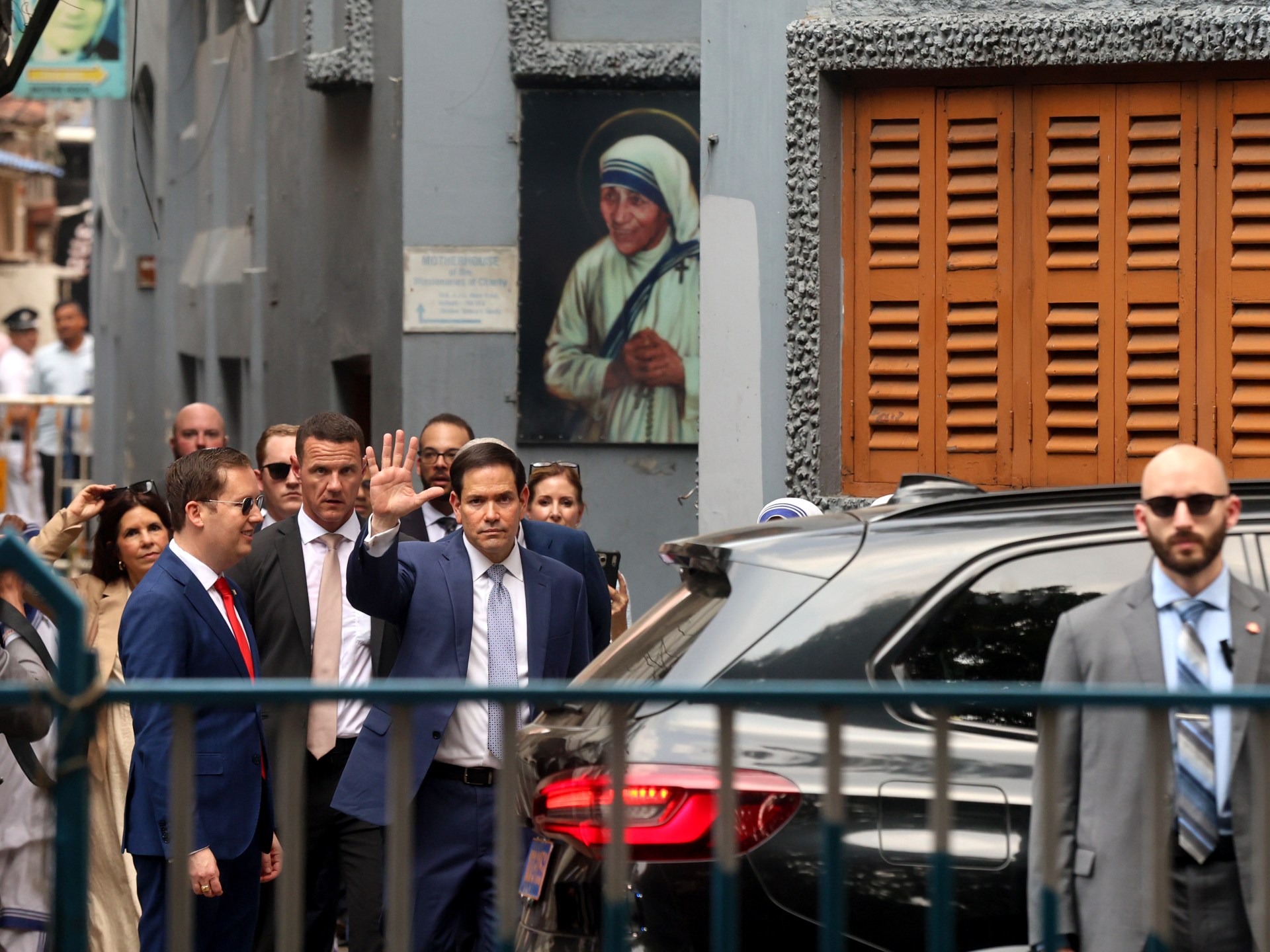

United States Secretary of State Marco Rubio has kicked off a four-day visit to India and invited Prime Minister Narendra Modi to the White House.
The trip beginning on Saturday was expected to focus on mending ties between Washington and New Delhi following recent trade frictions, particularly over India’s continued purchasing of Russian oil.
- list 1 of 3Are India and Pakistan quietly preparing to restart dialogue?
- list 2 of 3US raises threat of military action against Cuba
- list 3 of 3Pakistan’s army chief in Iran as US’s Rubio says ‘slight progress’ in talks
end of list
Other issues, including energy security, were set to be discussed, with India particularly hard-hit by the US-Israeli war in Iran and Tehran’s effective closure of the Strait of Hormuz.
In New Delhi, Rubio oversaw a ribbon cutting ceremony for a new wing of the US embassy. The top US diplomat called the building a “sign of our commitment to this important relationship”.
“This important relationship between our two countries is at the cornerstone of our approach to the Indo-Pacific,” Rubio said.
The State Department said Rubio and Modi “agreed to deepen trade and defence cooperation and accelerate collaboration on critical and emerging technologies”.
The visit will be capped by a meeting of the so-called Quadrilateral Security Dialogue, or Quad, a grouping of the US, Japan, Australia and India created in response to China’s power in the region.
While existing since 2007, the largely defunct grouping was revived in 2017 and has regularly stoked Beijing’s discontent.
The Quad meeting comes after US President Donald Trump visited Beijing and met with President Xi Jinping in early May. The event was heavy on mutual praise, but yielded little in the way of concrete agreements.
Advertisement
Despite a renewed US emphasis on India in recent years, the early actions of the Trump administration have rattled ties.
Last year, the administration doubled tariffs on India to 50 percent over its purchase of Russian oil, upon which the South Asian giant has long relied. Trump and Modi subsequently announced an agreement that would see India begin pivoting away from Russia.
However, the US-Israeli war with Iran, and its upending of global energy markets, has seen India continue to buy Russian oil. Rubio was expected to push Modi for India to buy more oil from the US and Venezuela.
The Iran war loomed large as Rubio arrived in New Delhi, with a new flurry of threats and diplomacy raising the contradictory prospects of both a resumption of US attacks or a breakthrough in the push for a lasting ceasefire.
Rubio pointed to “some progress” in the latest round of negotiations, adding “there is a chance that, whether it’s later today, tomorrow, in a couple days, we may have something to say”.
Speaking to reporters, he repeated US demands for Iran to allow free passage in the Strait of Hormuz, which emerged as a key point of leverage for Tehran in the conflict, and for Iran to turn over its stockpiles of highly enriched uranium, a condition Tehran has repeatedly rejected.
Relations between the US and India have also been battered by warming ties between the US and Pakistan, which has been leading mediation in US-Iran negotiations.
Deeply entrenched tensions between Pakistan and India have remained high following a brief air war last May.
Trump said he brokered a ceasefire in the conflict, as India’s government denied any foreign pressure played a part in the agreement.
On Saturday, Rubio also stopped in Kolkata, where he visited the tomb of Mother Teresa and the headquarters of her charity. He was set to also visit Agra and Jaipur during the trip.
Related News
‘Unacceptable’: What’s Iran’s peace proposal that Trump has rejected?
Drug overdose deaths drop in United States for third year in a row
Iran war live: Trump slams Tehran’s reply; Israel kills 2 medics in Lebanon