V.I. Constitution Draft Called Historic but Legally Risky as Advisor Urges Delegates to Clarify Rights Language
 18 May 2026

Delegates to the Sixth Constitutional Convention were told Saturday that their draft Bill of Rights is unusually ambitious by American standards, but that several provisions must be tightened to avoid federal objections, costly litigation, internal contradictions and court interpretations that may not reflect what delegates intended.
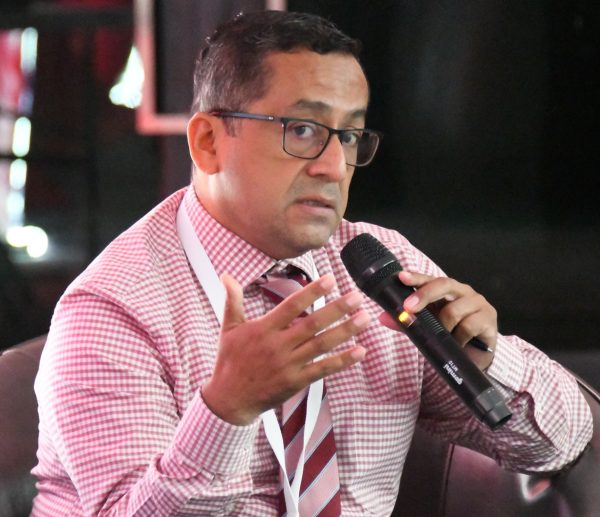
Richard Albert, a University of Texas law professor serving as constitutional advisor to the convention, addressed delegates during a session focused on draft articles from the Standing Committee on Human Rights. His presentation covered Article One, the Bill of Rights; Article Four, Suffrage and Elections; Article 10, Children and Youth; and Article 16, Initiatives, Referendums and Recalls.
Albert opened by placing the convention’s work in historical context, arguing that a homegrown constitution matters even though the U.S. Virgin Islands has operated for decades under the Revised Organic Act of 1954. He said a constitution written and ratified by Virgin Islanders would be an act of self-government, a compact across generations and a statement of shared values.
“The historic work you are doing is the most significant work that people can undertake in the project of self governance,” he told delegates.
He described the draft before him as unusually broad. “The drafts you prepared are more ambitious than any state constitution currently in force, much more ambitious,” he said. “That ambition reflects the values of the delegates of the U.S. Virgin Islands.”
But Albert warned that ambition comes with consequences. “A more detailed document like this one carries a higher litigation risk and a higher financial exposure,” he said.
One of his central messages was that federal supremacy must be made clear throughout the document, not only in one general provision. Public Law 94-584, the federal enabling law for the Virgin Islands constitutional process, requires any proposed constitution to recognize and remain consistent with U.S. sovereignty and the supremacy of applicable federal constitutional provisions, treaties and laws. Several draft provisions, Albert said, sit uneasily with that requirement unless their language is clarified.
His second broad warning was that expansive constitutional rights can invite litigation. Rights to healthcare, housing and beach access, he said, could be valuable statements of public commitment, but if written as judicially enforceable rights, they may create legal duties that courts could require the government to meet. That kind of litigation, he cautioned, would be paid from the same public resources that would otherwise fund government services.
For healthcare, Albert said the convention must decide whether it wants the right to be enforceable in court, merely aspirational, or a hybrid. A fully enforceable right could follow the South African model, where the government must show what it is doing to progressively realize the right. A non-justiciable model, similar to approaches used in India or Ireland, would make the right a guiding principle rather than something residents could sue to enforce. A hybrid model could make certain parts enforceable, such as emergency medical treatment regardless of ability to pay, while leaving broader goals as aspirations.
The right to housing drew similar concern. Albert said the proposed language goes further than any current U.S. state constitution and appears to include clean water, sanitation, energy, infrastructure, environmental safety, accessibility and cultural identity as components of the right. Each element, he said, could become a separate line of litigation. He advised delegates to decide whether those provisions are intended to create court-enforceable obligations or to guide legislation and policy.
The proposed right to beach access generated particular discussion. Albert acknowledged the long struggle in the Virgin Islands over shoreline access and said his own family background from Haiti made him familiar with beach exclusion. However, he said the draft language could be read as creating a right to cross privately owned coastal land, raising potential challenges under the U.S. Constitution’s Takings Clause.
Albert suggested that delegates either limit the right to beaches and shorelines already held in public trust, similar to the Texas model, or expressly provide for just compensation where private property rights are affected. Delegate Rupert Ross Jr. pushed back by stressing that, unlike Texas, the Virgin Islands’ historic understanding has been access to all beaches, and that shoreline exclusion has long carried racial and class implications in the territory. Albert said he agreed with the principle of public access, but urged delegates to make the constitutional approach explicit so federal reviewers would not conclude that the draft ignored takings concerns.
Several novel privacy rights also received attention. The draft includes a right for Virgin Islanders to control the collection, use and disclosure of personal and biometric data, as well as a right to transparency and fairness in algorithmic decision-making, including meaningful human review of automated decisions affecting substantial rights. Albert called those provisions forward-looking and not constitutionally impermissible, but said they have no real precedent in U.S. state constitutions. He compared them to the European Union’s General Data Protection Regulation and AI Act, both of which contain hundreds of pages of details. If the Virgin Islands places those rights into the constitution in a sentence or two, he warned, courts would be left to decide what they mean.
Albert recommended either leaving much of the detail to ordinary statute or requiring the Legislature to enact implementing laws before the constitutional provisions take effect.
The draft’s anti-discrimination section also goes further than most state constitutions, Albert said. He noted that some protected characteristics listed in the draft are rare or unprecedented in state constitutional practice, including pregnancy, health status, political opinion, economic condition and social origin. He did not recommend removing them, but urged delegates to ask what kinds of laws the provision is meant to invalidate and whether ordinary government classifications, such as reduced transportation fares for seniors or persons with disabilities, should be protected from unintended challenges.
On self-determination and reserved powers, Albert said the draft should make clear that those aspirations are exercised within the current territorial-federal relationship unless and until that relationship changes. The right to self-determination is recognized in international law, he said, and territories may express that aspiration. However, because the Virgin Islands’ governmental powers are delegated by Congress and subject to federal law, he warned that language reserving powers to the people could be read as claiming authority the territory does not legally possess.
Delegate David Silverman questioned how far delegates should go in treating federal supremacy and congressional plenary power as constraints, noting that the Revised Organic Act enumerates certain constitutional provisions applicable to the Virgin Islands and that the Insular Cases remain contested. Legal counsel clarified that the source of the supremacy requirement for the proposed constitution is Public Law 94-584, not only the Revised Organic Act.
Albert also raised concerns over the right to strike, saying the National Labor Relations Act governs private-sector labor relations and may preempt conflicting territorial law. He said the convention could clarify whether the right applies to public-sector workers under territorial control or express it at a level of generality that avoids federal conflict.
The draft’s animal well-being section, Albert said, could run into First Amendment issues if it captures protected expression or fails to remain neutral toward religious animal sacrifice. He said a provision on spectacles of violence against animals should be drafted carefully in light of U.S. Supreme Court precedent, and that any animal protection language should account for religious neutrality.
He also identified an internal conflict between the section on rights for women and girls and the general limitations clause. The women and girls section says no law may infringe those rights, while the limitations clause allows rights to be restricted under due process and strict scrutiny. As written, Albert said, both provisions cannot operate literally at the same time. He advised delegates to decide whether the rights for women and girls are subject to strict scrutiny or exempt from the limitations clause.
Another fiscal concern involved constitutional remedies. If the draft authorizes damages for constitutional violations, Albert warned, it may waive or invite waiver of sovereign immunity. That could expose the government to significant financial consequences. He suggested delegates consider exclusions, caps on damages or procedural requirements such as administrative claims before lawsuits proceed.
The draft’s habeas corpus language also drew a federalism warning. Albert said the territory can prohibit its own government from suspending habeas corpus, but it cannot limit Congress’s authority under the U.S. Constitution’s Suspension Clause. To avoid federal objection, he recommended saying clearly that the restriction applies to the Government of the Virgin Islands and not the federal government.
Under Article Four, Albert said fixed election and inauguration dates should include flexibility for emergencies such as hurricanes. Otherwise, he warned, the constitution itself could be violated if an election or transition cannot occur on the exact date stated. He pointed to state constitutions that allow election dates to be changed by law or allow an incumbent to remain in office until a successor qualifies.
He also said the draft’s requirement that officials take only an affirmation to enter office departs from the common American practice of allowing either an oath or an affirmation. If delegates intend to remove the oath option, he said, they should do so knowingly.
Campaign finance was one of the most discussed issues. Albert said the territory may set limits on contributions to candidates and require transparency and disclosure. However, under U.S. Supreme Court precedent, he said limits on independent expenditures are unconstitutional if the spending is not coordinated with a candidate. Convention President Raymond Richards asked for clarification, and Albert confirmed that contribution limits are permissible, but expenditure limits require careful federal-law language. Later, Albert said campaign finance transparency can be required, though simultaneous disclosure may be risky because officials need time to verify filings.
Delegate Liliana Belardo de O’Neal pressed the issue, arguing that large political donations affect the territory’s public life and that the constitution should strengthen campaign disclosure. Albert suggested authorizing transparency and disclosure as a constitutional principle while leaving details to ordinary statute.
Article 10, Children and Youth, drew a narrower drafting concern. Albert said if “children” and “youth” are meant to refer to all persons under 18, using both terms may create unnecessary confusion. If delegates intend the terms to mean different age groups, he said the constitution should define them clearly.
Article 16, covering initiatives, referendums and recalls, also needs refinements, Albert said. He noted that the draft’s two-thirds threshold for a successful recall is unusually high compared to the simple majority used in most states that allow recalls. A two-thirds requirement protects officials from recalls driven by transient minorities, he said, but also reduces recall’s usefulness as a democratic check. He also advised delegates to decide whether recalls should be allowed for any stated reason or only for specific grounds such as misconduct, malfeasance or neglect of duty.
Albert further warned that language making voter-approved initiatives immune from legislative amendment, repeal or gubernatorial veto should not be read to block judicial review. He recommended adding language preserving review for compliance with federal law and the federal Constitution.
Beyond individual provisions, Albert gave delegates five conditions he said are most closely associated with successful constitution-making in democracies: inclusivity, transparency and broad representation; adequate time with credible deadlines; genuine public engagement and civic education; a constitution that enables government rather than resolving every policy debate; and reconciliation and consensus across political camps.
He said public education is central because voters who do not understand what they are being asked to ratify are likely to vote no. He also warned against turning a constitution into a policy platform, saying delegates should ask whether each provision is essential to the constitutional project or could be handled through ordinary legislation.
Several delegates responded by stressing the importance of the rights the draft seeks to protect. Delegate Imani Daniel described the convention as operating in a “new frontier of democracy” and said rights for women, animals and housing reflect progressive aspirations that may require creativity within the limits of federal law. She said the Virgin Islands has historically pushed boundaries in its relationship with colonial authority, and that the current process should create a foundation for future political development.
Delegate Akima Richardson said the territory’s sixth attempt at constitution-making must also recognize the history of public beach access, noting that her late grandfather played a role in the local free beach initiative. Delegate John Canegata suggested that the draft should also consider a right tied to self-preservation or personal protection, referencing the Second Amendment and public safety concerns.
Delegate Rudel Hodge Jr. asked for a complete review of the full draft once the standing committees’ sections are combined, so delegates can identify internal conflicts and cross-referencing problems. Albert agreed that a comprehensive review is important, warning that constitutions drafted in separate committee parts often contain tensions, bad references and mistakes. He cited Saint Lucia as an example where a constitutional typo produced legal difficulty because the final text was not comprehensively checked before enactment.
The session also touched on process and timing. Hodge noted that roughly seven months remain under the convention’s current timeline. Richards said the Government Structure draft is the largest document currently before Albert and legal counsel, and that each standing committee’s work is expected to go through review, distribution to delegates, public presentation, community feedback and a final review by Albert and legal counsel.
Delegates also sought clarity on whether Albert may meet with them individually or through committees. After questions from Daniel, Richards stated on the record that Albert could interact with committees and directly with delegates, while Albert said he would respond as long as everyone understood his role and the convention’s rules.
Silverman asked why a constitution adopted by the people would be meaningfully better than simply adopting the Revised Organic Act as the territory’s constitution. Albert answered that the key difference is legitimacy — specifically, sociological legitimacy rooted in public ownership and consent. A constitution, he said, becomes the source from which later laws, appropriations and rulings trace their legitimacy.
Albert closed by reminding delegates that their work could resonate beyond the Virgin Islands. New constitutions within the American union are rare, he said, noting Rhode Island in 1987, Georgia in 1983 and Louisiana in 1975. Democratic constitution-making has also often failed in recent years in places such as Chile, Iceland and Australia, he said, while many newer constitutions around the world have emerged in non-democratic contexts.
“Your success will show the world that democratic constitution making is still possible, that it’s worthwhile,” he told delegates.
The meeting began with tributes to the late Delegate Ronald Russell, whose recent death has affected the convention. Delegates remembered him as wise, inspirational and committed to the future of the Virgin Islands, with several noting that he continued participating in the convention even while receiving health treatment. Daniel said Mr. Russell’s “legacy will continue” through the constitutional draft.