Nixon to Trump: Pakistan’s long record as backchannel between rival powers
 27 March 2026

Islamabad, Pakistan – In the middle of 1971, at the height of the Cold War, a Pakistani government plane carrying US Secretary of State Henry Kissinger flew overnight from Islamabad to Beijing. The trip was secret, the facilitator was Pakistan, and the geopolitical consequences were generational.
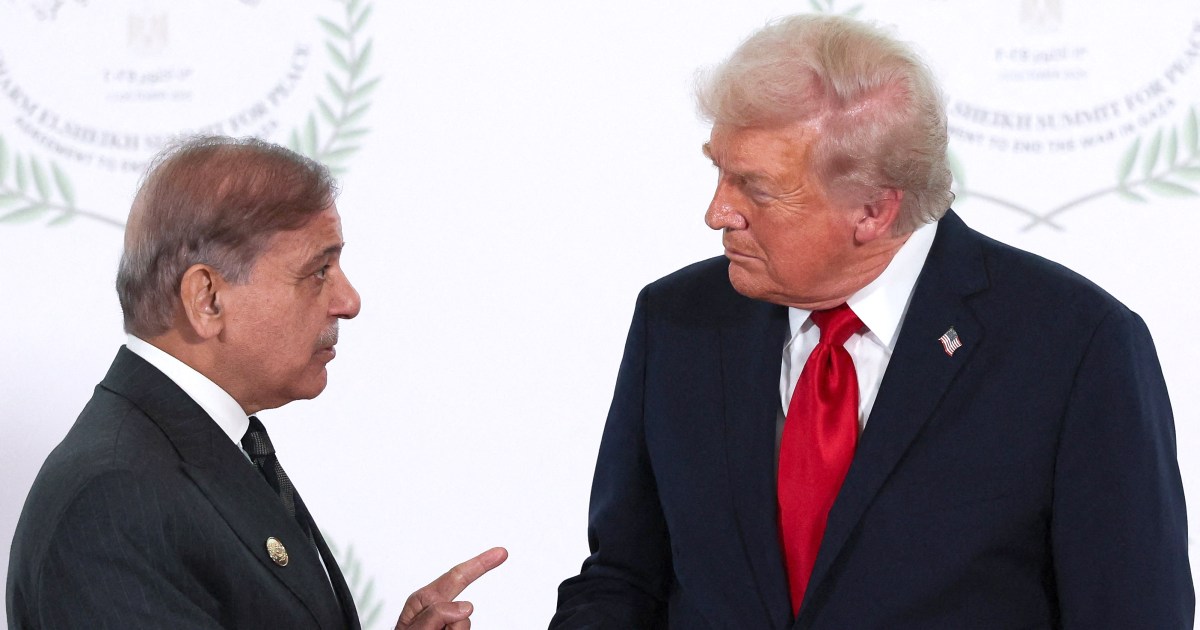
More than 50 years later, Pakistan is once again carrying messages. Foreign Minister Ishaq Dar confirmed on March 25 that Islamabad is relaying a US 15-point ceasefire proposal to Tehran, with Turkiye and Egypt providing additional diplomatic support, as the US-Israeli war against Iran stretches into its second month.
On Thursday, chief US negotiator Steve Witkoff also confirmed that Pakistan was transferring messages between Washington and Tehran. Hours later, President Donald Trump announced on his social media platform, Truth Social, a 10-day pause on threatened strikes against Iranian power plants, citing, in his words, a request from the Iranian government.
Iran has so far denied that direct negotiations are taking place, but Trump’s latest pause means that his initial threat to attack Iran’s power plants, delivered last weekend, has now been deferred twice, as Pakistan plays the part of a key diplomatic facilitator.
The role is not new. Pakistan brokered the secret US-China backchannel in 1971 and was a key interlocutor in the Geneva Accords that helped end the Soviet occupation of Afghanistan in the 1980s. It also facilitated talks that led to the 2020 Doha Agreement and has, across successive governments, attempted to mediate between Saudi Arabia and Iran.
Advertisement
Since the launch of Operation Epic Fury, the US-Israeli air campaign that began in late February 2026 and killed Supreme Leader Ali Khamenei within days, Islamabad has quietly but deeply inserted itself into the crisis, working the phones and holding meetings with key regional actors.
Prime Minister Shehbaz Sharif has spoken repeatedly to Iranian President Masoud Pezeshkian. Army Chief Field Marshal Asim Munir has held at least one direct call with President Donald Trump. Both Sharif and Munir have also travelled to Saudi Arabia, with whom Pakistan signed a mutual defence agreement in September last year, and which hosts a US base and has faced Iranian attacks in recent weeks.
“Pakistan’s story is told most often through the prism of conflict,” says Naghmana Hashmi, a former Pakistani ambassador to China. “Yet beneath the headlines of coups, crises, and border skirmishes runs a quieter, more consistent thread: a state that has repeatedly tried to turn its geography and Muslim-world ties into diplomatic leverage for peace,” she told Al Jazeera.
Whether this latest round of diplomacy produces anything durable remains uncertain. But it has once again raised a familiar question: How and why does Pakistan keep emerging as a diplomatic broker, and how effective has it been?
Opening the China channel
In August 1969, US President Richard Nixon visited Pakistan and quietly tasked the country’s military ruler, President Yahya Khan, with passing a message to Beijing: Washington wanted to open communication with the People’s Republic of China.
At the time, the US treated Taiwan as China and did not recognise Beijing.
Pakistan was chosen for the diplomatic role because it maintained working relations with both Washington and Beijing.
Winston Lord, who served as Kissinger’s aide and was on the flight to Beijing, described the decision in a 1998 oral history interview conducted by the Association for Diplomatic Studies and Training.
“We finally settled on Pakistan. Pakistan had the advantage of being a friend to both sides,” he said.
Two years of indirect exchanges followed, with Pakistani officials carrying messages between the two capitals.
Then, in July 1971, Kissinger arrived in Islamabad on a public tour of Asia. According to historical records and accounts from key participants, he appeared to fall ill at a welcome dinner.
In the early hours of July 9, Yahya Khan’s driver took Kissinger and three aides to a military airfield, where a Pakistani government plane was waiting with four Chinese representatives on board. The aircraft flew to Beijing overnight, while a decoy car headed to the hill resort of Nathia Gali, about three hours from Islamabad.
Advertisement
Kissinger spent 48 hours in meetings with Chinese leader Zhou Enlai before returning to Pakistan. The trip paved the way for Nixon’s visit to Beijing in February 1972, and the famous handshake with Chinese leader Mao Zedong that led to a detente between the two countries, and the US recognition of communist China.
Kissinger later acknowledged in an interview with news magazine The Atlantic that the Nixon administration had declined to publicly condemn Pakistani army actions in East Pakistan, which contributed to the creation of Bangladesh in December 1971.
According to him, doing so “would have destroyed the Pakistani channel, which would be needed for months to complete the opening to China, which indeed was launched from Pakistan”.
Masood Khan, who served as Pakistan’s ambassador to the United States and later to the United Nations, says the episode reflected something structural.
“In 1971, Pakistan was the only country that could be trusted simultaneously in Washington and Beijing with a very sensitive mission, which was kept secret even from the State Department,” he told Al Jazeera.
“But beyond trust, Pakistan had also acquired the requisite strategic manoeuvrability and operational flexibility that suit interlocutors caught in an apparently irredeemable situation,” Khan added.
Muhammad Faisal, a Sydney-based foreign policy analyst, called it Pakistan’s defining diplomatic moment.
“Pakistan’s facilitation of the US-China backchannel is unambiguously the most consequential. It restructured Cold War geopolitics in ways that still define the international order. No other Pakistani facilitation comes close in scale or permanence,” he said.
But he also points to its limits.
“Pakistan couldn’t turn that support from both powers to its advantage in the 1971 civil conflict and the subsequent war with India. Despite being on good terms with both China and the US, Pakistan couldn’t deter India from taking advantage of the civil conflict,” he added.
Mediator and stakeholder
Pakistan’s role in Afghan diplomacy spans four decades and does not always fit neatly into the category of neutral brokering.
An early instance came in the 1980s, following the Soviet invasion of Afghanistan in December 1979.
Pakistan became the primary conduit for US, Saudi and Chinese military and financial assistance to the Afghan mujahideen, with its intelligence agency, the Inter-Services Intelligence (ISI), organising and directing the resistance.
From June 1982, a United Nations-mediated process began in Geneva. Since Pakistan refused to recognise the Soviet-backed Kabul government, negotiations were conducted indirectly.
The Geneva Accords were eventually signed on April 14, 1988, by the foreign ministers of Afghanistan and Pakistan, with the United States and the Soviet Union as guarantors. They set a timetable for Soviet withdrawal, completed by February 1989.
As Khan observed, Pakistan occupied a dual role. “It was both a stakeholder and a mediator,” he said, a distinction that would shape its Afghan policy for decades.
Advertisement
Nearly three decades later, in July 2015, Pakistan hosted the first officially acknowledged direct talks between the Taliban and the Afghan government of then-President Ashraf Ghani in Murree, near Islamabad, with US and Chinese officials attending as observers.
The Taliban, who had ruled Afghanistan from 1996 until being overthrown after the 9/11 attacks in 2001, were then waging a rebellion against US and NATO forces. Pakistan, widely seen as having influence over the group, played a key facilitating role.
During the subsequent US-Taliban negotiations that led to the Doha Agreement in 2020, Pakistan’s involvement was less visible but remained central.
US envoy Zalmay Khalilzad repeatedly acknowledged that Pakistani pressure on Taliban leadership helped sustain the talks.
Faisal said it is unclear what the agreement delivered for Pakistan.
“Pakistan did bring the Taliban interlocutors to the table. However, the outcome, the rushed US exit and the Taliban takeover, did not secure Pakistan’s own medium-to-long term interests,” he said.
Today, Pakistan and the Taliban-ruled Afghanistan are locked in a war, both firing at each other. And the Taliban has grown close to Pakistan’s South Asian rival, India.
Saudi-Iran: efforts without outcomes
Few diplomatic efforts have absorbed more Pakistani energy with less to show than attempts to ease tensions between Riyadh and Tehran, say analysts.
In January 2016, after protesters ransacked Saudi diplomatic missions in Iran, then-Prime Minister Nawaz Sharif, elder brother of current premier Shehbaz, flew to both capitals in a single trip alongside then-Army chief General Raheel Sharif.
Within days, however, Saudi Foreign Minister Adel al-Jubeir publicly denied that any formal mediation had been agreed.
In October 2019, after drone and missile attacks on Saudi Aramco facilities at Abqaiq and Khurais temporarily halved the kingdom’s oil output, Pakistani Prime Minister Imran Khan undertook shuttle diplomacy between Tehran and Riyadh.
Khan said that Trump, then in his first term, had personally asked him to “facilitate some sort of dialogue”. Iranian officials said at the time they were unaware of any formal mediation process.
When China brokered the restoration of Saudi-Iran diplomatic ties in Beijing in March 2023, Pakistan’s Foreign Office noted that the first direct contact between the two sides since 2016 had taken place on the sidelines of a summit of Islamic countries hosted by Islamabad a year earlier.
Khan, the diplomat, rejects the view that China’s role in the 2023 breakthrough represented a Pakistani failure.
“China should get all the credit for the culmination of the Iran-Saudi rapprochement, but Beijing would recognise that Pakistan paved the way for it,” he said.
“Pakistan’s forte is opening channels, building confidence, and hosting indirect, proximity talks. This kind of facilitation is foundational in any kind of mediation and subsequent conciliation, arbitration, and agreements,” he added.
Attempt at peace in Middle East
In September 2005, Pakistan’s Foreign Minister Khurshid Mahmud Kasuri met his Israeli counterpart Silvan Shalom in Istanbul, marking the first publicly acknowledged official contact between the two countries.
In his memoir, Neither a Hawk Nor a Dove, Kasuri described the meeting as an attempt to turn Pakistan’s nonrecognition of Israel into diplomatic leverage, using its credibility in Arab and Muslim capitals as a conduit, contingent on progress towards Palestinian statehood.
Shalom called the talks “a huge breakthrough”. But the initiative did not survive domestic opposition.
Advertisement
Protests erupted in Pakistan, which does not recognise Israel. No follow-up meeting took place, and no structured process emerged.
Recurring diplomacy
Faisal attributes Pakistan’s recurring diplomatic role to enduring structural factors.
“Pakistan’s access is linked to its geography and its regional relationships amid many fault lines that it straddles,” he said.
“Iran cannot ignore Pakistan because it is home to the largest Shia population outside Iran. For the US, ignoring Pakistan, a nuclear-armed Muslim-majority nation straddling the broader Middle East and South Asia with close ties to China, comes at its own risk.”
Khan rejects the suggestion — made by some analysts — that Pakistan’s mediation is driven primarily by Washington.
“To suggest that Pakistan has always opted for mediation at the behest of the US is a reductive construct. Mediation is in the DNA of Pakistan’s diplomacy,” he said.
“Pakistan does not pursue bloc politics and prefers to maintain equidistant relations with Washington, Beijing, Tehran, Riyadh, and other Gulf states. It is aligned, but not a camp follower.”
Yet the current Iran mediation carries higher stakes than most recent efforts.
“Pakistan now enjoys trust in Washington, Tehran and the Gulf capitals,” Khan said. “No other country in the region has that kind of leverage.”
Related News
US-Israel war on Iran: What’s happening on day 28 of attacks?

Italians vote in high-stakes justice referendum in key test for Meloni
More than 110 people killed in Iran’s Kurdistan: Official