
Fahie appeal takes aim at informant, verdict and ‘undetectable’ coke
 12 February 2026

Two years after former premier Andrew Fahie was found guilty of conspiring to smuggle cocaine into the United States, he is taking his fight to the next level.
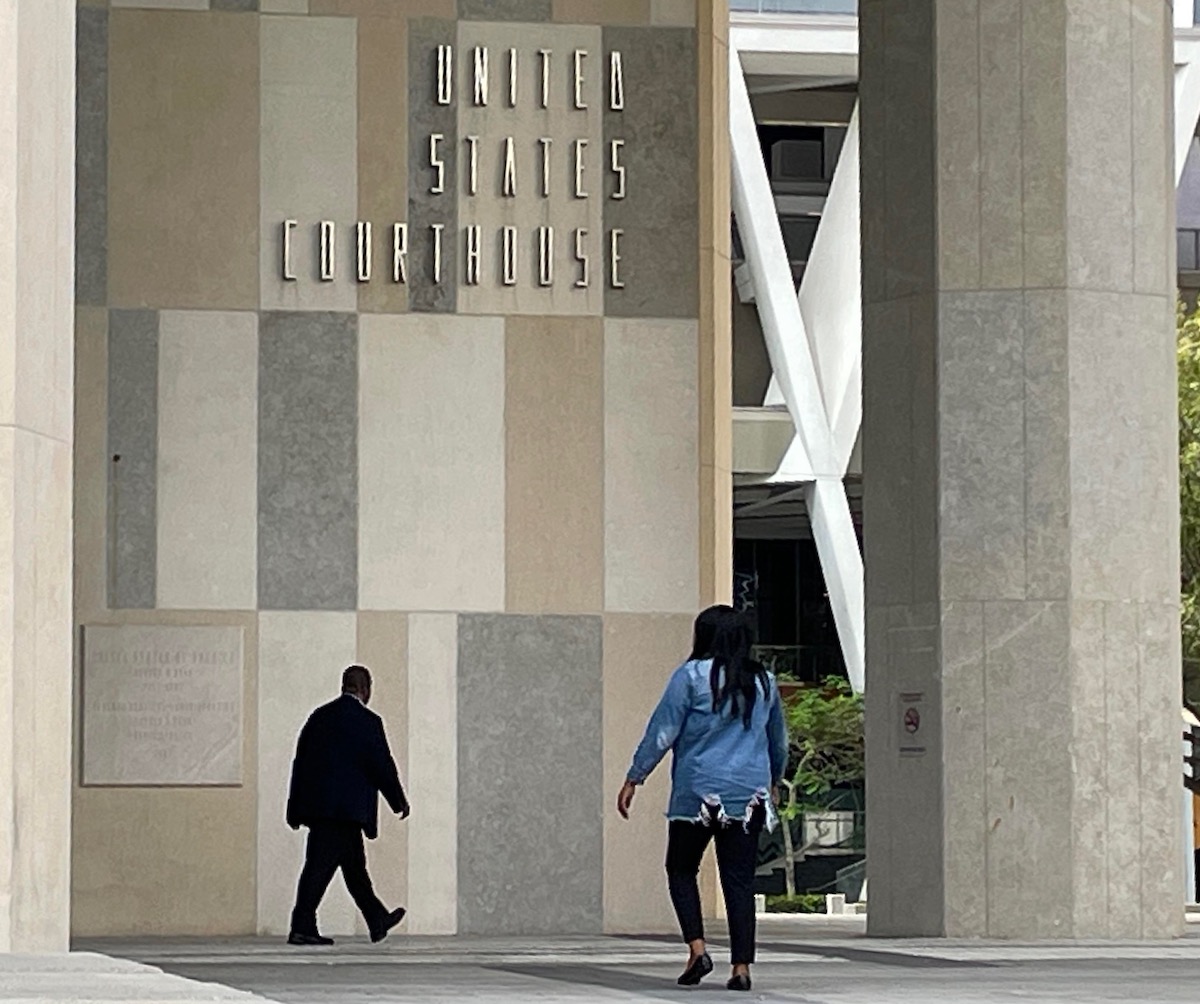
Last week, Mr. Fahie’s lawyer filed a formal appeal in the United States Court of Appeals for the Eleventh Circuit, arguing that his convictions should be tossed out because the US government hid damaging information about its star confidential informant, failed to prove the cocaine charge as required by law, and mishandled warning signs that the jury’s verdict may not have been unanimous.
The appeal is Mr. Fahie’s main legal path forward after a trial that ended in a sweeping guilty verdict and a prison sentence of 11 years and three months.
Now, the Eleventh Circuit will decide if the conviction stands or if the case that shook the Virgin Islands should be tossed out or head back to court.
Sting operation and arrest
Mr. Fahie was arrested in Miami on April 28, 2022, after an elaborate sting operation carried out by the US Drug Enforcement Administration.
As part of the sting, undercover operatives posed as members of Mexico’s Sinaloa Cartel, asking Mr. Fahie and his co-conspirators to help facilitate the “free passage” of cocaine through VI waters on the way to Puerto Rico, according to prosecutors.
During Mr. Fahie’s trial in February 2024, jurors heard clandestine recordings of a DEA confidential source — who Mr. Fahie knew as “Roberto Quintero” — explaining to Mr. Fahie that the cartel’s cocaine would be concealed as waterproof construction materials.
In exchange for turning a blind eye to the shipments, Mr. Fahie expected to receive an initial $500,000 in cash and a cut of the proceeds from future drug sales, prosecutors said during his trial.
On Feb. 8, 2024, a unanimous jury found Mr. Fahie guilty of all four counts against him: conspiracy to import five kilograms or more of cocaine; conspiracy to engage in money laundering; attempted money laundering; and foreign travel in aid of racketeering.

The appeal
In the initial appeal brief, which was filed Feb. 3, Mr. Fahie’s attorney Benedict Kuehne argued that the case should never have gone to a verdict in the first place.
The brief lists three main issues.
The first raises questions about the confidential informant Mr. Fahie knew as “Roberto Quintero.”
The brief argues that the informant’s credibility had previously been shredded — and that the government knew as much but tried to keep that fact out of court.
Specifically, the appeal claims that US officials withheld information that “a foreign judicial officer found the confidential informant to have credibility and reliability issues that resulted in the dismissal of corruption charges against Mexican government officials.”
According to the brief, the informant was the key driver of the sting operation even though he did not testify in court.
The brief also goes further, alleging that the government case agent falsely testified — first at the bond hearing and then again at trial — that he did not know about the informant’s credibility problems.
According to the brief, the issue came to light only after repeated challenges and court-ordered hearings. Though the judge refused the defence’s request to dismiss the case based on government misconduct, the brief notes, she criticised the agent.
“Ultimately, while I don’t think [DEA Agent Brian] Witek comported himself the way one expects a federal law enforcement agent should in front of a jury, after I intervened … he ultimately acknowledged that he knew of the general information about the CI’s credibility,” the judge said, according to the brief.
The appeal argues that such prosecutorial conduct was not a minor discovery dispute but a substantive issue that undermined the fairness of the trial.
The ‘cocaine’
The appeal’s second argument involves Mr. Fahie’s claim that he never believed that cocaine would be passing through VI waters at all.
The first count charged Mr. Fahie with conspiring to import “five kilograms or more of a mixture and substance containing a detectable amount of cocaine,” but the brief argues that the sting itself was built around the idea that the substance could not be identified as cocaine.
According to the filing, the confidential informant repeatedly told Mr. Fahie that the shipment would look like liquid construction materials and that during inspections it would “never test positive [for cocaine] — never, never, never.”
The informant allegedly claimed the cocaine would be extracted later in Puerto Rico using a four-day chemical process.
The appeal filing argues this fact matters because federal law requires proof that the object of the conspiracy contained a “detectable amount” of cocaine — and the government’s own narrative said the opposite.
Uncertain jurors?
Mr. Fahie’s third argument addresses incidents that occurred after his guilty verdict was read in court.
According to the appeal, two jurors stayed behind after being discharged and told a court officer they were unhappy with the verdict and would have found Mr. Fahie not guilty. Defence lawyers, the filing notes, had already noticed that one juror appeared to hesitate while being polled in court.
The judge later conducted an inquiry with that juror. Asked whether the verdict was hers, she responded, “Yes. At the time that I answered that.”
But the second juror — who the brief says also voiced disagreement after the verdict — was never interviewed.
Because of these issues, Mr. Fahie’s lawyer argues that the court should have either declared a mistrial or conducted a full investigation to ensure the verdict was truly unanimous.
Mr. Fahie is asking the appellate court to dismiss the case due to what he calls “egregious government misconduct” and throw out the cocaine-conspiracy conviction for insufficient evidence.
He is also asking the court to order a mistrial or send the case back for a full inquiry into the jury-unanimity question.
To make his case, his lawyer has requested oral argument.
Related News
These Are the 11 Individuals Arrested and Charged in DOJ’s Medicaid and SNAP Fraud Case

Territorial Hospital Board Authorizes Consultant RFP as Consolidation Effort Advances
Neighbor Fires Shot Into Passing Car, Grazes Woman as 18-Year-Old Passenger Rode Along, Po...