Op-Ed: Leadership in a Borrowed House and the Limits of Power in the Virgin Islands
 28 January 2026
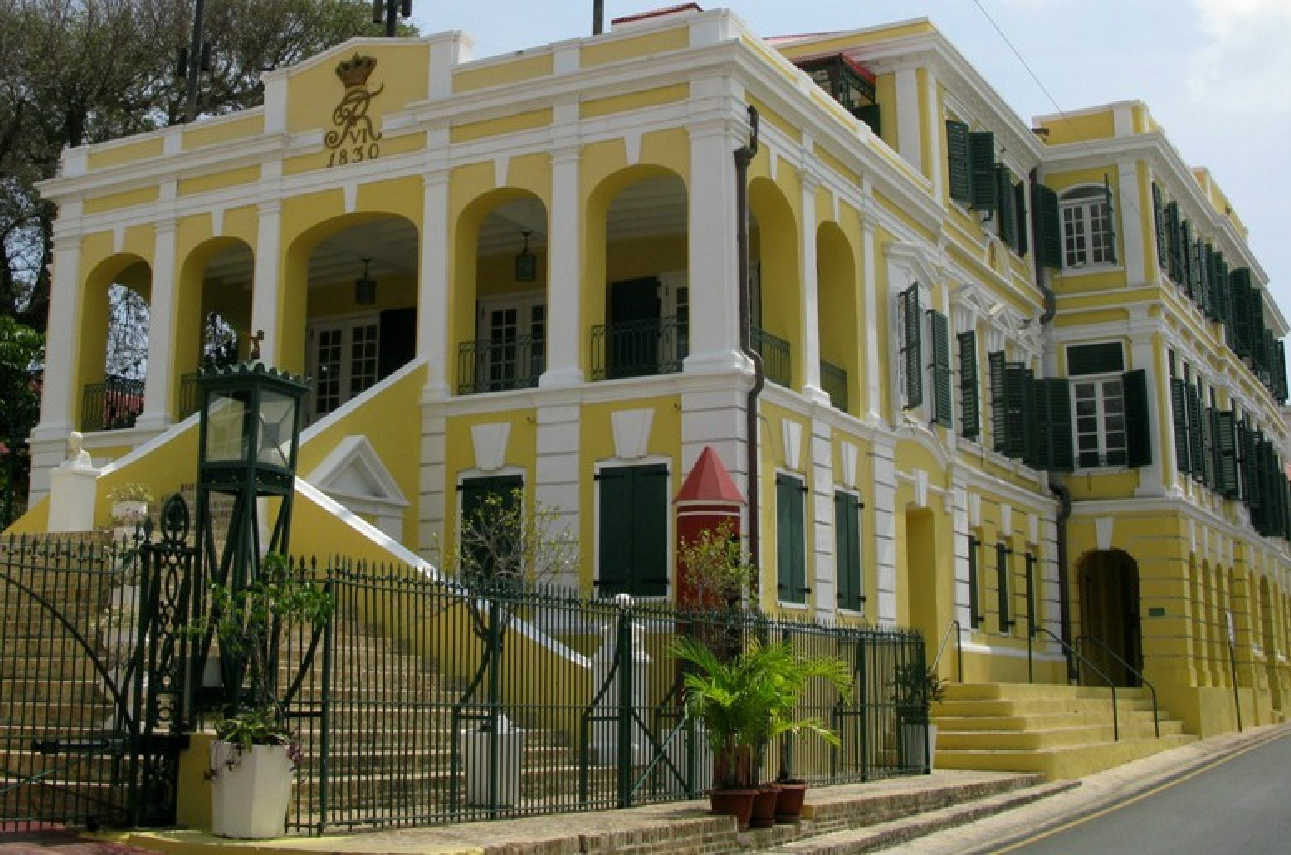

Leadership in the Virgin Islands has always existed inside a borrowed house. The walls are federal, the roof is territorial, and the people are expected to behave as if they built it themselves. This is the central contradiction shaping Virgin Islands governance and the source of both its political frustrations and its leadership failures.

The Virgin Islands is not a sovereign nation, yet it is repeatedly measured against sovereign expectations. Its leaders are elected, its people vote, its institutions resemble those of states and nations, but ultimate authority rests elsewhere. Congress controls the purse strings. Federal law overrides local statute. Even citizenship itself is constitutionally uneven. Leadership here is democratic in appearance but constrained in execution.
This structural reality shapes every leadership decision, whether acknowledged or not. Economic policy is negotiated, not determined. Long-term planning competes with short-term federal compliance. Innovation is filtered through approval processes designed far from island realities. Yet public discourse often ignores this framework, choosing instead to personalize failure. Governors, senators, commissioners rise and fall while the structure remains intact.
This misdiagnosis is costly. When leadership is framed purely as an individual shortcoming, the public is denied a systemic understanding of its own condition. Cynicism grows. Voter turnout declines. Talented citizens withdraw. Leadership becomes a rotating cast rather than a sustained project. However, constraint does not absolve leadership of responsibility. Some of the Virgin Islands’ deepest wounds are self-inflicted: patronage politics, institutional fragility, short-termism, and an overreliance on personality-driven authority. These are not imposed by Washington. They are local choices made within constraint.
The tragedy lies in how often leaders confuse limitation with inevitability. Federal oversight becomes a convenient shield against accountability. Structural dependency becomes cultural dependency. The language of “we can’t” replaces the discipline of “how might we.” True leadership in the Virgin Islands requires a different posture, one rooted in stewardship rather than spectacle. The leader’s task is not to pretend sovereignty, but to maximize dignity within constraint. That means building institutions that outlast personalities. It means cultivating civic literacy, so citizens understand where power truly lies. It means forming regional alliances that increase leverage rather than isolation.
The Virgin Islands’ relationship to the Caribbean deepens this challenge. Culturally Caribbean, politically American, and historically colonial, the territory occupies an in-between space that demands nuanced leadership. Attempts to lean fully into one identity at the expense of the others produce distortion. Leadership must integrate these realities, not deny them. Diaspora leadership theory is particularly relevant here. Virgin Islanders lead not only locally, but symbolically. They represent the unresolved question of American democracy’s outer limits. Are territories perpetual dependents, or evolving partners? Leadership that avoids this question condemns future generations to inherited ambiguity.
Renewal begins with reframing leadership as a collective discipline rather than a heroic act. No governor alone can overcome federal constraint. No legislature alone can restore trust. But leadership that is honest, coordinated, and values-driven can rebuild civic confidence even when outcomes are slow. This requires leaders willing to be disappointed with truth rather than comfort with illusion. Leaders who will say: This is what we control. This is what we influence. This is what we must organize to change. Such clarity does not weaken authority; it legitimizes it.
Education, institutional memory, and civic participation must become leadership priorities. Not as slogans, but as infrastructure. A people who understand their political condition are harder to manipulate and easier to mobilize. That is dangerous to weak leaders, but essential to strong societies. The Virgin Islands does not suffer from a lack of talent. It suffers from a leadership culture trained to survive cycles rather than build systems. Federal constraint magnifies this weakness but did not create it.

Leadership in a borrowed house requires care. You reinforce the foundation. You respect the limits. But you still make it livable for those inside. You do not pretend the house is yours, nor do you abandon it because it isn’t. You lead as a steward, accountable to the people who live there now and those who will inherit it later. That is the leadership the Virgin Islands requires—not louder voices, but steadier hands. Not promises of escape, but practices of dignity. Not borrowed authority but earned trust.
Related News
On the Ground in Jamaica, WAPA Linemen Trade Skills and Build Regional Resilience
Governor Bryan Signs Wage Increase Into Law and Approves Broad Slate of Bills From January...
VI National Guard Exits Federal Oversight After Six Years of Transformation