
Christmas bird count wraps up in Anegada
 16 January 2026

In the back of a white Dodge pickup bouncing along Anegada roads thick with heat, Nancy Woodfield-Pascoe reached over and banged the side of the truck with her palm.
The squeaking of brakes stopped slowly, and the engine was cut. After a light breeze eased, all that was left were bird calls.
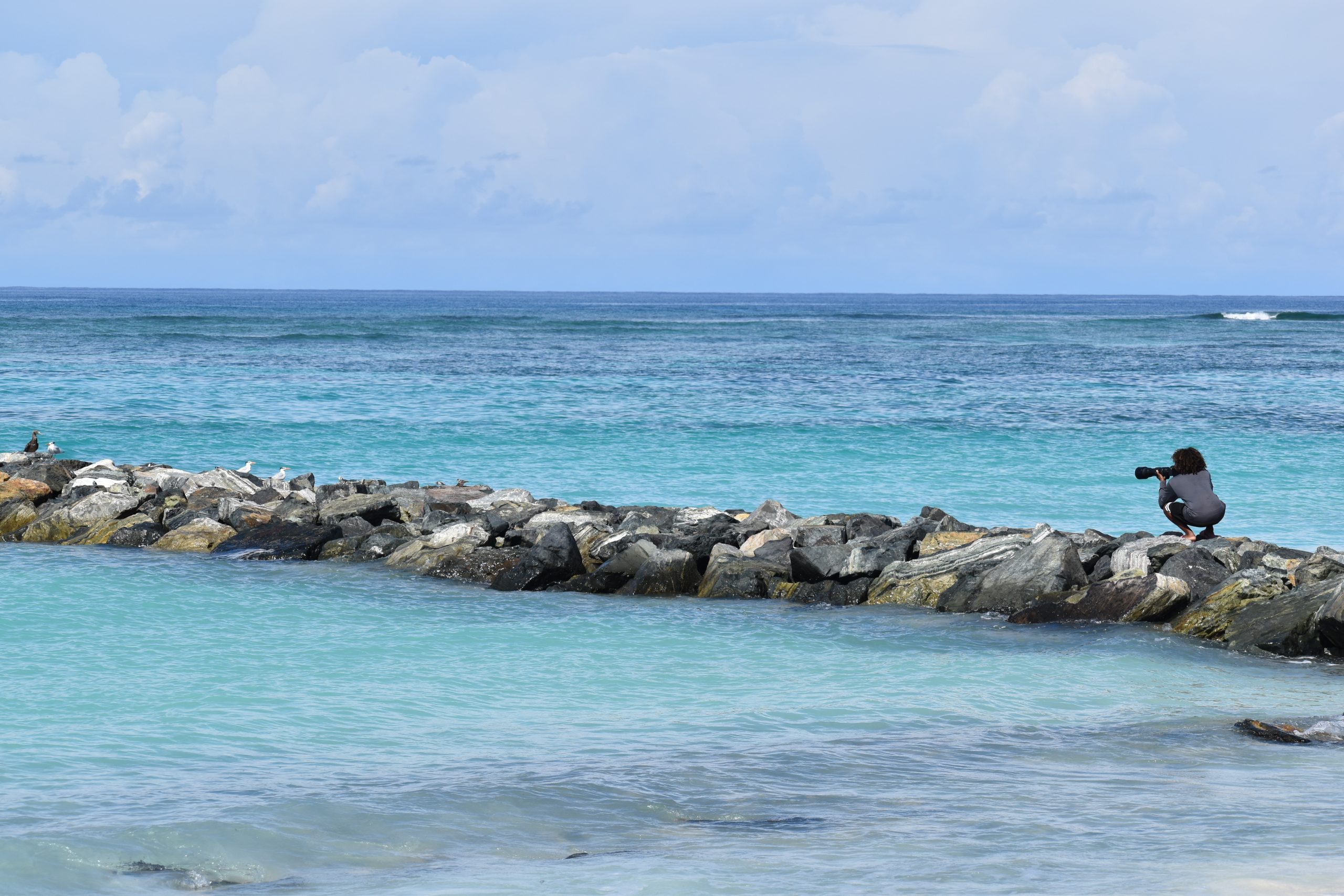
Across from Ms. Woodfield Pascoe, Anegada resident and wildlife photographer Rondel Smith Jr. clicked together the body of his camera with a 600-millimetre telephoto lens. Binoculars and lenses came out and took aim.
Swiveling sharply with a yellow flash overhead, they recorded a sighting of a bananaquit, which Ms. Woodfield-Pascoe added to her printed list of birds on a clipboard.
The group was taking part in the Anegada edition of the National Audubon Society’s Annual Christmas Bird Count on Jan. 5.
Throughout the day, Creightanya Brewley drove the truck around the island, stopping each time Ms. Woodfield-Pascoe signalled and launching forward again whenever the pavement safari continued.

The numbers
This year’s count on Anegada logged 710 birds representing 40 species, according to Ms. Woodfield-Pascoe.
The first count on Tortola on Dec. 13 spotted 1,004 birds across 40 species. Six days later on Virgin Gorda — which was included for the first time this year — 139 birds representing 24 species were documented.
The variety makes Ms. Woodfield-Pascoe hopeful for the islands’ avian ecosystems.
“Many people who get involved and start birding often do not realise the diversity of birds found within the BVI, from ducks to hawks, hummingbirds and sandpipers,” said Ms. Woodfield-Pascoe, who is deputy director for science and research at the National Parks Trust. “It’s a wonderful way to get out in nature and just explore places that you may drive past every day and then realise that it’s providing an essential habitat to BVI birdlife.”

Volunteers
For this year’s Tortola count, both new and experienced volunteers numbered 11 in total — the highest recorded.
Ms. Woodfield-Pascoe and the NPT encourage more people to get involved in citizen science and contribute to the annual bird count.
Since 1988, the VI has submitted its annual count numbers to the National Audubon Society, a United States non-profit organisation named after famed naturalist John James Audubon.
The organisation gathers data from similar counts conducted around the world. The contributed results include any new species spotted as well as updates on previously recorded ones.
“The annual bird count is a great way to check on the state of the BVI’s birdlife. It’s a snapshot in time that can give an indicator on overall habitat health,” Ms. Woodfield-Pascoe said. “Birding on Anegada is always a delight as there are many different species found there in abundance that are not common on Tortola or Virgin Gorda, such as sanderlings, ruddy turnstones, northern mocking birds and Caribbean elaenias.”


Dream job
The bird count last week was the third for Ms. Brewley, who works for the NPT as a terrestrial warden and nursery manager at the J.R. O’Neal Botanic Gardens in Road Town.
During the Anegada trip, she also collected plant specimens as well as fruits and seeds pruned from bushes and trees, carefully placing them into a large vinyl bag.
For Ms. Brewley, her job is a dream come true.
“After I graduated from [college], I wanted to get some experience in the career path I was interested in,” she said. “I was trying to get into conservation. I always wanted to work at the botanic garden. I used to go there as a child, and it’s just a very nice place: really calm and relaxing.”
Ms. Brewley secured an apprenticeship at the gardens after Hurricane Irma in 2017, and the opportunity blossomed into a full time job.
Both Ms. Woodfield-Pascoe and Ms. Brewley concluded that this year’s bird-count findings were more or less consistent with previous counts.
“I didn’t see as many doves as I recall seeing the last time, but other than that I think it was kind of normal results,” Ms. Brewley said. “There were a lot of great king birds. It was more or less usual stuff.”

Changing ecosystems
While some factors tend to remain consistent with each year’s count, the birders also notice changes over time.
Another stop on Anegada was the mangrove-lined Fisherman’s Wharf, where the rising tides made the narrow road slick and shiny.
The Dodge parked precariously over a large puddle, and the birders took long strides and jumped to nearby dry spots.
Waiting on the docks was Rondel Smith Sr., a fisherman and former NPT staff member who described rising sea levels as one of the symptoms of climate change on Anegada.

From his years of experience on the water, Mr. Smith said he has seen the area change dramatically — causing birds to alter their nesting habitats.
Ms. Woodfield-Pascoe said the island has been a major migratory stopover for many bird species, and protecting its habitats should be a top priority.
“Birds are very sensitive to changes in the climate, and this is usually reflected in what species we see or don’t see — if certain migratory species are absent — as colder or warmer conditions in northern hemispheres will impact when birds migrate, with many birds migrating in the spring or the autumn between North and South America,” she said. “Protecting a bird’s habitat is very important, whether they be upland forest species, wetland birds or seabirds.”
Non-native species
Periodic glimpses of brightly coloured feathers in the trees also told of changing bird populations and their effect on the environment as the group rode around Anegada, occasionally pelted with passing showers.
At the Anegada Beach Club, large male peacocks fanned away stray cats and smaller birds with their vibrant plumage. The cats retreated nearby, patient and undeterred.
Stray cats are among the most destructive predators in the VI, as they are not prey for any other animal, Ms. Woodfield-Pascoe said.
While the peacocks aren’t so lucky, they do share something in common with the cats: They were former pets let loose and allowed to breed unchecked in the wild.
According to Ms. Woodfield Pascoe, invasive species, including certain plants such as the Australian whistling pine, can harm the ecosystem by interfering with the growth of other organisms.
“We were not expecting to find a peacock on Anegada!” she said. “This is not a native bird and is an example of how birds are introduced through the pet trade.”
On Tortola, she added, monk parakeets have also become established.
“It is assumed that these were pet birds that were accidentally or deliberately released,” she said. “And their population is growing, although they have not been observed beyond Tortola.”
Thanks to the annual bird count, such invasive species are now carefully recorded and logged.
Taking part
NPT Director Cassander Titley-O’Neal thanked volunteers for taking part in the research. “For those who want to learn, we invite them to come and participate in the next count,” she said. “Please follow us on Facebook to see all upcoming events.”
Related News

Virgin Islands rings in the New Year

Steel Pulse, Chronixx, Morgan Heritage, and Third World Remember Vaughn Benjamin Of Midnit...

J’Ouvert Outing Ends in Arrest After Woman Reports Assault and Vehicle Theft