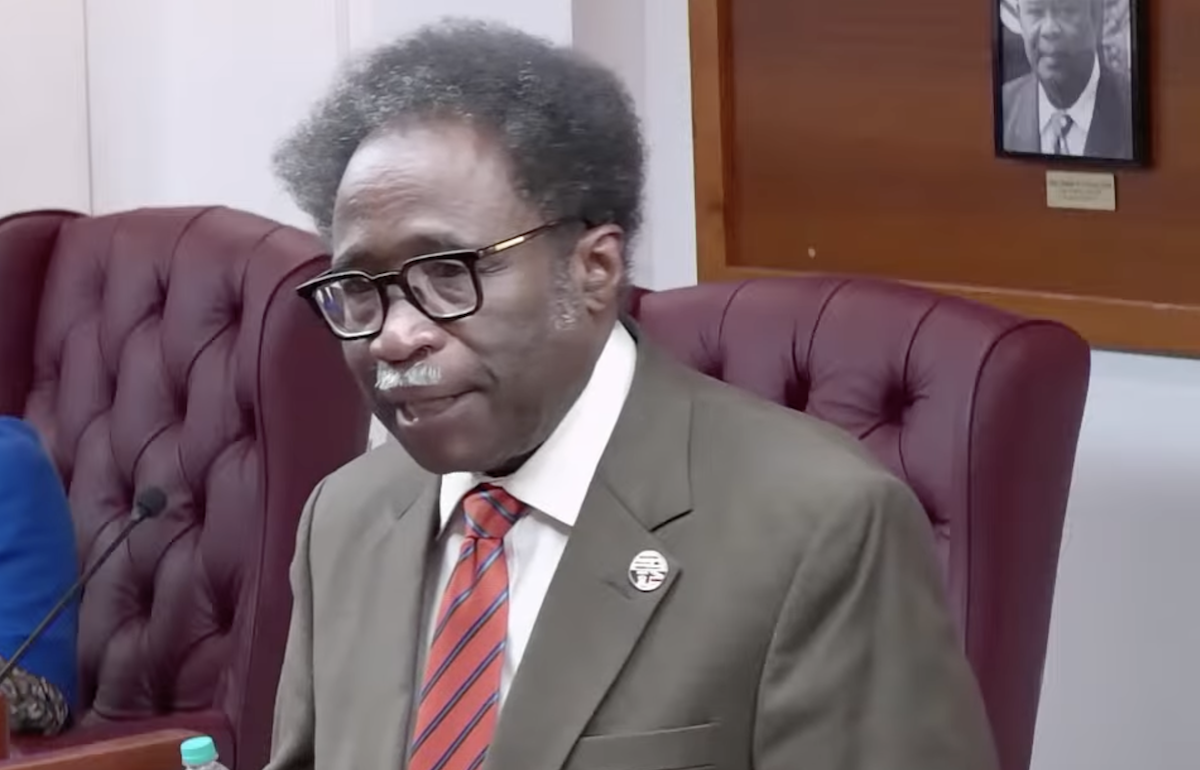
HOA passes record $562m budget with boosts for security
 26 December 2025
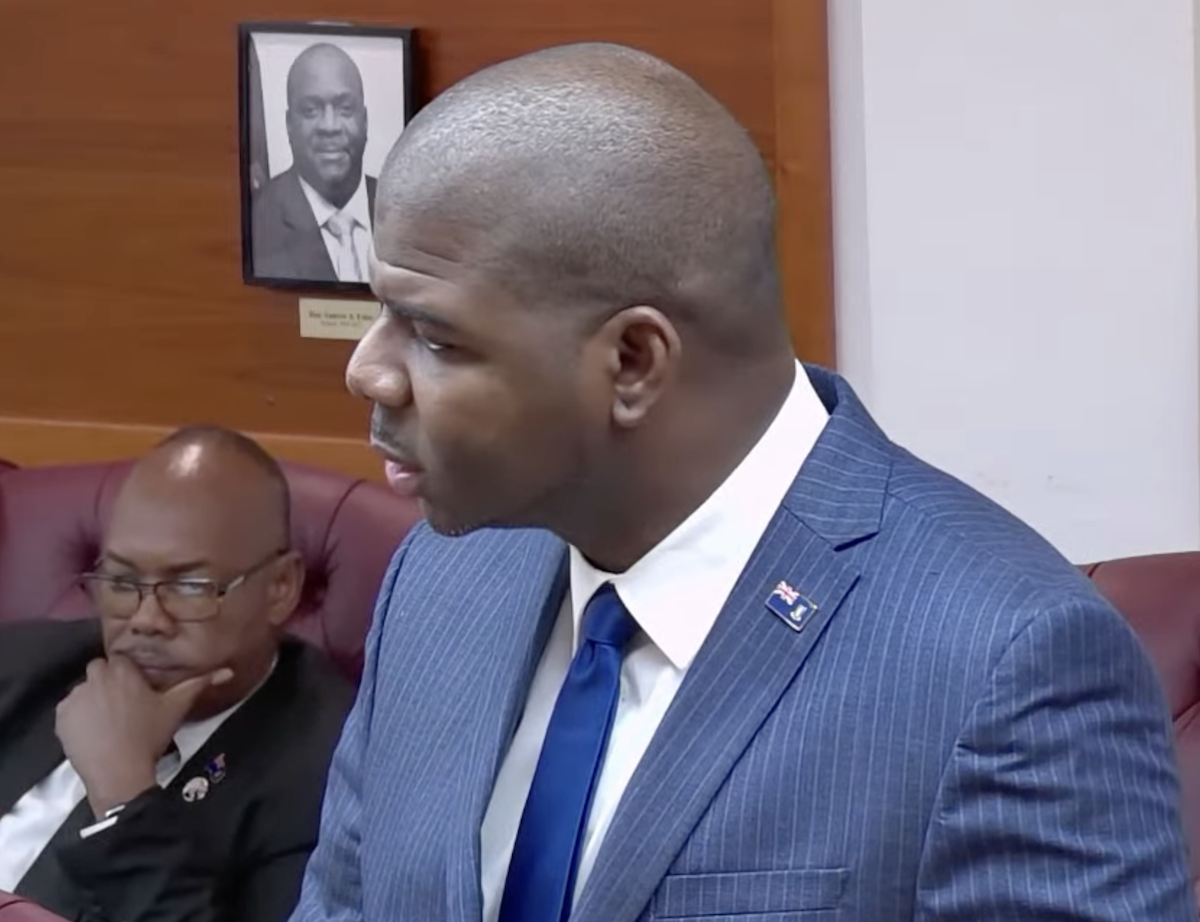

House of Assembly members publicly debated the 2026 budget estimates for three days last week, sharing widely divergent perspectives on the territory’s future before passing an appropriations bill with amendments on Dec. 18.
On the government side of the aisle, Premier Natalio “Sowande” Wheatley and his colleagues used the session to tout their recent record and explain their plans for a record-breaking budget that now includes more than $562 million in spending.
“The 2026 budget continues to prioritise accelerated and sustainable growth in alignment with the National Sustainable Development Programme,” Mr. Wheatley said during the debate.
He added that the expenditures include $12 million more than previously planned — including an approximately $4 million jump in security spending — following discussions last month with United Kingdom officials about relaxing the territory’s borrowing rules.
Opposition members, however, countered the government’s optimistic narrative by criticising its record and questioning whether its plans will help residents struggling from the rising cost of living.
“Whatever we’re doing — these lovely things — they’re not reaching the public,” opposition member Ronnie Skelton said, adding, “We need to get this budget to be able to touch the people on the street. … People are definitely having a hard time.”
After the three days of public debate, the HOA entered a closed-door committee session on Dec. 18 before emerging later that day to pass the Appropriations Bill, 2026.

Dialogue
The debate had kicked off two days earlier, with five members contributing on Dec. 16: Opposition Leader Myron Walwyn (R-D6), Marlon Penn (R-D8) and Mitch Turnbull (R-D2) on the opposition side and Financial Services and Economic Development Junior Minister Lorna Smith (R-at large) and Deputy Speaker Karl Dawson (R-D1) on the government side.
The debate continued the following afternoon with Mr. Skelton (R-at large) speaking first.
Besides addressing the rising cost of living, Mr. Skelton listed urgent works needed to improve infrastructure including roads and the sewerage system.
He also stressed the importance of construction projects in boosting the economy.
“It needs to happen,” he said. “I know you are waiting for that massive project called Prospect Reef, but one thing I have learned: With massive projects come massive problems. And you gotta be ready for them. There will be problems.”
Then-opposition member Stacy Mather — who has since crossed the aisle to the government — spoke next, echoing the question posed by Mr. Skelton and other opposition colleagues.
“How will the policies and the laws that we going to do in 2026 better the life of our families?” asked Mr. Mather (R-at large).
He also touched on topics such as education, infrastructure and healthcare while urging HOA members to “get to work.”
“Our country is tired. Our people are tired. But we are not a people that gives up,” he said, adding, “Let’s just do the work we need to do. Nothing more.”

Government side
Health and Social Development Minister Vincent Wheatley and Deputy Premier Julian Fraser also spoke on Dec. 17.
Mr. Wheatley (R-D9) said his ministry received $89,769,700, which made up 15.96 percent of the overall budget. He added that contributions for National Health Insurance made up about $40 million of this allocation.
The minister went on to highlight some initiatives set for the coming year.
“We want to do some legislative reforms for the sexual offences project,” he said. “We started this project. We got to get us this register and this bill through the House. I know we are significantly advanced, but I hope to get it through very shortly. I think it’ll be first quarter.”
He also spoke about the Social Protection Act, 911 legislation, repairs and upgrades to healthcare facilities, and other initiatives he said are in the works for the coming year.
Deputy premier
Mr. Fraser (R-D3), the final legislator to contribute on Dec. 17, responded to criticism from some opposition members who suggested that the budget wasn’t balanced.
“If you look at a pie chart for the budget, Madam Speaker, and you see how the how the monies are being distributed, Madam Speaker — miscellaneous: 1.3 percent; constitutionally established bodies: 3.9 percent; pensions, public debt and funds contribution: 12.38 percent; Premier’s Office: 4.08 percent; Ministry of Tourism, Culture, Sustainable Development: 3.62 percent; Ministry of Financial Services, Economic Development and Digital Transformation: 4.48 percent; Ministry of Finance: 6.85 percent; Ministry of Environment, Natural Resources and Climate Change: 3.32 percent; Ministry of Education, Youth Affairs and Sports: 13.70 percent; Ministry of Health and Social Development: 15.96 percent; Ministry of Communications and Works: 18.26 percent,” he said.
Mr. Fraser added that these figures are not set in stone.
“There is nothing saying that these percentages has to be what they are,” he said. “Absolutely nothing saying that. You can reduce these percentages and get the budget to be ‘balanced.’”
He added that the Ministry of Finance regularly uses such techniques.
“The Ministry of Finance know that they have in the consolidated funds monies that they can access, and they also know that if they were going to access those funds they have to be in a safe space,” he said. “Because we have to send our budget off to the United Kingdom, Madam Speaker. And they see nothing wrong with it.”
Mr. Fraser then pushed back against opposition criticism.
“When members get up and talk about a budget deficit — I mean, that’s all talk,” he said.

Dec. 18 debate
The last day of public debate on Dec. 18 included contributions from four more government members.
Tourism and Culture Junior Minister Luce Hodge-Smith spoke first, highlighting ongoing and upcoming initiatives within her ministry and the broader tourism sector.
“I am pleased to report that the draft Virgin Islands National Tourism Policy 2025 to 2035 is currently under review following an extensive consultation process,” she said. “Further to this, a request for proposals, RFP, for the development and execution of the Virgin Islands Tourism Strategy was published on [Nov. 6] with a submission deadline of Dec. 22, 2025.”
The RFP, she said, sought qualified firms with expertise in strategic planning, tourism development and project execution.
“The selected firm will be expected to deliver a comprehensive strategy that enhances our global competitiveness, sustainability and overall visitor experience,” she said.
Education, Youth Affairs and Sports Minister Sharie de Castro spoke next.
“When the current government assumed office in 2019, it did so amidst post-hurricane recovery, and soon after a global pandemic struck,” she said. “The early years of this administration were therefore focused on stabilisation and recovery.”
From 2022, however, the focus shifted, according to the minister.
“In 2023, the first budget I advocated for as minister for education, we agreed as a government on three clear priorities: infrastructure, resources and professional development,” she said.
Ms. de Castro then listed the ministry’s budget allocations, which she said grew from $57 million in 2024 to $67.4 million in 2025 and $77 million for 2026.
“That is a $20 million increase in just two budget cycles, representing 35 percent growth,” she said, adding, “This is not a spike. It is a shift.”

Infrastructure
Next, Communications and Works Minister Kye Rymer spoke, predicting that the historic size of the 2026 budget will help improve infrastructure across the territory.
This work, he said, includes addressing a longstanding pothole problem that is exacerbated during each rainy season.
“[It] has been a cycle, but we know we deserve better,” he said. “And we intend to move away from the band-aid fixes and repair our roads properly.”
He also touted Cabinet’s approval of “the biggest investment in roads since about the 1960s.”
This work, he said, will include rehabilitating the road from the West End ferry terminal to the Road Town ferry terminal.
The premier
After Mr. Rymer spoke, the premier stood to close the debate.
He began by explaining some of the differences between the “Draft A” budget presented on Nov. 6 in his budget address and “Draft B,” which he said was completed after the closed-door Standing Finance Committee meetings — and after discussions with UK officials last month at the Joint Ministerial Council.
“Draft B necessitated a net increase of $12.28 million in recurrent expenditure, which is primarily driven by the need to strengthen national security through supporting the programmes of law-enforcement agencies,” Mr. Wheatley said. “This accounts for $4.21 million, or 34.28 percent, of the total increase in recurrent expenditure.”
Mr. Wheatley went on to list some of the law-enforcement initiatives to be funded by the increase, including staffing for the Office of the Director of Public Prosecutions; specialised training in maritime search planning; radio, information-technology and forensic kit equipment for the Royal Virgin Islands Police Force; and “material to support rehabilitation programmes at His Majesty’s Prison.”
Other increases in Draft B include additional funding to statutory bodies, such as $600,000 for the H. Lavity Stoutt Community College; $1,190,000 to “facilitate operational enhancements” for the BVI Airports Authority; and $490,000 to “strengthen staffing and support capacity” for the Financial Investigation Agency, the premier said.
Budgeting details
Mr. Wheatley also responded to opposition members’ concerns about what they “saw as a deficit between recurring revenue and recurring expenditure.”
He explained that the money not spent in the previous year’s budget goes into the consolidated fund and can be spent in the following year’s budget.
“So what has been happening in the Virgin Islands is if we project that we will not spend — let’s just say — $20 million in 2025, some of that money will be budgeted in 2026,” he said. “When we get through the year and it’s not spent, it will just be in the consolidated fund: It will be money that has been collected, whether through financial services or through any other particular means, and it will just be in the consolidated fund. And we would have budgeted some of that money in 2026.”
This money, he added, would not be categorised as revenue for the 2026 budget because it was seen as revenue for the previous year.
“It will not be seen as revenue: It will come from the consolidated fund,” he said. “And so you’ll see a certain amount of money that comes from our funds in 2026. So I wouldn’t necessarily be so alarmed by that, Madam Speaker.”
He added that there is nevertheless a need to continue increasing the territory’s revenue.
“That is something that we have to do, Madam Speaker,” he said. “And we have been increasing our revenue. We have record revenue this year.”
Mr. Wheatley also highlighted some of the efforts he said have boosted revenue, such as charter yacht industry licensing fees, payroll taxes, hotel accommodation taxes and import duties.
Committee session
After Mr. Wheatley spoke, the House entered a closed-door committee session.
Later that day, members returned from that session and passed the Appropriations Bill, 2026, with amendments before the sitting was adjourned.
Related News
VI National Guard Exits Federal Oversight After Six Years of Transformation
BMV Waives Late Fees for Online Vehicle Registration Renewals Through February

Two Nights, Two Major Events as Look Jam Brings RSVP The Classic and Vanilla Sky to St. Croix