Afghan, Pakistani forces exchange heavy fire as tensions flare
 05 December 2025
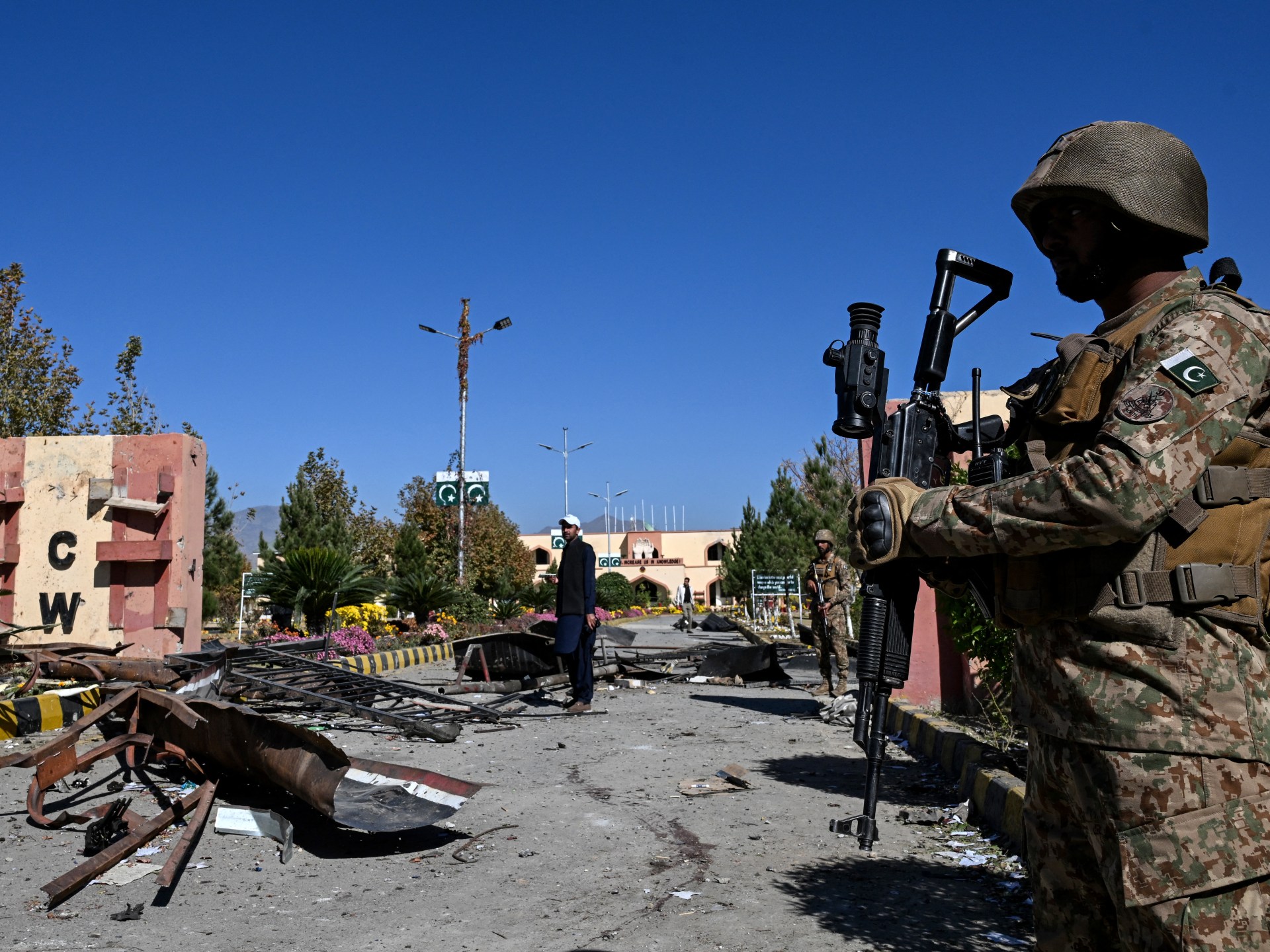

Afghanistan and Pakistan’s forces have exchanged heavy fire along their border as tensions between the South Asian neighbours escalate after peace talks in Saudi Arabia failed to produce a breakthrough.
Officials from both sides said the skirmishes broke out late on Friday night, with the two countries accusing one another of opening fire first.
- list 1 of 3Why jail access to Pakistan’s Imran Khan has caused a political storm
- list 2 of 3Bomb kills three Pakistani police officers close to Afghan border
- list 3 of 3Pakistan seeks new South Asian bloc to cut India out: Will it work?
end of list
In a post on X, the spokesman for Afghanistan’s Taliban government, Zabihullah Mujahid, said Pakistani forces had “launched attacks towards” the Spin Boldak district in the Kandahar province, prompting Afghan forces to respond.
A spokesman for Pakistani Prime Minister Shehbaz Sharif said it was the Afghan forces who carried out “unprovoked firing” along the Chaman border.
“Pakistan remains fully alert and committed to ensuring its territorial integrity and the safety of our citizens,” spokesman Mosharraf Zaidi said in a statement.
Residents on the Afghan side of the border told the AFP news agency that the exchange of fire broke out around 10:30pm local time (18:00 GMT) and lasted about two hours.
Ali Mohammad Haqmal, head of Kandahar’s information department, told AFP that Pakistan forces attacked with “light and heavy artillery” and that mortar fire had struck civilian homes.
“The clashes have ended, both sides agreed to stop,” he added.
Advertisement
There were no immediate reports of casualties from either side.
Relations have soured between Afghanistan and Pakistan since the Taliban returned to power in 2021, largely due to Islamabad’s accusations that Kabul is providing sanctuary to several armed groups, including the Pakistan Taliban (TTP).
The TTP has waged a sustained campaign against the Pakistani state since 2007 and is often described as the ideological twin of the Afghan Taliban. Most recently, on Wednesday, a roadside bombing in Pakistan near the Afghan border claimed by the TTP killed three Pakistani police officers.
Pakistan also accuses Afghanistan of sheltering the Balochistan Liberation Army and a local ISIL/ISIS affiliate known as the ISKP – even though the ISKP is a sworn enemy of the Afghan Taliban.
The Afghan Taliban denies the charges, saying it cannot be held responsible for security inside Pakistan, and has accused Islamabad of intentionally spreading misinformation and provoking border tensions.
A week of deadly fighting on their shared border erupted in October, triggered after Islamabad demanded that Kabul rein in the fighters stepping up attacks in Pakistan.
About 70 people were killed on both sides of the border and hundreds more wounded before Afghan and Pakistani officials signed a ceasefire agreement in Qatar’s capital Doha on October 19.
That agreement, however, has been followed by a series of unsuccessful talks hosted by Qatar, Turkiye and Saudi Arabia aimed at cementing a longer-term truce.
The latest round of talks, held in Saudi Arabia last weekend, failed to produce a breakthrough, although both sides agreed to continue their fragile ceasefire.
Despite the truce, Kabul has accused its neighbour of carrying out repeated air strikes in Afghanistan’s eastern provinces over recent weeks.
One attack reportedly carried out by the Pakistani military on a house in Afghanistan’s southeastern Khost province in late November reportedly killed nine children and a woman. Pakistan denied that it carried out any such attack.
Related News
Global campaign launched to free jailed Palestinian leader Marwan Barghouti
US warns civilian flights as military activity around Venezuela increases
Five killed in Kyiv, Rostov as Russia, Ukraine carry out overnight attacks