2020 SOEs struck down by Appeals Court
 14 September 2026

Appeals Court rules that emergency powers cannot override bedrock constitutional rights
BELIZE CITY, Thurs. Sept. 3, 2026
The Court of Appeal today handed down a landmark ruling affirming that even in times of crisis, Belize’s bedrock constitutional protections must remain intact. The decision, unfavourable to the State, reshapes how the government may use State of Emergency (SOE) powers. Delivered by Acting Appeals Justice E. Andrew Marshalleck and concurred by Justices Minnet Hafiz Bertram and Marguerite Woodstock Riley KC, the ruling stresses that, while the state is duty-bound to protect citizens from escalating violence, emergency measures cannot override the Constitution’s Section 3 core guarantees of life, liberty, and security of the person, which is a right rooted in international human rights law.
Justice Marshalleck noted that the right has long been described as a supreme human right without which all other human rights lose meaning. He also referenced to Section 5 of Belize’s Constitution which embeds the right against arbitrary arrest and detention within the broader right to liberty and security of the person.
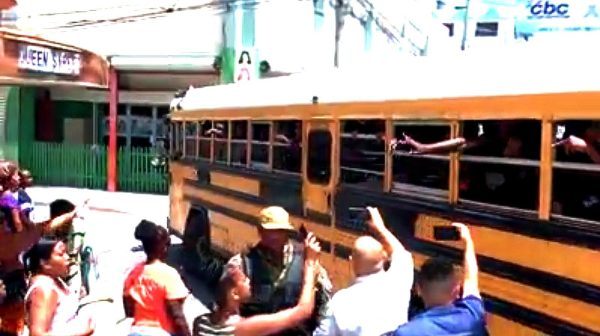
The decision resolves two conflicting High Court rulings on the March and July 2020 SOEs – and the two-month extension of the latter – declared in Southside Belize City at the height of the COVID-19 pandemic. There were three sets of litigants for a total of 18 detainees represented by attorneys Leslie Mendez and Leeroy Banner. One High Court judge upheld the SOEs as lawful, citing seven murders in four days, with two children being shot in their homes. The other judge found the SOEs to be unconstitutional, and awarded 13 SOE detainees $372,000 in damages, with sums ranging from $12,000 to $25,000, in compensatory damages, plus $7,000 each in vindicatory damages.
In the ruling, which was unfavourable to the government, the judge held that the state had not provided sufficient evidence to justify bypassing ordinary crime-fighting powers; and that the violence, though serious, did not meet the constitutional threshold of a threat “likely to endanger public safety” requiring extraordinary measures. The other judge deferred heavily to the executive, and reasoned that the Governor General’s judgment should not be second-guessed unless bad faith is proven. He also held that once Parliament approved the SOE extension, the decision became political rather than legal.
At the Court of Appeal, both SOEs and the two-month extension were struck down as unconstitutional.
The Court acknowledged that the right to liberty is not absolute and may be limited by the state. However, Marshalleck echoed the caution by 19th century British philosopher John Stuart Mill, that the state may restrict liberty only to prevent harm to others or in the public interest. It cannot be for convenience, expediency or broad crime-fighting aims. The Court also adopted the position that the right requires protection by the government and against the government itself. Marshalleck emphasized Mill’s warning about the “tyranny of the majority” or the idea that the biggest threat to individual freedom comes not from a dictator, but from a majority willing to support government restrictions on unpopular individuals or groups.
The Court declared that, while the Constitution allows SOEs and emergency regulations granting expanded arrest and detention powers, these must be reasonably justified and must still uphold Section 3’s overarching protections. “Section 3 draws lines which cannot be crossed even in the context of a period of public emergency,” Marshalleck wrote. The judgment reminded that SOEs can be lawfully declared when the constitutional threshold is met.
The Court pointed to Jamaica, Trinidad and Tobago, and Belize increasingly using SOEs to “force peace” in gang-controlled areas, and warned that frequent reliance on SOEs is a red flag that normalizes powers intended for emergencies only. Marshalleck called it “reliance on bandages rather than cures to address an ailment. The root causes of crime are not addressed by SOEs, so that crime returns after the SOE ends.” He emphasized that SOEs ought to be “temporarily and sparingly exercised.”
Based on the evidence before the trial judges, the Court found that there was no large-scale triggering event to warrant an SOE. Marshalleck affirmed that the seven deaths that preceded the SOE must have given rise “to a threat to the lives of others on such a scale as to be characterized as civil unrest or disorder and be of such a nature that it is incapable of being addressed under the ordinary criminal law.” He added that what defines a triggering event is not the number of people killed or the depravity of the killings, “but the likely consequences of the killings.” He rejected German legal theorist Carl Schmitt’s view that emergencies permit the state to suspend the constitutional order, noting that such thinking helped legitimize Adolf Hitler’s rise under the guise of legality.
The Court also found that the trial judges made key errors when assessing individual arrests and detentions. They focused too heavily on whether arresting officers had reasonable suspicion, even though the detainees were actually held under Detention Orders signed by the Minister, which required a different legal test. The judges also misinterpreted Section 19 which requires detainees to be told the specific reasons for their detention, have those particulars published, and receive a timely review by an independent tribunal within one month.
Instead, the Minister provided vague labels like “gang activities,” and no Review Tribunal was ever appointed. The Court accepted the appeals on those errors, but the Government’s appeal of the adverse ruling deeming the SOEs and their proclamations unconstitutional was dismissed.
The Government also argued that damages should not have been awarded because there was insufficient evidence of loss. The Court of Appeal disagreed and affirmed that the arrests and detentions were unlawful and that compensation was warranted. It ordered that the same approach be applied to the remaining five detainees who lost their claims in the High Court. They were each awarded $15,000 in compensatory damages and $7,000 in vindicatory damages. This increases the government’s liability by $110,000, bringing the total to $482,000. Other SOE detainees may now be encouraged to sue the government as well.
The SOE detainees were awarded costs.
The government was represented by Deputy Solicitor General Samantha Matute along with Senior Litigator Jarvis Lou and Crown Counsel Alea Gomez. Attorney General Anthony Sylvestre, Jr. confirmed that they are still reviewing whether the government should appeal.
Related News
St. Croix Fugitive Wanted Since February Arrested at Alabama Workplace by U.S. Marshals
Federal Banking Rule Overrides a Virgin Islands Homeowner Protection as 10 States Sue and ...
Machete-Wielding Suspect Arrested Less Than Two Hours After Christiansted Jewelry Store Ro...